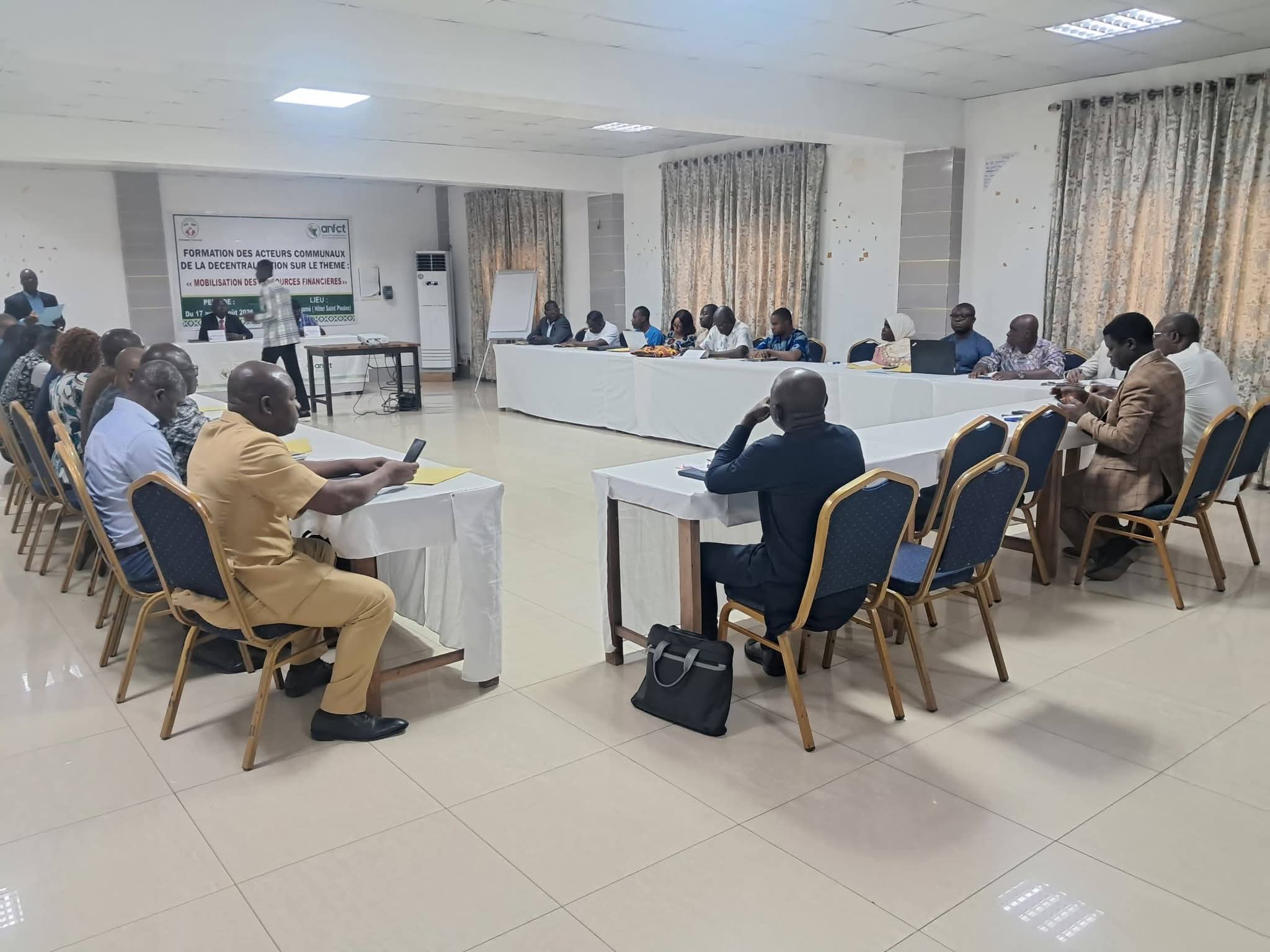
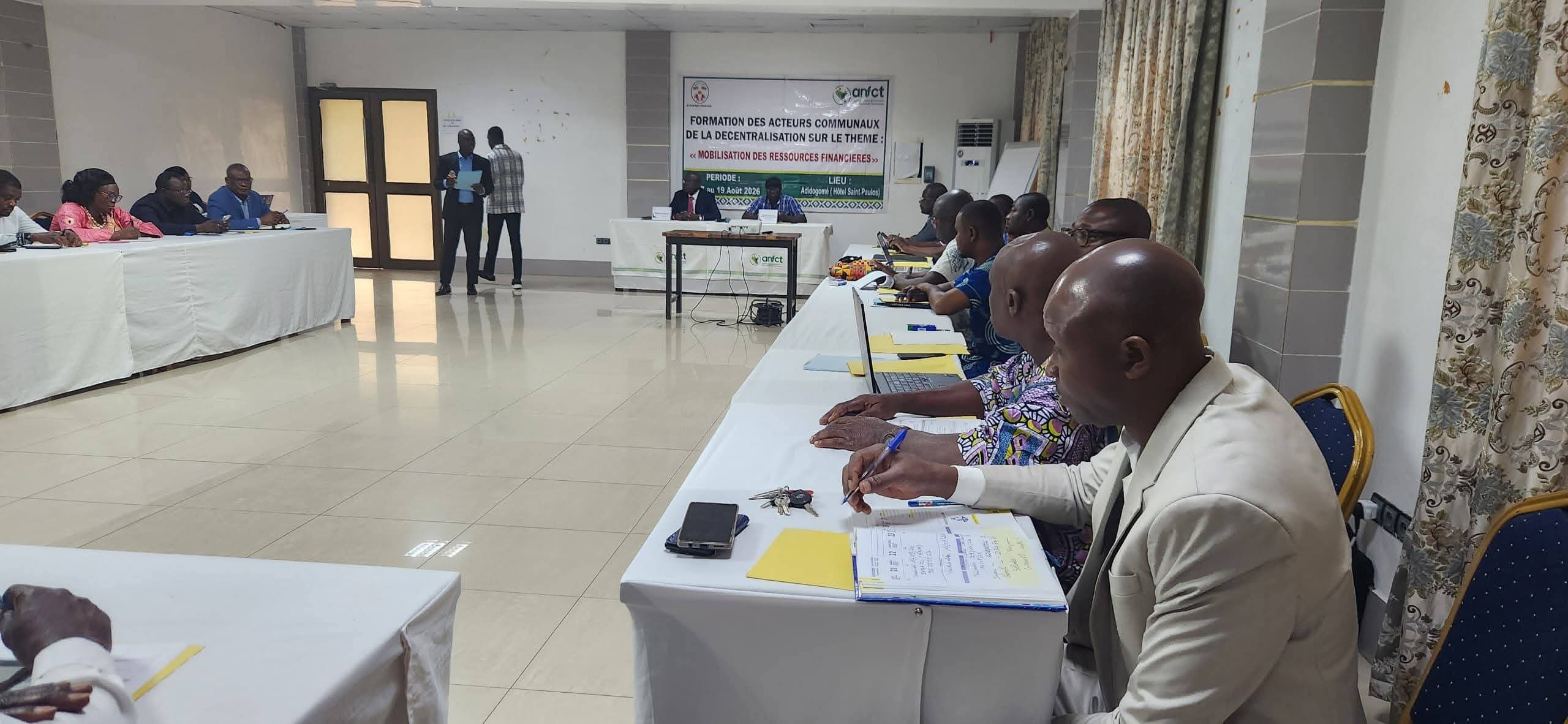
LOMÉ, August 17, 2026 — For local communities to consistently meet the needs of their residents, they require not only adequate financial resources but also robust management practices. This critical challenge brings together communal leaders from Golfe 2, Golfe 3, Agoè-Nyivé 5, and Agoè-Nyivé 6 for a key training session from August 17 to 19, 2026, hosted within the Golfe 7 commune.
This intensive training, specifically designed to enhance financial resource mobilization, aims to equip local stakeholders with more effective strategies for increasing communal revenues and improving their oversight. The initiative is a core component of the National Training Plan, spearheaded by the National Agency for the Training of Local Authorities (ANFCT).
Financial autonomy: a central objective
For municipal administrations, the focus extends beyond merely identifying new funding streams. It encompasses their capacity to secure existing revenues, optimize collection processes, and effectively translate mobilized resources into tangible public services for their communities. This is a crucial aspect of local governance and sustainable development.
The financial capacity of a local government directly impacts its ability to fund essential infrastructure, maintain public facilities, and address the pressing social and economic demands of its populace. Consequently, strengthening the competencies of communal agents and officials emerges as a pivotal element in effective local governance.
The gathering in Golfe 7 is specifically designed to leverage this by fostering the acquisition of practical skills and enabling participating communities to share and compare their varied experiences.
A training focused on local practices
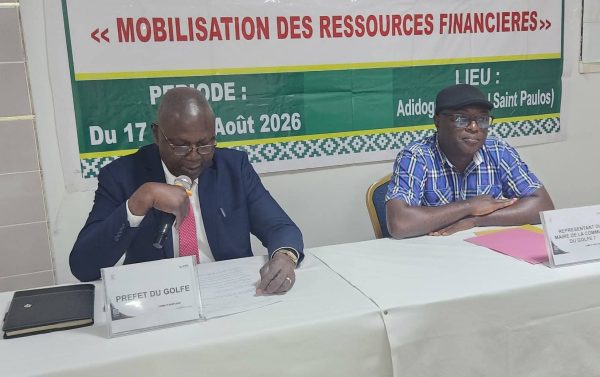
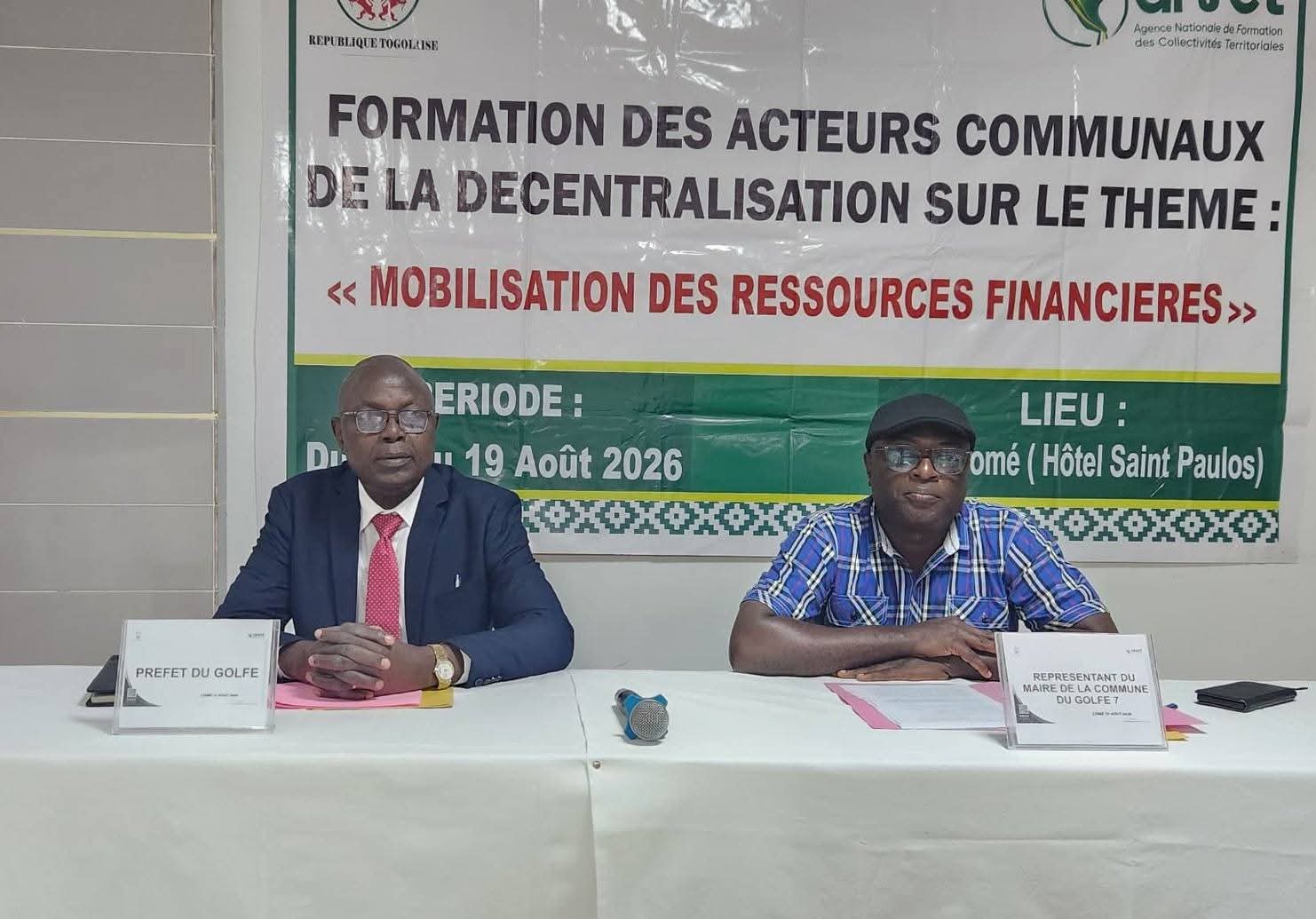
The Prefect of Golfe, Kossivi AGBODAN, officially inaugurated the proceedings on Monday, August 17. He was joined by the Third Deputy Mayor of Golfe 7, ADAKA Koffi, alongside the mayors and representatives from the participating local authorities, their general secretaries, and key financial personnel.
Speaking on behalf of the Senator-Mayor, ADAKA Koffi highlighted the meeting as a vital opportunity to strengthen the financial independence of local governments. He urged all participants to maximize their engagement over the three-day program, particularly through sharing insights and collaboratively developing solutions directly applicable to their local contexts.
The chosen pedagogical approach moves beyond mere theoretical instruction. It encourages participants to critically examine their current practices, pinpoint challenges encountered in the field, and collaboratively identify strategies to enhance their resource mobilization mechanisms effectively.
Mobilizing more, but managing better
The address by the Prefect of Golfe underscored a second crucial imperative for the discussions: strict adherence to discipline in the management of local public finances.
A local authority might increase its revenue without genuinely improving residents’ living conditions if it lacks proper control over how these resources are utilized. For Kossivi AGBODAN, therefore, efforts to mobilize funds must be inextricably linked with financial orthodoxy, rigorous oversight, and unwavering transparency.
This demand lends particular significance to the training program. The ultimate goal is not merely to boost income, but to ensure that every collected resource effectively supports communal policies and projects, driving tangible development and progress in this part of Africa. This focus aligns with broader African economy news emphasizing good governance.
Three days to transform practices
Through August 19, participants will utilize this shared platform to deepen their understanding, exchange practical experiences, and explore sustainable methods for improving the mobilization and management of financial resources. This is a critical step for local development and African politics English discussions on decentralization.
With this initiative, the ANFCT continues its vital support for local authorities in their ongoing decentralization journey. For the four participating communes, the challenge now lies in translating the knowledge gained from this training into concrete actions that will bolster their financial capabilities and, ultimately, enhance their responsiveness to the needs of their populations.
By Ramatou Soumana — Reporter
Section feedOpen public syndication feed accessible via RSS / XML
football CAN CAF president Patrice Motsepe in Dakar amid CAN 2025 title controversy Patrice Motsepe has led the CAF since 2021. (I. Kralj/Presse Sports) CAF […]
From military stronghold to a logistical nightmare Once a formidable bastion of Russian military power in Europe, the Kaliningrad exclave now faces an unprecedented tightening […]