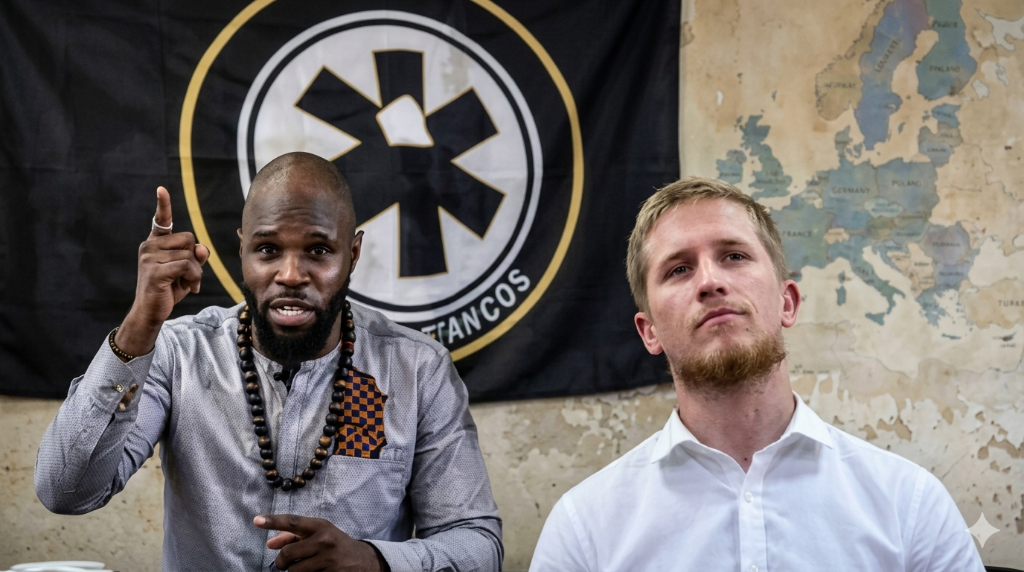
Known for his fiery speeches and carefully crafted online persona, the man who calls himself the “general” of the Black cause is facing a crisis of credibility. While Kemi Seba positions himself as the ultimate defender of African sovereignty against modern colonialism, his recent actions suggest a confusing path of contradictions. His recent legal troubles in South Africa and his surprising ties to radical Afrikaner right-wing figures have raised serious questions about the true nature of his activism.
A movement clouded by inconsistency
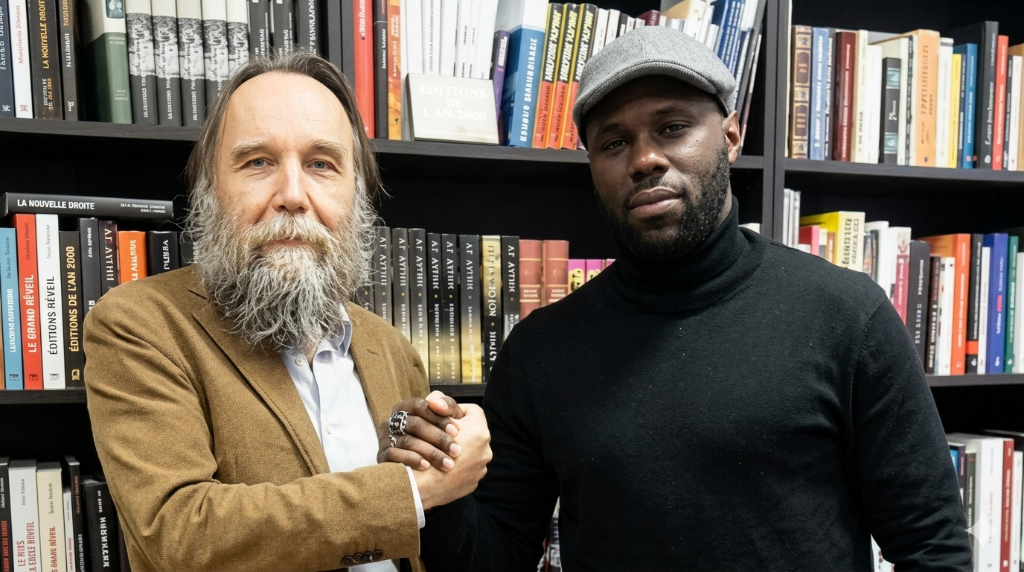
For years, Stellio Capo Chichi, better known as Kemi Seba, has built a reputation by attacking foreign interference and demanding a total break from former colonial powers. However, many find it impossible to reconcile this demand for total freedom with his public association with figures like Dries van der Merwe. Van der Merwe is a prominent figure in white separatist movements and an open nostalgist for the Apartheid era.
Seba often justifies these links through the lens of political strategy—arguing that the enemy of his enemy is a partner. Yet, this approach feels like a betrayal to those who remember the long struggle against colonial rule. By aligning with individuals who historically advocated for the inferiority of Black populations, Seba is not practicing Realpolitik; he is undermining the very dignity he claims to protect.
Financial scrutiny and international funding
The activist’s image as a self-reliant revolutionary is also being challenged by legal authorities in Benin. Investigations into money laundering have cast a shadow over how his operations are funded. There is a glaring disconnect between his public calls for African autarky and the opaque international financial networks currently being scrutinized by the justice system.
It is particularly ironic that a man who describes the CFA franc as a tool of modern slavery is now the subject of a financial investigation involving complex international transfers. If these allegations of money laundering are proven true, it would suggest that the “revolutionary” is simply another player in the global financial systems he claims to despise, using these networks for personal or political gain.
The high cost of political opportunism
Events in South Africa have highlighted a bitter reality: Seba appears willing to collaborate with any group capable of disrupting the current status quo, regardless of their historical or moral background. His willingness to work with groups dreaming of Afrikaner supremacy suggests that his primary goal may not be justice, but rather the creation of media-driven chaos.
“Pan-Africanism should never serve as a mask for unnatural alliances. One cannot claim to liberate a people while shaking hands with their former oppressors for the sake of political convenience.”
The crumbling of a public image
As he faces arrest warrants and potential extradition, the facade of the “principled” activist is beginning to crack. By seeking support from those who long for racial segregation to boost his own influence, Kemi Seba has crossed a line that many of his followers may find unforgivable. He has effectively turned a noble struggle into a personal ideological business.
To many observers, he is no longer the authentic voice of a continent, but a man in search of a safe haven, trapped by his own tactical betrayals. History may eventually show that Seba’s most dangerous adversary was not a foreign power or a currency, but the deep-seated inconsistency of his own choices.