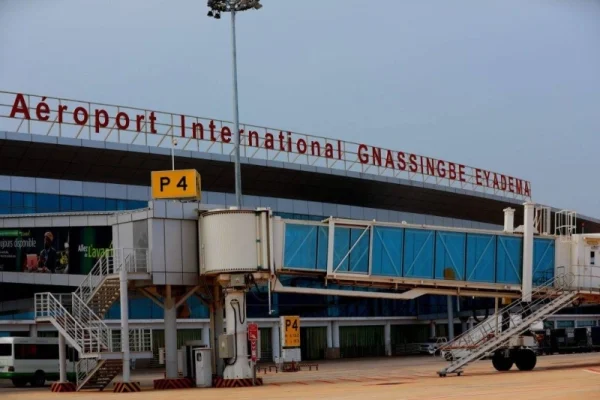
Welcome to Lomé, where the third edition of the Biashara Afrika panafrican forum kicked off this past Monday, May 18, 2026, with a textbook case of how continental integration ambitions can crash onto the tarmac of the Gnassingbé Eyadéma International Airport.
The magic of Africa’s high-profile economic gatherings often lies in their stark contrast between lofty rhetoric and on-the-ground realities. Delegates arrived to celebrate the African Continental Free Trade Area (AfCFTA), tossing around buzzwords like “single market of 1.4 billion consumers,” only to leave with a front-row seat to one of the continent’s most absurd bureaucratic comedies.
the absurdity of an African passport rejected in Africa
The mood was still cordial when Nigeria’s Minister of Industry, Trade and Investment, Dr. Jumoke Oduwole, took the stage before a packed audience of heads of state and financial titans. Instead of showering the crowd with yet another round of hollow praise for intra-African trade promises, she opted to recount a real-time nightmare experienced by two high-profile investors—one Nigerian, one Ghanaian—who had touched down in Lomé the night before.
Their crime? Daring to present their respective national passports, issued within the ECOWAS bloc that has championed free movement since the 1970s, only to be met with a blunt refusal at the border.
The border police verdict was swift and merciless: entry denied. To set foot on Togolese soil, these business leaders had no choice but to swallow their panafrican pride, pull out their European passports—yes, European—and request a 24-hour emergency visa.
Dr. Oduwole, drawing on nearly a decade of commercial experience in Nigeria, delivered a damning assessment:
“One of them, a financial services investor, told me he would not consider investing here. We hadn’t even left the airport, and his decision was already made. The same scenario would never unfold in Europe—an African businessman forced to apply for a visa with an African passport within the European Union simply wouldn’t happen.”
The irony is as biting as it is costly for the state coffers: to be welcomed in Togo, it seems, an African investor is better off waving a European passport.
But why the investor’s swift rejection? For ordinary citizens, visas have long been a rite of passage at every border. So, is there an unwritten rule that distinguishes investors from everyday travelers—or are the rules different altogether?
the integration paradox: when bureaucracy outmuscles policy
For a nation positioning itself as a regional logistics and financial hub, the reality is jarring. Visa restrictions on neighboring Africans drive capital away, and the overzealous airport bureaucracy undermines the country’s image in real time—especially in front of investors. In Lomé, an African passport holder gains faster entry by flashing a European one. The ECOWAS passport? Optional.
tick-tock: 48 hours to salvage the “hub”
Stung by the unfiltered critique and acutely aware that the spectacle was overshadowing the forum’s prestige, Togolese President Faure Gnassingbé bypassed traditional diplomatic niceties. No drawn-out committees, no six-month parliamentary inquiries—just an immediate response.
Commending the timely candor of the Nigerian minister and Afreximbank’s president for exposing the continent’s contradictions, Gnassingbé issued a no-nonsense deadline:
“I am giving the Minister of Security 48 hours to resolve this anomaly.”
The message was crystal clear. Togo’s top security official now has until Wednesday—coinciding with the forum’s closing day—to retrain border services on the nuances of free movement, all under the amused gaze of continental observers.
Biashara Afrika 2026 had set out to dismantle non-tariff barriers strangling the continent. Mission accomplished, at least for Lomé’s airport—where a multi-billion-dollar project nearly collapsed over a poorly stamped visa.
AfCFTA: administrative borders choke african integration
“This kind of incident is a wake-up call: without free movement of people, the AfCFTA will remain an empty shell,” observed an Ivorian economist in attendance. A Ghanaian entrepreneur added, “If we must wave a European passport to invest in Africa, then integration is nothing more than a slogan.”
The episode lays bare Africa’s deep-seated contradictions. The AfCFTA promises a single market of 1.4 billion consumers and a combined GDP of $3.4 trillion, yet its credibility is eroded by administrative practices that mock its ambitions.
The question now: will harmonized visa rules, digitalized border procedures, and a firm political will follow? Or will Lomé’s lesson—that a misplaced stamp can cost millions in lost investment—fade into yet another forgotten anecdote?