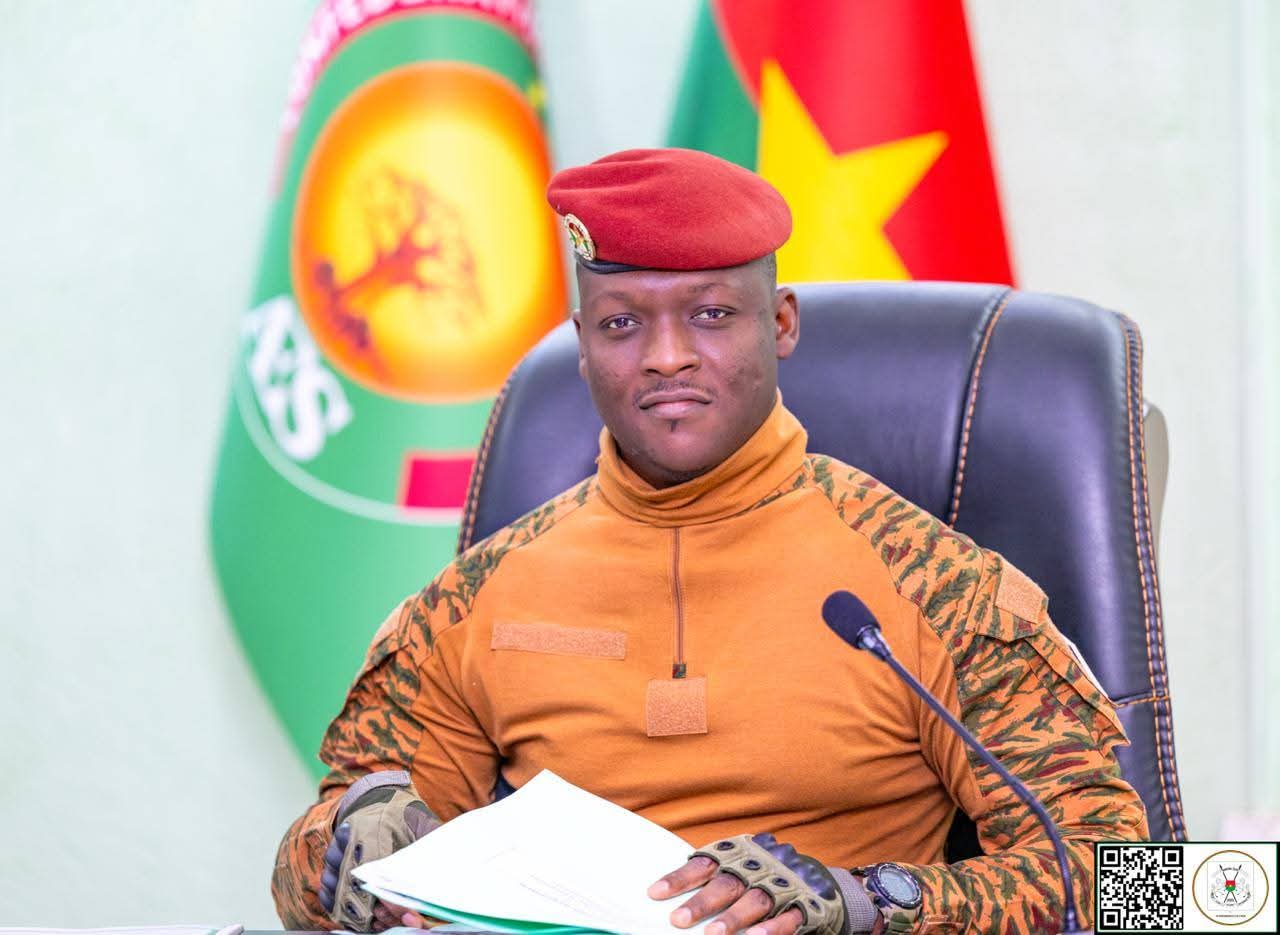
On the occasion of the second anniversary of the Sahel Confederation (SEC), celebrated on July 6, 2026, Burkina Faso’s current president, Captain Ibrahim Traoré, delivered a resolutely offensive speech. The Head of State drew up a largely positive balance sheet and showcased ambitious plans for the future of the organization bringing together Burkina Faso, Mali, and Niger.
The SEC president asserts that the Confederation has made significant progress in political cooperation, diplomatic relations, and military collaboration. He mentions improved coordination in the fight against terrorism, strengthened common institutions, and progressive economic integration.
However, the document does not present any concrete data or precise indicators to evaluate these advancements. Sahelian populations continue to face major challenges: persistent insecurity in several zones, inflation, difficulties in accessing basic social services, and a slowing economy.
The speech also emphasizes the will to build an economic sovereignty through industrialization, local transformation of natural resources, food security, and energy supply, as well as free movement of people and goods.
These objectives are ambitious. However, their realization will require significant investments, adapted infrastructure, and sustained stability, while the three countries face important budgetary constraints and a fragile security context.
A key point: Captain Ibrahim Traoré attributes part of the AES’s difficulties to an « economic war and media », to disinformation campaigns and external pressures he describes as imperialist and neo-colonial.
This reading reflects the official position of AES authorities since their break with several Western partners. It does not, however, gain unanimous support among observers, who believe that the SEC’s challenges also stem from internal factors, such as governance difficulties, economic constraints, and persistent terrorist attacks.
The speech aims to be reassuring by affirming that the AES is not directed against any people or organization, while confirming ongoing discussions with the CEDEAO for redefining future relations.
This openness to dialogue contrasts with tensions in relations between the two organizations over the past few years, leaving room for preserving certain regional gains, including free movement.
In conclusion, Captain Ibrahim Traoré’s message appears more like a political statement aimed at reinforcing cohesion around the SEC project than a detailed assessment of its performance.
Two years after its creation, the SEC displays a clear vision and a mobilizing speech around sovereignty and integration. However, the true test remains that of tangible results: improved security, job creation, economic development, and better living conditions for the population.
Despite the SEC president’s boasts about progress in fighting terrorism, recent attacks on Mali serve as a reminder that the threat remains intact. The July 4, 2026, coordinated attack on several military camps and positions in Gao, Aguelhok, Anéfis, Sévaré, and Kéniéroba highlights the SEC’s limited ability to turn around the security dynamics in the Sahel region.
These events underscore the limits of the security devices deployed by the SEC. Despite reinforced military cooperation and regularly announced joint operations, the organization struggles to durably reverse the insecurity trend in the Sahel region. More than slogans about sovereignty and unity, the population now demands concrete results: a significant reduction in attacks, the return of stability, and tangible improvements in their daily security.
The SEC’s two-year anniversary serves as a reminder that true success will depend on translating ambitious visions into concrete actions.