On June 16, the African continent commemorated African Child Day, an occasion traditionally marked by significant gatherings and pledges for a brighter future. This year, the focus was on universal access to water, sanitation, and hygiene. In Togo, representatives of the incumbent administration undoubtedly adhered to the customary practice of delivering reassuring speeches. However, beneath the official rhetoric, the reality on the ground remains stark: to maintain its hold on power, the Lomé regime has too frequently resorted to lethal force, impacting innocent minors. This article revisits a tragic series of unfulfilled commitments and unresolved investigations.
From Soweto to Lomé: a shield of child suppression
African Child Day was originally established to honor the students of Soweto who, in 1976, rose up to demand quality education and reject the imposition of Afrikaans. While numerous nations have since strived to materialize these rights, the Togolese system appears to have transformed the repression of its youngest citizens into a final political bulwark.
Protecting a child extends beyond mere declarations of intent; it necessitates ensuring their dignified birth and upbringing. In what serve as hospitals across Togo, mothers still deliver babies on the bare ground. Due to insufficient resources and infrastructure, maternity wards are overwhelmed, sometimes resembling crowded infant facilities where life precariously hangs by a thread.
As sub-regional and international institutions reiterate their short, medium, and long-term commitments to children, Lomé feigns compliance. Yet, the slightest dissent from young people against these systematic infringements of their fundamental rights is met with live ammunition. Even those not actively protesting, merely seeking sustenance, ultimately swell the ranks of victims.
Jacques Koutoglo: a drowning theory against a family’s grief
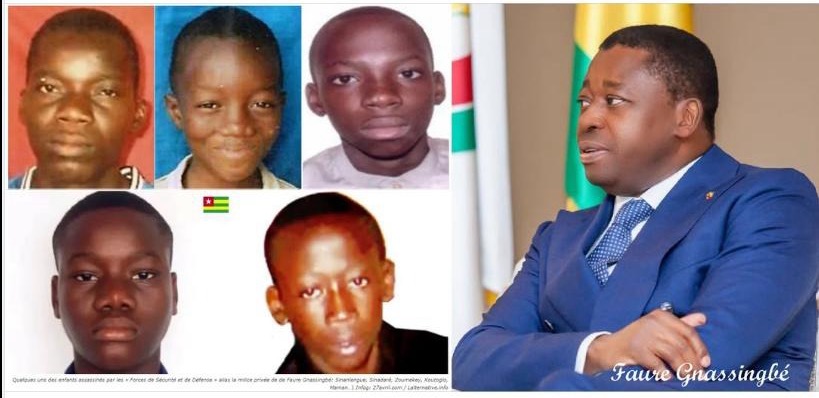
Nearly a year has passed since the family of Jacques Koutoglo began their demand for accountability. This 15-year-old middle school student was fatally assaulted before being discarded into the Bè lagoon in Lomé during the initial demonstrations of June 2025. That afternoon, the teenager was not participating in the protest; he was simply searching for food.
In response to the tragedy, Pacôme Adjourouvi, then Minister of Human Rights, initially publicly supported the hypothesis of a “natural drowning” amidst the unrest. He later reversed course, announcing the initiation of a formal inquiry to establish culpability. Since then? Nothing. The minister departed from his post without ever releasing the findings of the probes. The government’s refusal to authorize a commemorative mass for young Jacques only deepens the sense of injustice for his inconsolable family.
Joseph Zoumekey and Rachad Maman: silence as the sole response
In 2017, the fate of 13-year-old Joseph Zoumekey already demonstrated that repression spared no age group. Sent by his mother to purchase condiments in the Bè-Kpota district, the child was struck down by live ammunition. It was not until 2018, following an independent post-mortem examination conducted by Amnesty International experts, that it was confirmed the cause of death was indeed a gunshot wound, contradicting the state’s account. Despite repeated calls from the NGO to bring the perpetrators to justice, the administration under Faure Gnassingbé retreated into silence.
The same year, in Bafilo, 14-year-old Rachad Maman met a similar fate while walking alongside his father to advocate for democratic reforms. Struck by gunfire aimed at the group of demonstrators, his case triggered a wave of global condemnation, materialized by an Amnesty International petition signed by thousands worldwide. The request was straightforward: shed light on the matter and prosecute those responsible. This appeal, too, went unheeded.
Anselme Sinandaré and Douti Sinalengue: North and South united in sorrow
Further north, in Dapaong, the memory of Anselme Sinandaré (12 years old) and Douti Sinalengue (21 years old) endures. In 2012, during a peaceful student demonstration demanding the presence of their teachers in classrooms, both were shot dead. More than a decade later, no official process has identified the shooters within the security forces.
From the extreme north to the coastline, a painful reality persistently emerges: the lives of children appear to hold little value when juxtaposed with the imperatives of power retention. Dozens of families are thus stripped of their future, witnessing their offspring—the next generation—sacrificed with complete impunity. This dynamic of repression persists and spans generations, dating back to the onset of the Gnassingbé family’s governance.
Yet, Togo is indeed a signatory to the African Charter on the Rights and Welfare of the Child, ratified on May 5, 1998. By allowing these crimes to go unpunished and these investigations without resolution, the authorities in Lomé send an unequivocal message to the international community: adherence to treaties ceases where the demands of their political survival begin.