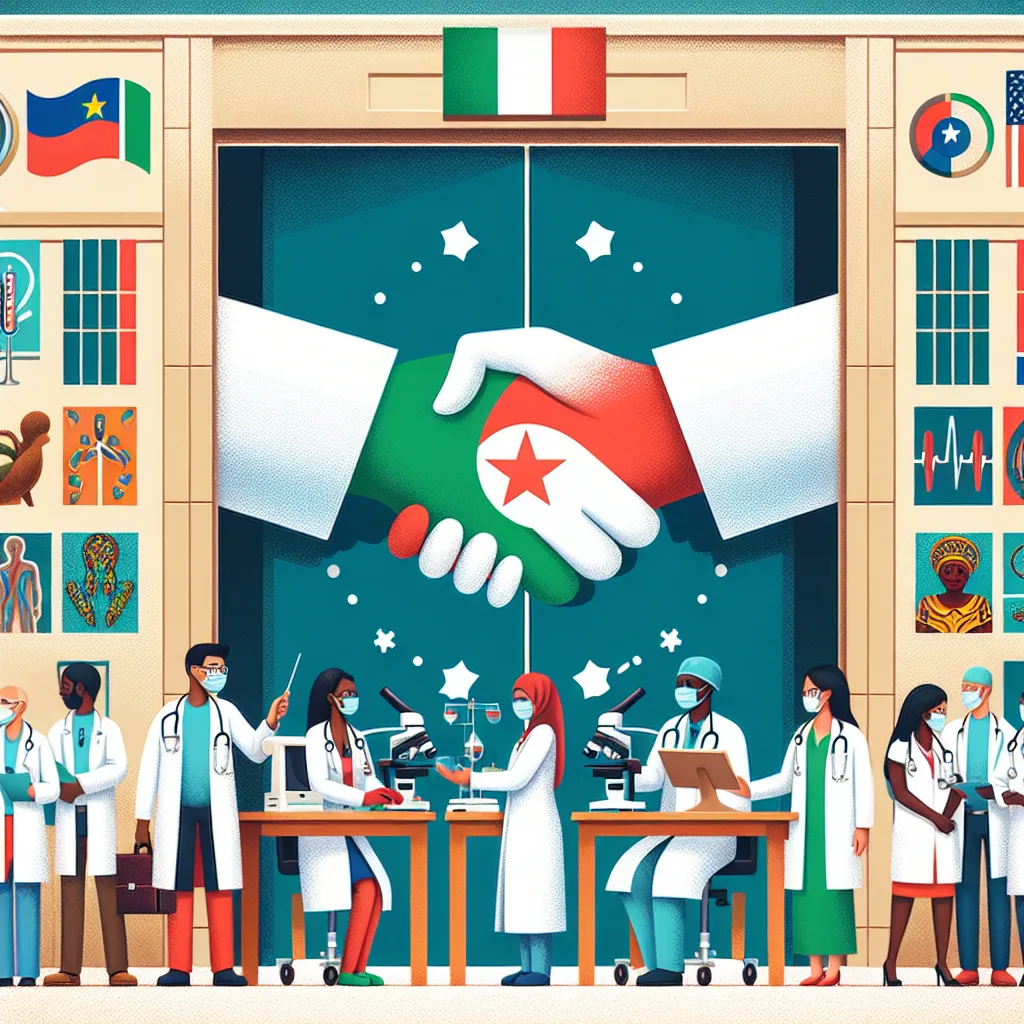
a five-year US-Burkina Faso health agreement to strengthen Sahel’s disease defense
a landmark five-year agreement between the United States and Burkina Faso has been unveiled to elevate public health security as a shared priority. the pact aims to empower Burkina Faso with self-sustaining tools to combat infectious threats while simultaneously safeguarding American communities. by fostering local resilience, this bilateral framework prioritizes robust, locally managed health systems. it establishes clear objectives, dedicated resources, and systematic monitoring to anticipate, detect, and respond swiftly to outbreaks in a region facing escalating health challenges.
this strategic partnership is designed for long-term impact, with measurable outcomes at its core. coordination mechanisms will align national priorities with external support, ensuring shared responsibilities and transparent expenditure tracking. through multi-year planning, programs will gain stability, enabling performance-based evaluation with defined health targets and tracked indicators for optimal results.
targeted funding to fight hiv/aids, malaria, and beyond
significant financial backing has been committed to intensify efforts against HIV/AIDS, malaria, and other infectious diseases. these funds will focus on prevention, early diagnosis, and treatment, with a strong emphasis on operational efficiency. concurrently, Burkina Faso has pledged to boost its public health spending, reinforcing local ownership and ensuring the sustainability of health gains. a portion of the budget will specifically address emergency preparedness and rapid response capabilities.
a clear public health roadmap for maximum impact
a strategic action plan has been developed to concentrate efforts on high-impact health initiatives. malaria control will be reinforced through targeted campaigns, insecticide-treated mosquito nets, and expanded access to rapid diagnostic tests. the fight against HIV/AIDS will intensify with combined prevention strategies, continuous care, and improved medication adherence. maternal and child health services will be integrated into primary care to reduce treatment dropouts and ensure seamless care pathways.
modernizing epidemic surveillance systems
early detection of infectious threats is a cornerstone of this agreement. digital platforms will streamline reporting, enhance data reliability, and guide decision-making. interoperable alert systems will trigger proportional responses, while training programs will uplift the quality of epidemiological reports and case tracking. these upgrades aim to contain outbreaks rapidly and minimize human and economic costs.
upgrading laboratory infrastructure and connectivity
laboratory capacities will be expanded to accurately identify pathogens. state-of-the-art equipment and standardized protocols will be deployed, with reference networks consolidated to speed up confirmations and knowledge sharing. regular audits will uphold quality standards, biosafety, and equipment maintenance. these enhancements will shorten diagnostic timelines and optimize patient care.
strengthening community-level healthcare delivery
community health workers will serve as the backbone of this initiative, bridging prevention, screening, and treatment to underserved populations. continuous training, supervision, and resource provision will empower these frontline agents. simplified care pathways will reduce treatment abandonment, supported by awareness campaigns promoting protective behaviors and service utilization.
sustaining local health workforce integration
at the end of the five-year term, locally funded frontline health workers will be formally integrated into Burkina Faso‘s public health system. this transition prevents service disruptions while stabilizing care delivery. laboratory technicians will also be upskilled to reinforce local expertise. by building a resilient system on national talent, the partnership aims to improve talent retention and governance clarity.
national ownership and accountability in focus
Burkina Faso‘s leadership in this initiative ensures that health investments remain a national priority. budget allocations will be adjusted to secure social and health spending, with monitoring frameworks tracking progress, addressing gaps, and disseminating lessons learned. joint accountability mechanisms will safeguard fund utilization, complemented by regular consultations with local stakeholders to align efforts with community needs.
regional collaboration to curb cross-border threats
regional integration is embedded in this strategy to prevent the spread of epidemics across borders. information-sharing mechanisms with neighboring countries and technical bodies will be strengthened. joint simulation exercises will test emergency response plans, while supply chains will be secured to ensure the smooth delivery of medical supplies. by reinforcing a key Sahelian nation, the agreement seeks to create a ripple effect of improved health security across the region.
navigating political transitions with health resilience
the agreement accounts for Burkina Faso‘s ongoing political transition, embedding health programs within institutional stability plans. technical and financial partners will collaborate with local health authorities to maintain service neutrality during periods of change. this approach ensures uninterrupted access to essential healthcare, even amid political restructuring.
aligning with the US global health security strategy
this partnership aligns with the United States‘ America First Global Health Security Strategy, which links health security to systemic resilience. multiple bilateral engagements across Africa reinforce prevention and response efforts, ensuring coordinated support that avoids duplication and accelerates outcomes. synergies will be maximized between vertical programs and horizontal health system strengthening.
measuring progress and sharing success
transparent tracking of key indicators will assess service coverage, care quality, and expenditure efficiency. interactive dashboards will guide decision-making, adjust priorities, and document impact. best practices will be shared to inspire similar initiatives across the Sahel. the ultimate goal is a sustained reduction in preventable infections and maternal-child mortality rates.
tangible benefits for communities
households can expect concrete improvements, including faster diagnostics, better availability of medical supplies, and enhanced health awareness. vulnerable populations will benefit from strengthened protection mechanisms. with robust funding and vigilant governance, a sustainable path to long-term health progress is within reach for Burkina Faso and its people.