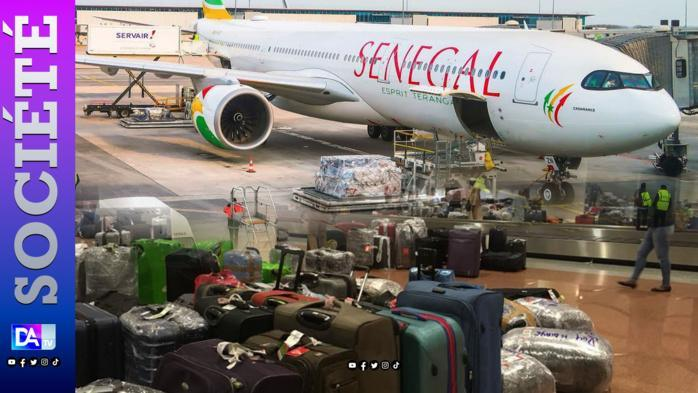
The fallout from the Interpol probe into Air Senegal has escalated, sparking a heated public debate and reshaping the outlook for the national carrier. Officials confirm the airline is now at the center of a multi-country investigation involving alleged smuggling operations by crew members on its Dakar-Paris route. The revelations have raised serious questions about airline security protocols and the integrity of staff involved in high-risk international flights.
Unpacking the alleged smuggling network
The investigation, first uncovered by local sources, alleges that multiple Air Senegal flight attendants and stewards participated in a coordinated effort to transport unauthorized goods across borders. Among the questionable items were oversized luggage, vehicle bumpers, and other cargo handled outside standard safety protocols. A particularly unsettling incident involved a milk carton that an attendant was asked to carry from Paris. Upon inspection, it contained a suspicious substance later confirmed to be a controlled drug.
What the probe uncovers about airline operations
The probe has exposed significant gaps in safety and oversight. According to reports, the implicated crew members lacked the required security clearances for handling cargo on international routes. The company admits to receiving formal notification from investigating authorities and has since suspended several staff pending further inquiry.
Airline leadership denies the operations were solely motivated by financial gain, suggesting deeper systemic issues may be at play. While sources claim crew members were compensated for their involvement, the true motives behind these activities remain under scrutiny. The company has indicated it will not prejudge the investigation’s outcome but has emphasized a zero-tolerance stance moving forward.
Lessons from past incidents and mounting regulatory pressure
This is not the first time Air Senegal has faced such allegations. A prior case involving goods allegedly transported from New York led to the suspension of 13 flight attendants and stewards. Following an internal review, some were reinstated after restrictions were lifted. This history has intensified regulatory scrutiny and raised doubts about the airline’s ability to self-regulate effectively.
Key concerns emerging from the investigation
- Lack of proper security clearances for crew involved in cargo handling
- Inconsistent enforcement of airline safety and smuggling prevention protocols
- Potential coordination between ground personnel and external smuggling networks
- Gaps in real-time monitoring of crew behavior and cargo integrity
The ripple effect: passengers, reputation, and the future of Air Senegal
The probe’s findings have sent shockwaves through the aviation sector. Passengers, especially on the Dakar-Paris route, now face heightened scrutiny during boarding, with officials considering stricter checks. The airline’s reputation has taken a significant hit, with travelers and industry experts questioning its operational integrity. For a state-backed airline, the stakes could not be higher—both in terms of passenger trust and international credibility.
As the investigation deepens, one question looms large: Can Air Senegal restore its credibility and secure its future amid growing doubts over its internal controls? The outcome of this probe may redefine the standards for accountability in African aviation.
For now, the public waits, and the airline races against time to rebuild confidence before the next chapter in this unfolding story.