Bénin 2035: how culture becomes the fourth economic pillar
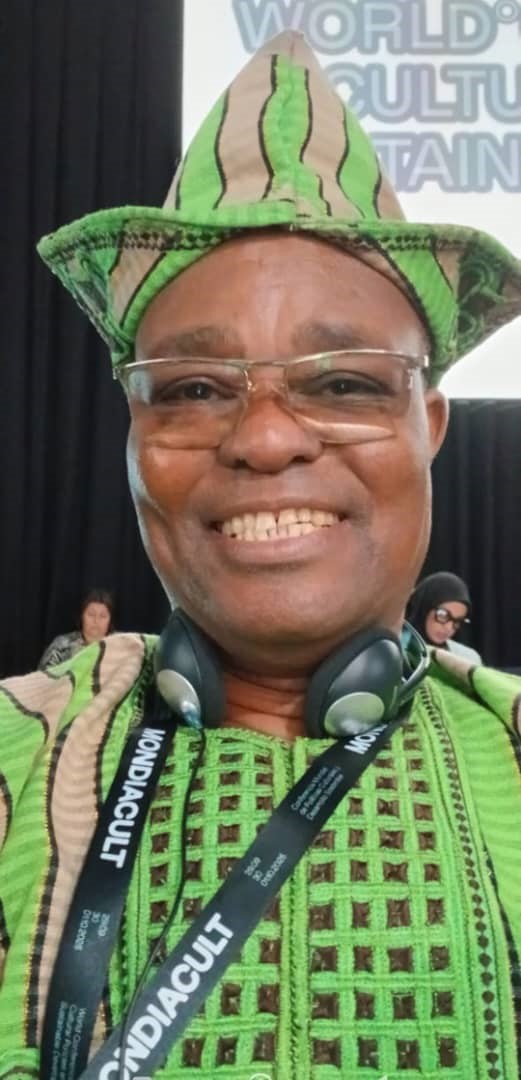
As an expert-consultant on cultural heritage and President of the NGO TOWARA-BENIN (the only Beninese NGO accredited by UNESCO), with a Postgraduate Diploma in Finance and Management Control from Abomey-Calavi University (2007), I’ve witnessed firsthand how Bénin’s cultural wealth remains an untapped economic force.
Our nation, cradle of Vodoun, heir to ancient kingdoms, holder of living arts of rare virtuosity and home to a youth bursting with creativity, possesses a treasure that has been left largely dormant. Too often, culture has been reduced to mere window dressing or an ornamental budget line. Yet the time has come to reverse this trend decisively.
By 2035, Bénin has the chance to elevate culture to the rank of a fourth economic pillar. This is not about nostalgia for the past, but about building a productive, job-creating, and territorially innovative sector. To achieve this systemic transformation, eight strategic pillars must be put in place.
- Legal certainty: lifting artists out of precarity through law
No robust economy can be built on shifting legal sands. Recent regulatory steps in Bénin are encouraging, but they remain fragile—subject to political agendas and easily reversible. The path forward is clear: the status of artists and cultural workers, along with the creation of a dedicated House of Artists, must be enshrined in parliamentary law, not decrees. Only laws passed by the National Assembly can guarantee lasting legal stability and enforceable protection.
This means immediately securing artists’ social protection, modernizing copyright governance, offering substantial tax incentives to private investors, and legally recognizing professions tied to intangible cultural heritage. Only then can we truly protect the creator—and the investment.
- Human capital: refounding cultural engineering
The lifeblood of a creative economy is its people. Amateurs must give way to elite professionalization. Bénin must launch a massive upskilling plan covering not only artistic disciplines but also cultural management, entrepreneurship, conservation-restoration techniques, and digital technologies applied to heritage. Every locality should become an incubator for local talent, tailoring training to regional identities.
- Centers of excellence: specialized schools as pillars of transmission
To institutionalize this renewal, the national education system must establish three flagship institutions:
- National Higher School of Arts: to train the avant-garde of contemporary performance (dancers, choreographers, scenographers, stage technicians).
- Superior Institute of Cultural Heritage: a high-level scientific hub dedicated to preserving tangible and intangible heritage, museography, and archiving.
- Academy of Arts and Traditions of Bénin: a sacred space where master practitioners document and legitimize ancestral knowledge for future generations.
- World-class infrastructure: building the physical backbone of creativity
Creativity demands spaces worthy of its ambition. Bénin’s territorial fabric must be reinforced with modern, versatile, and decentralized infrastructure: communal cultural centers, regional theaters, digital creation hubs, and artisan villages. Every department must have the physical tools to create, produce, disseminate, and engage audiences.
- Financing revolution: unlocking the engine of cultural production
Artistic boldness without financial means is an illusion. We propose a three-tier financial architecture:
- National Cultural Development Fund: focused on creation, research, and international mobility.
- Creative Economy Desk within financial institutions: offering low-interest credit, guarantee mechanisms, and loans tailored to the unique cycles of artistic production.
- Public-private Cultural Investment Fund: capable of raising capital from the state, local authorities, the private sector, and the diaspora.
- Industry-wide integration: from craftsmanship to visual arts
Bénin’s cultural sector suffers from fragmentation that dilutes its impact. Whether in cinema, fashion, music, dance, or publishing, each discipline must be structured as an autonomous industrial sector—with a decade-long strategic plan, dedicated training pathways, distribution channels, and aggressive marketing strategies for regional and international markets.
- Intangible heritage: monetizing Bénin’s unique identity
Our masks, ritual rhythms, initiation narratives, and artisanal know-how are not mere folklore—they are invaluable intangible assets. By investing in digitalization of collections, labeling of heritage festivals, and creating national cultural itineraries, Bénin can transform living traditions into powerful drivers of local development and tourist appeal.
- Strategic convergence: culture, tourism, and agro-industry in harmony
Bénin’s global identity will flourish when culture, experiential tourism, and agro-industry converge organically. By showcasing local products through an aesthetic lens and creating territorial excellence labels, each region can turn its culture into an economic prosperity argument. The tourist of 2035 won’t just come for the scenery—they’ll come to live the culture, taste the terroir, and inhabit the history.
The road to 2035
Building tomorrow’s Bénin requires breaking from outdated rent-seeking paradigms. By 2035, our nation has a historic opportunity to shine as the beacon of creative economy in Sub-Saharan Africa.
This transition is not poetic—it is a matter of high-level state strategy. By equipping our artists with protective and ambitious legislation, financing bold initiatives, and safeguarding our memories, we will make culture the engine of sustainable, inclusive growth—proudly rooted in Beninese genius.
By Marcel Zounon, cultural heritage expert