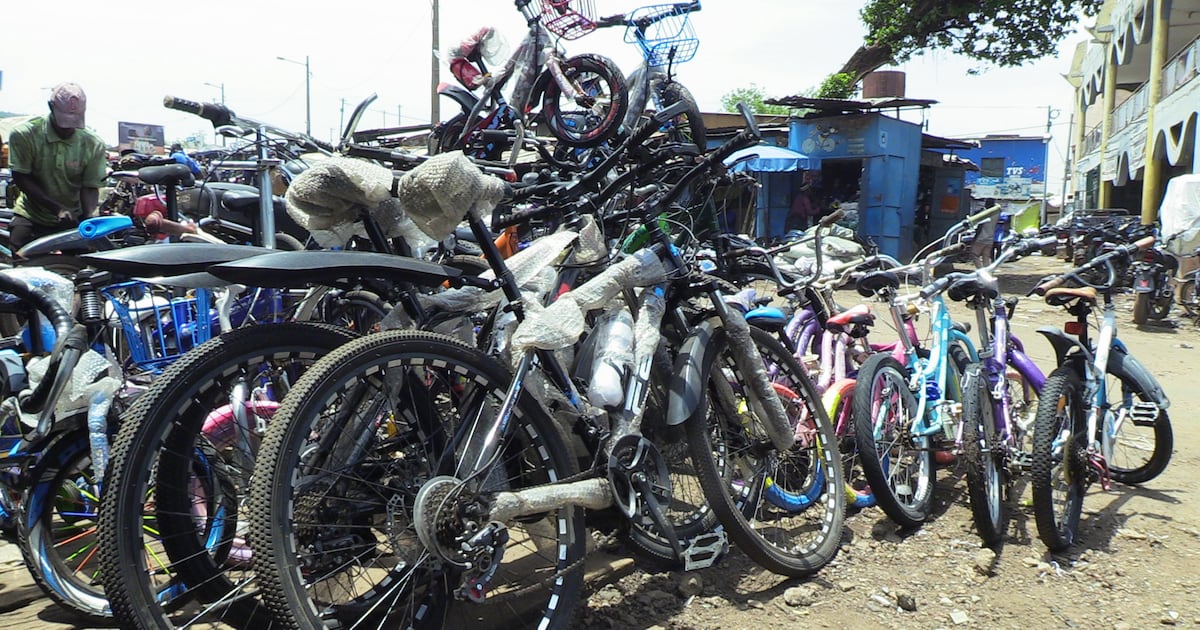
At the bustling Médine market in Bamako, commerce thrives beyond mere transactions. Adama Konaté, a seasoned bicycle vendor, exemplifies this dynamic. He imports two-wheelers from France, the United States, England, Canada, and China, but his role extends far beyond sales. Here, he meticulously repairs and assembles bicycles, catering to a diverse clientele seeking reliable two-wheel transportation.
The market’s section known as ‘Diguèbakonona’ is a treasure trove for both urban dwellers and rural farmers. Beyond bicycles, Adama stocks a wide range of vehicle accessories. More notably, the area has become a go-to destination for hard-to-find agricultural equipment, bridging gaps in local supply chains.
Artisans shaping livelihoods at Médine
Adjacent to Adama, Drissa Traoré crafts a variety of essential goods. His workshop produces locally made stoves, dowry chests, peanut grinders, and ovens. Since relocating to the new Médine market a year ago, his business has flourished. “My income has improved significantly,” he shares. “Prices vary based on the equipment, but customers are satisfied with the quality.” With gratitude, he acknowledges the market’s role in transforming his economic prospects. “I urge young people to embrace discipline and hard work,” he advises aspiring entrepreneurs.
Agricultural equipment: a seasonal lifeline
Fousseyni Sangaré specializes in agricultural tools, a critical trade ahead of the rainy season. Farmers flock to Médine to purchase plows, hoes, and other soil-working implements. “This year, logistics challenges due to regional insecurity have made deliveries difficult,” he explains. Most of his stock originates from Koutiala, a key agricultural hub in southern Mali. Despite economic pressures, loyal customers continue to support his business, a testament to the market’s resilience.
Adama Konaté reflects on his 27-year journey in the bicycle trade. “From repairs to assembly, I’ve adapted to meet demand,” he says. The market’s growth, he notes, has been fueled by the ongoing fuel crisis, which has driven more Malian households to adopt bicycles as a practical alternative. His inventory spans multiple models, each priced competitively to suit varying budgets.