After three years of standoff, the Bénin and Niger are inching closer to resolving their border dispute. A joint expert committee has finalized a draft agreement addressing security, transit, legal, and economic concerns. While progress is tangible, Niamey has set three non-negotiable conditions that must be met before political ratification can proceed.
Niger’s tough stance on border reopening
Nigerian authorities have made it clear: the frontier will remain closed until its demands are satisfied. These include:
- A formal defense pact guaranteeing mutual non-aggression and prohibiting either nation from using its territory to destabilize the other.
- Creation of a joint intelligence-sharing cell to monitor terrorism and cross-border trafficking in real time.
- Full transparency regarding foreign military presence near the border, a move tied to sovereignty concerns.
For Régis Hounkpè, executive director of InterGlobe Conseils, these conditions reflect prudent caution rather than hostility. « These clauses are standard for regional stability, but their explicit formalization in this context is unprecedented after years of tension. The implementation will require diligence from both sides to ensure these commitments aren’t just symbolic. »
economic fallout of the closed frontier
The closure has crippled Niger, an inland nation where 70% of imports—including fuel, construction materials, and food—pass through Bénin’s Port of Cotonou. Alternative routes via Nigeria or Togo are not only longer but exponentially costlier, with logistics expenses surging 30–50% since 2023.
The stakes are even higher for the Niger–Bénin oil pipeline, a 2,000 km artery transporting 90,000 barrels daily from Agadem to Sèmè-Kpodji. Suspended flows have cost Niger millions in lost revenue—funds critical for a country grappling with post-coup economic strain.
Bénin isn’t spared either. The port’s congestion has slashed transit revenues by up to 60% in some sectors, while displaced trade has weakened its reputation as a West African logistics hub. Trucking, wholesale commerce, and logistics firms have borne the brunt, with some businesses shuttering entirely.
human cost of the blockade
The crisis extends beyond ledgers. At border towns like Malanville and Gaya, markets are half-empty, shopkeepers have closed storefronts, and families face severed connections. Alternative routes via Nigeria inflate prices for staples like rice, while hazardous river crossings and exorbitant transport fees isolate communities. Vulnerable groups, including women and children, are particularly exposed to exploitation and smuggling networks.
a pragmatic path forward
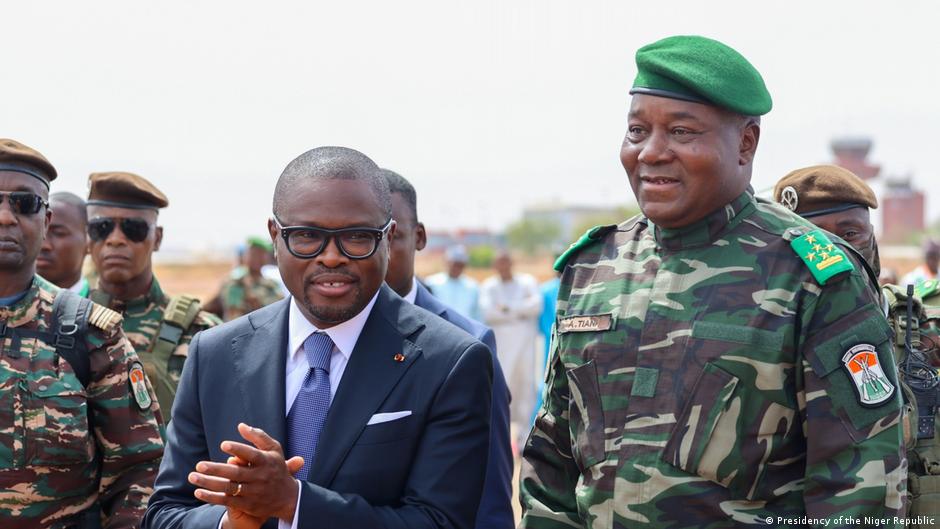
The impasse began to thaw with Romuald Wadagni’s election in Bénin. Days after his inauguration, he visited Niamey, kickstarting talks that culminated in the expert committee’s findings. Régis Hounkpè argues that economic survival now outweighs geopolitical posturing. « Leaders today are bound by geography. They have no choice but to collaborate—whether on security, logistics, or counterterrorism. Ideology must yield to pragmatism. »
While the generals in Niamey and Cotonou navigate these demands, a phased reopening is likely. Priority goods could resume transit under heightened monitoring, easing pressure on both nations. If successful, Hounkpè believes this thaw could inspire broader regional cooperation—much like the recent détente between Mali and Côte d’Ivoire, driven by economic imperatives over political alignment.