Benin-Niger border thaw: a glimmer of hope for economic revival
After three years of a closed border, a joint expert committee from Benin and Niger has delivered promising conclusions, raising hopes for a thaw in relations. Though progress has been made on security, transit and legal frameworks, Niamey has set three non-negotiable conditions that must be met before political ratification can proceed.
Niamey’s three red lines
Nigerian authorities have outlined three non-negotiable prerequisites for a durable reopening of the Benin-Niger border, closed since 2023. The first demands a formal defense and security pact between both nations, explicitly banning mutual aggression and forbidding either country from allowing its territory to be used for destabilizing the other.
Régis Hounkpè, senior analyst and executive director of InterGlobe Conseils, views this as a natural expectation: « Of course, Benin will not attack Niger, just as Niger will commit to not attacking Benin. This is standard practice, but given the three-year freeze in relations, it takes on special significance. The real test will be how these commitments are implemented in practice—both sides must ensure these clauses are enforced in good faith. »
The second condition involves establishing a joint intelligence-sharing cell to monitor terrorism and cross-border trafficking in real time, a move Hounkpè praises as mutually beneficial: « It’s crucial that this mechanism ensures neither side can use it to orchestrate destabilization efforts. »
The final requirement addresses transparency regarding foreign military presence along the Benin side of the border. « This touches on sovereignty, » Hounkpè notes. « President Wadagni has repeatedly affirmed Benin’s sovereignty in choosing its international partners—whether France, China, Russia, Turkey, or others. The key is that these alliances aren’t weaponized to undermine Niger’s stability. Pragmatically, no country benefits from exporting instability. »
Economic fallout of the blocked border
For landlocked Niger, the closed border has crippled its primary trade corridor. Nearly 70% of Niger’s imports—including fuel, construction materials, and food staples—flow through Benin’s Port of Cotonou, shared by other West African Economic and Monetary Union members like Mali and Burkina Faso. Alternative routes via Togo or Nigeria are longer, riskier, and up to 50% more expensive, driving up costs for businesses and consumers alike.
The stakes are even higher for Niger’s oil sector. The 2,000 km Agadem-Sèmè-Kpodji pipeline, operational since 2023, has seen exports suspended due to the tensions, depriving Niger of millions in daily revenue. With no viable alternative export routes, the economic hemorrhage is unsustainable for Niamey’s budget.
Benin isn’t spared either. The port’s logistical congestion—caused by diverted containers—has slashed customs revenues by up to 60% in some sectors, while transport firms and wholesalers face steep losses. Traders in border towns like Malanville and Gaya report halved customer traffic, with markets shrinking and livelihoods at risk.
>Populations bear the brunt
The crisis extends beyond commerce. Families separated by the closed border face steep travel costs, dangerous pirogue crossings, and disrupted supply chains that have inflated food prices by 20-30% in some regions. Vulnerable communities, especially in border areas, grapple with isolation, precarious living conditions, and a surge in petty crime and smuggling networks.
« Micro-level impacts are severe, » Hounkpè observes. « Traders and transporters who lost three years of income now face an uphill battle to recover. Markets that once thrived are nearly empty, and the human cost—broken families, lost jobs—is incalculable. »
Why cooperation is inevitable
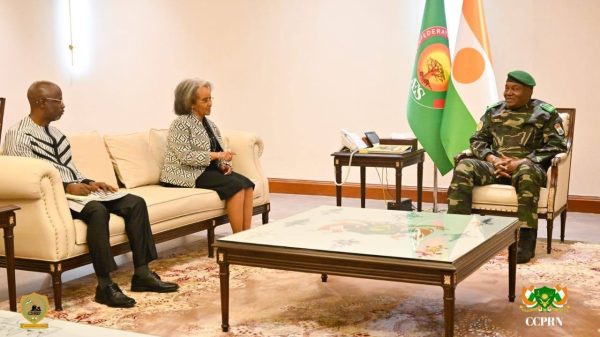
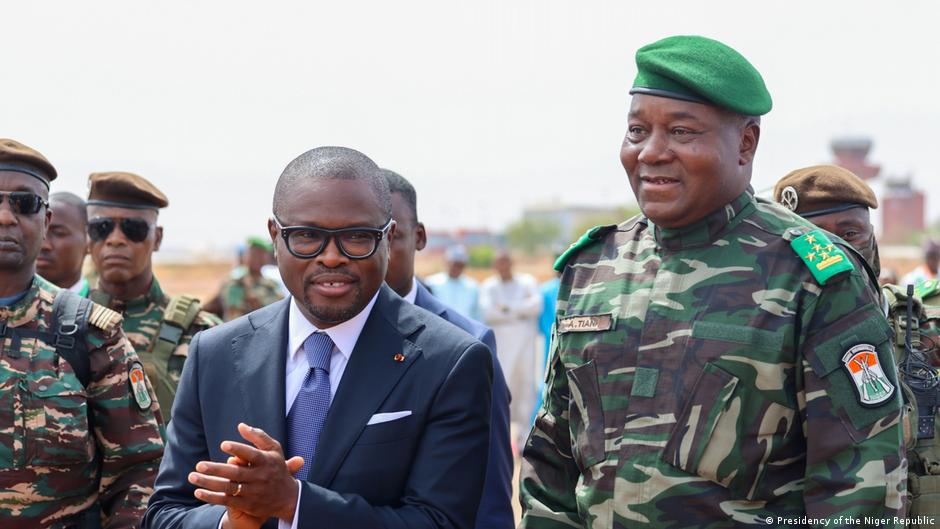
Economic survival, not ideology, has forced both nations back to the negotiating table. Benin’s new President Romuald Wadagni prioritized the thaw within days of his inauguration, visiting Niamey on June 2, 2026, to jumpstart talks. The joint expert committee’s progress reflects this urgency.
Hounkpè emphasizes the « geographic determinism » binding Benin and Niger: « Their leaders are now forced to collaborate—not out of choice, but necessity. Survival dictates cooperation on logistics, security, and counterterrorism. The alternative is economic collapse for both. »
While political distrust lingers from the 2023 coups in both countries, the pragmatic path forward likely involves a phased reopening, starting with high-priority goods under stricter controls. If successful, Hounkpè predicts ripple effects across the Economic Community of West African States (ECOWAS) and the Alliance of Sahel States (AES), mirroring recent détente between Mali and Côte d’Ivoire driven by economic pragmatism, not ideology.
« This could set a precedent, » he concludes. « A reminder that when economies scream for relief, politics must yield. »