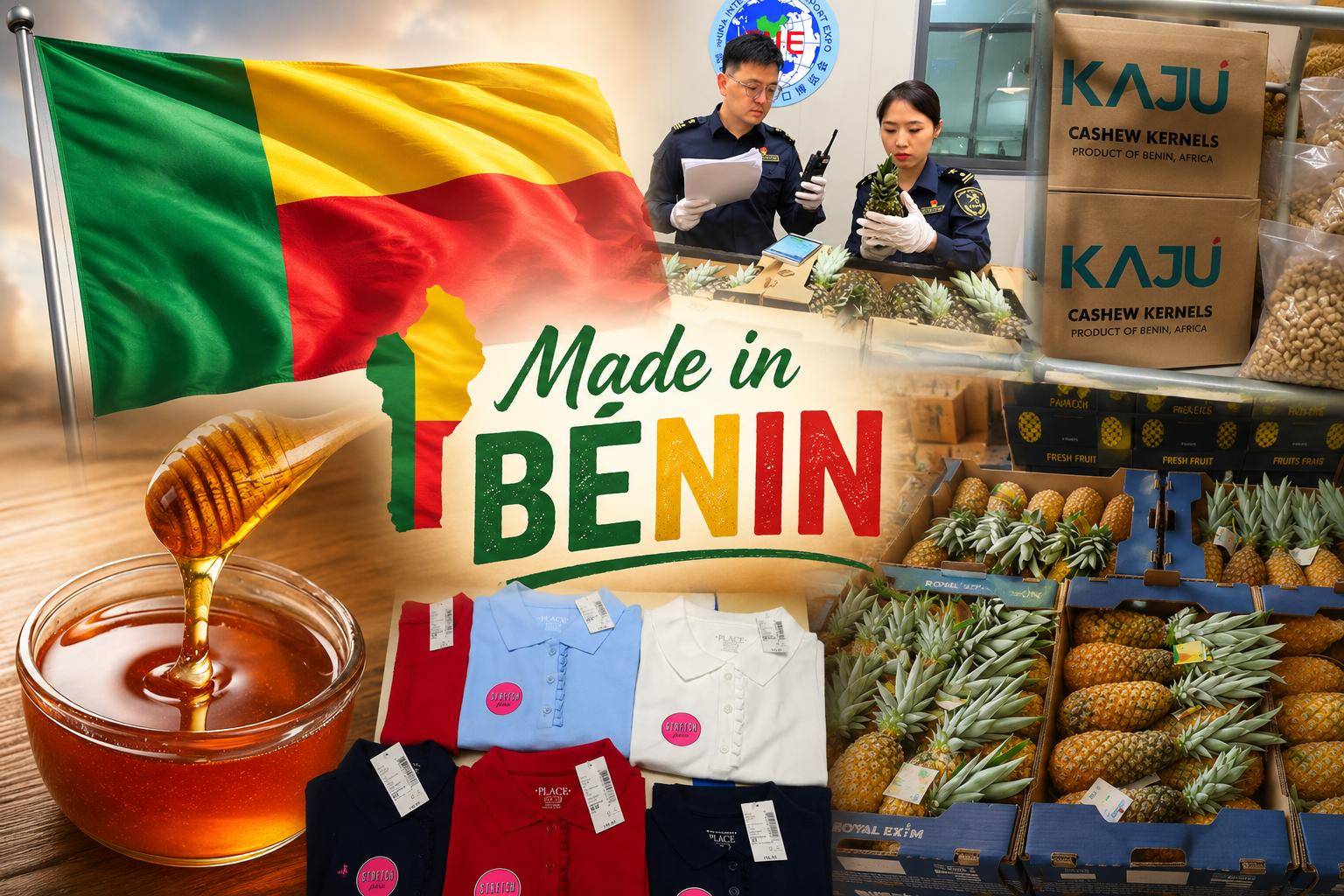
From local farms to international tables: Benin’s green revolution
The lush landscapes of Benin are now yielding more than just crops—they’re cultivating economic transformation. Once confined to domestic and regional markets, Beninese agricultural products like the famed Pain de Sucre pineapple from Allada, organic soybeans from the Ouémé Valley, and premium honey from the northern highlands are making waves on the global stage. This remarkable shift stems from a deliberate government strategy under President Patrice Talon to break through stringent international trade barriers, particularly those imposed by the European Union and China.
Breaking barriers: The international standards challenge
Exporting agricultural goods is no small feat—it’s a rigorous battle against ever-evolving international norms. Benin faced this reality head-on when its pineapple exports to Europe were suspended in 2017 due to compliance issues. Rather than retreat, the nation revamped its entire approach. The government invested heavily in upgrading national laboratories, including the Beninese Agency for Food Safety (ABSSA), to meet the exacting standards of Western and Asian markets.
These structural reforms paid off. Benin secured critical certifications that now grant its products seamless access to lucrative overseas markets. Today, Beninese exports are celebrated not just for their flavor but for their traceability, safety, and premium quality—qualities that resonate with discerning international buyers.
Honey: Benin’s golden ticket to European markets
The turning point came in February 2018 when the European Commission granted Benin official approval to export its honey. This landmark decision validated the country’s commitment to sustainable, biodiversity-friendly apiculture—a practice deeply rooted in the rural landscapes of northern and central Benin. The golden honey, prized for its therapeutic benefits and unique floral notes, is no longer a local delicacy but a luxury commodity commanding premium prices abroad.
For Beninese beekeepers, this shift has been transformative. Stable, remunerative pricing has turned apiculture into an attractive career for rural youth, breathing new life into communities that once grappled with economic uncertainty. The honey’s success story underscores how strategic certification can elevate a traditional product into a global contender.
Diversified champions: Pineapples, soybeans, and cashews lead the charge
The Pain de Sucre pineapple from Allada achieved another milestone in October 2021 when it earned Protected Geographical Indication (PGI) status from the African Intellectual Property Organization (OAPI). Recognized for its exceptional sweetness, this pineapple now graces fresh produce aisles and premium juice markets across the West, carrying the banner of Beninese freshness and quality.
Meanwhile, the soy industry is thriving, particularly in the organic segment. The Glo-Djigbé Industrial Zone (GDIZ) has enabled Benin to move beyond raw bean exports, offering processed, high-value products that fetch higher margins. Even the cashew sector is undergoing a transformation—by phasing out raw nut exports, Benin is now processing and adding value domestically, creating thousands of jobs and ensuring greater revenue retention within the country.
Rural revitalization: The human impact of Benin’s agricultural boom
The benefits of this export-driven growth extend far beyond macroeconomic indicators. On the ground, farmers are experiencing tangible improvements in their livelihoods. “We now sell our produce with the certainty of a fair price,” shares a soybean farmer from Savalou, highlighting how stabilized income streams have reduced rural precarity.
These reforms have also spurred professionalization in agriculture. Farmers receive training in modern techniques, reduce chemical inputs, and adopt sustainable practices that safeguard the land for future generations. For a nation where over 60% of the active population depends on agriculture, this shift is nothing short of revolutionary—it’s a pathway to balanced trade, foreign exchange earnings, and long-term prosperity.
The “Made in Benin” seal: A mark of excellence
Benin’s agricultural sector has undergone a complete metamorphosis. From the honeyed forests of the north to the sweet plateaus of Allada, the country’s products now carry the prestigious “Made in Benin” label—a symbol of trust, quality, and innovation. This journey, from the 2018 honey certification to the 2021 pineapple recognition, proves that with strategic vision and farmer dedication, Africa can compete—and win—on the global stage. The “Made in Benin” tag is no longer just an identifier; it’s a promise of excellence.