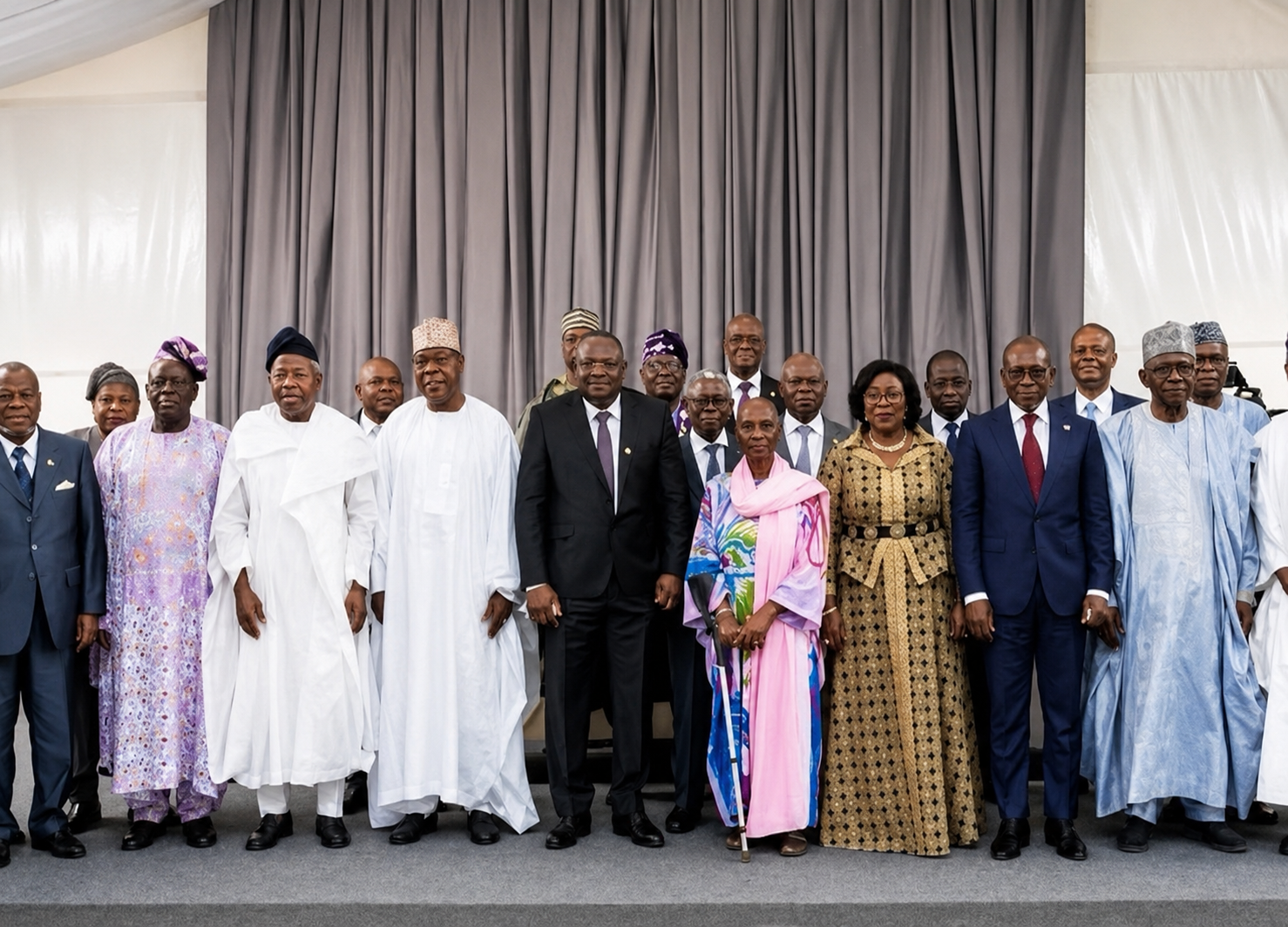
The Birth of a New Institution in Benin’s Political Landscape
The official inauguration of Benin’s first Senate on July 30, 2026, followed by the election of former President Patrice Talon as its president on August 6, marked a significant milestone in the country’s institutional evolution. Established through the constitutional revision of December 17, 2025, this second parliamentary chamber introduces a new dynamic into Benin’s governance structure.
Yet, this institutional milestone has sparked debate. Critics have framed the Senate as a potential “shadow government,” suggesting it could serve as a vehicle for Patrice Talon to retain influence beyond his presidency. However, such interpretations warrant scrutiny against the backdrop of constitutional provisions.
A Constitutionally Mandated Institution, Not a Personal Project
The first point to clarify is that the Senate is not a creation of Patrice Talon. It stems directly from the 2025 constitutional amendment, which redefined Benin’s parliamentary structure by introducing a bicameral system comprising the National Assembly and the Senate. The Constitution explicitly outlines the Senate’s composition, functions, and operational framework.
This distinction is crucial. While the Senate’s creation, composition, or operational methods can be debated, it cannot be dismissed as an ad hoc mechanism designed to extend Talon’s authority. Its existence is rooted in constitutional law, with clearly defined limits and prerogatives.
Patrice Talon’s Role: Political Influence vs. Constitutional Authority
The election of Patrice Talon as Senate president has inevitably fueled speculation about his potential influence. As a former head of state assuming leadership of a new institution, his role naturally raises questions. Yet, it is essential to separate political influence from the constitutional exercise of presidential power.
Patrice Talon completed his two-term presidency in May 2026, when Romuald Wadagni was sworn in as his successor. The transition of power was formalized, and Talon’s new position as Senate president does not equate to a return to the presidency. The Senate president does not hold the same constitutional powers as the head of state, nor does he direct the government or state administration.
The Constitution vests executive authority in the president of the Republic, while the Senate operates as part of the legislative branch. Article 79 of the Constitution explicitly designates Parliament as the body responsible for exercising legislative power and overseeing government actions.
The Senate’s Regulatory Role: A Check on Power, Not a Parallel Government
A key source of confusion lies in the Senate’s regulatory functions. The Constitution assigns it critical responsibilities, including safeguarding national unity, democracy, peace, political stability, and state continuity. It is also tasked with ensuring adherence to political truce and ethical standards in governance.
These duties are substantial and justify public debate. However, they do not transform the Senate into a parallel government. Regulation is not governance, oversight is not administration, and advisory roles do not replace executive functions. The Senate does not replace the president, government, or ministries; it operates within the parliamentary framework and the regulatory mechanisms prescribed by the Constitution.
Legislative Powers with Clear Boundaries
The Senate is not a symbolic institution. Its constitutional prerogatives are significant. Certain categories of legislation including constitutional amendments, electoral laws, and regulations governing political parties require the Senate’s non-objection before enactment. To withhold consent, a two-thirds majority of senators must vote in favor. Silence within the stipulated timeframe is interpreted as tacit approval.
The Senate also has the power to request a second deliberation on laws passed by the National Assembly, with exceptions for budgetary and financial laws. This authority underscores its role as a legislative counterbalance rather than a decorative body.
Yet, it is imperative to distinguish between legislative and executive authority. The Senate’s powers are circumscribed by constitutional limits, ensuring they do not encroach upon the executive’s domain.
A Senate of Experience: Bridging Institutional Knowledge
The Senate’s composition reflects a deliberate effort to integrate institutional experience. The Constitution mandates the inclusion of ex-officio members from past high-ranking positions, as well as appointees with backgrounds in defense and security. If these criteria are not met, additional members are designated to meet the constitutional minimum of 25 senators.
This structure positions the Senate as a forum for dialogue, mediation, and crisis prevention roles that extend beyond mere legislative functions. In a democracy, governance is not solely the domain of majority rule; it also requires mechanisms for consensus-building and institutional resilience. The Senate’s design reflects this philosophy.
The Paradox of Criticism: Influence vs. Constitutional Guardrails
Critics who question Patrice Talon’s potential influence are not entirely off-base. As a former president, he possesses experience, networks, and institutional knowledge that could shape the Senate’s direction. However, this political reality must not be conflated with a legal assertion that he is exercising presidential authority.
The pertinent question is not whether Talon can wield influence clearly, he can but whether that influence can constitutionally substitute for the president’s authority. The answer is no. The Senate’s powers are defined by the Constitution, but they do not include directing administration, formulating government policy, or exercising executive functions.
This distinction is vital. The debate must focus on the texts rather than assumptions.
Political Continuity vs. Institutional Seizure of Power
The transition from Patrice Talon to Romuald Wadagni has been interpreted as a continuation of the same political trajectory. Wadagni, a former finance minister under Talon, won the April 2026 presidential election with over 94% of the vote, reflecting broad continuity in governance.
While this continuity can be critiqued politically, it does not equate to an institutional seizure of power. Democracies often experience political succession without abrupt policy shifts. The true test lies in whether institutions function within their mandates, responsibilities are clearly delineated, and oversight mechanisms operate effectively.
The Ultimate Test: Practical Functioning
As a new institution, the Senate’s efficacy cannot be judged solely by its stated intentions or opponents’ fears. Its performance will be measured by its daily operations: its ability to exercise its powers without becoming a rubber-stamp body, its dialogue with the National Assembly, its relationship with the government, and its use of its legislative tools.
Equally important is adherence to the constitutional obligation of political reserve. Senators are prohibited from acting as political actors or partisans, ensuring their role remains impartial. The Senate’s success will hinge on whether it fulfills its mandate to regulate, mediate, and contribute to institutional stability.
Defining Roles: Executive, Legislative, and Regulatory
The most effective way to dispel misconceptions is to clarify the distribution of responsibilities. The president of the Republic leads the executive branch, the government implements policy, and the National Assembly and Senate collectively form Parliament. The Constitutional Court oversees constitutional compliance and resolves institutional disputes.
Within this framework, Patrice Talon’s role as Senate president does not restore his presidential powers. His political influence may persist, but it does not translate into constitutional authority. The distinction between political influence and institutional power is fundamental.
Moving Beyond Speculation to Evaluation
The debate over the Senate is valid. A new institution must be open to scrutiny and critique. However, such criticism should be grounded in facts rather than conjecture.
The Senate is not an extra-constitutional entity. It is enshrined in the revised 2025 Constitution, endowed with specific powers, and integrated into Benin’s bicameral parliamentary system. Its president is not a de facto president, its powers do not mirror those of the government, and its existence does not diminish the constitutional responsibilities of the head of state.
The real challenge for Benin will be to assess whether the Senate fulfills its constitutional mission: enhancing institutional stability, refining the legislative process, fostering political dialogue, and preserving peace. The era of speculation must give way to an era of evaluation. The Senate is now an institutional reality, and its true value will be determined by its actions and adherence to constitutional limits.