
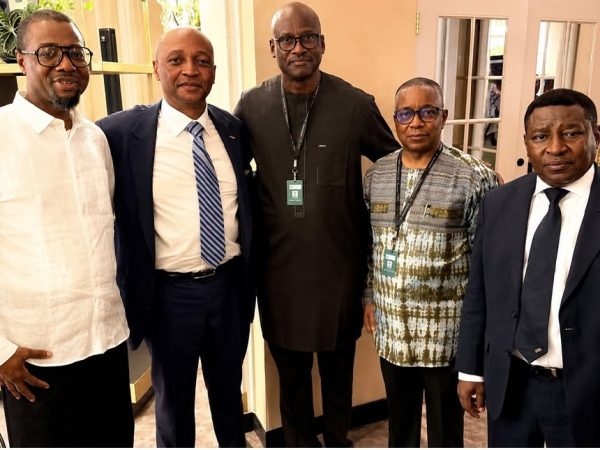
The African Football Confederation (CAF) has officially recognized the joint interest declaration from Burkina Faso, Mali, and Niger to host the 2032 Africa Cup of Nations (CAN). This milestone, confirmed in New York on July 18, marks the beginning of a long journey for the three Sahelian nations—part of the Alliance of Sahel States (AES)—as they now focus on proving their readiness in infrastructure and security.
The historic meeting brought together the presidents of the three national football federations—Colonel Oumarou Sawadogo (Burkina Faso), Mahamadou Cissé (Mali), and Issaka Adamou (Niger)—alongside CAF President Patrice Motsepe. While the declaration’s approval is a necessary administrative step, it does not guarantee eventual hosting rights. The announcement, made public on July 20 by Niger’s Football Federation (FENIFOOT), underscores the trio’s ambition to position themselves as a unified force in African football.
What the CAF’s validation means for the Sahel trio
Under CAF’s candidacy regulations (Article 7.3), the declaration of interest is the first formal hurdle in the bidding process. It allows the three countries to proceed to the next phase, where technical feasibility—including stadiums, hotels, and transportation networks—will be scrutinized. While this step is symbolic, it sets the stage for a rigorous evaluation that could redefine the region’s sporting and diplomatic landscape.
Why the CAF is planning three editions ahead
In early July 2026, CAF opened simultaneous bidding for the 2028, 2032, and 2036 CAN tournaments, giving member associations ample time to develop robust proposals. This long-term strategy aims to stabilize the competition’s future while allowing federations to align their national development plans with continental sporting ambitions. Though the 2032 host decision date remains undetermined, the Sahelian bid will face intense scrutiny over its ability to meet CAF’s stringent standards.
A proven model: lessons from East Africa
The tripartite hosting approach is not unprecedented. Kenya, Uganda, and Tanzania are already set to co-host the 2027 CAN, demonstrating how shared resources can ease the logistical burden. For the Sahel trio, this model offers a blueprint to leverage existing infrastructure rather than shoulder the full cost of a standalone mega-event. CAF’s leadership has praised the initiative as a testament to regional cooperation, though compliance with all procedural requirements remains non-negotiable.
Football as a diplomatic tool for the AES
The joint bid reflects a broader strategic shift among the three countries. Since severing ties with ECOWAS, Burkina Faso, Mali, and Niger have intensified collaborations across sectors—from monetary policy to international diplomacy. A successful CAN 2032 bid would provide the Alliance of Sahel States with a rare global platform, particularly amid ongoing security challenges. Just days before the CAF’s decision, the African Union condemned deadly attacks in Niger and Mali (July 17–18), highlighting the region’s persistent instability.
For CAF, the Sahel’s bid will hinge on two critical pillars: security and infrastructure. The federation’s final judgment will weigh not only the quality of stadiums and accommodations but also the host nations’ capacity to ensure safe conditions for teams and spectators alike.
What’s next for Burkina Faso, Mali, and Niger
The July 18 approval is merely the first chapter in a years-long process. While the trio celebrates this administrative victory, their focus must now shift to compiling a technical dossier that aligns with CAF’s exacting criteria. The real test lies in transforming political unity into tangible preparations—from upgrading venues to securing long-term funding and logistics. Success would not only crown a sporting achievement but also signal the Sahel’s growing influence on the continental stage.
The road to CAN 2032 is fraught with challenges, but for Burkina Faso, Mali, and Niger, the journey itself represents an opportunity to redefine their regional identity—and perhaps, one day, their global standing.
More Stories
Niger South Africa bolster security ties with high-level talks
Prolonged absence of Cameroon’s president paul biya sparks concern
Shocking death of a Togolese dancer in France sparks outrage