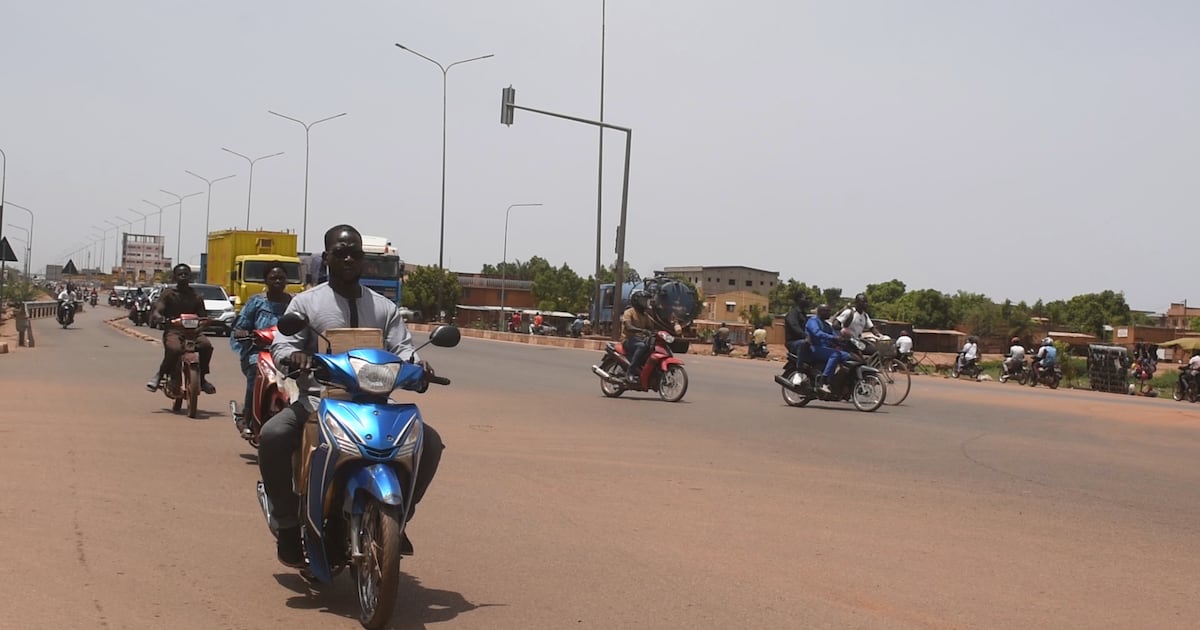
A recent traffic regulation in Burkina Faso, allowing compact Mio motorcycles to utilize designated bicycle paths, has ignited a lively debate among urban commuters. While some residents commend this innovative approach to traffic management, others voice significant concerns regarding its potential impact on safety and the suitability of existing infrastructure.
“I believe this is a sound decision, especially since traffic flow itself is governed by law. If authorities determine that Mio-type motorcycles should join smaller two-wheelers on these narrower lanes, I find that perfectly reasonable,” stated Ben Ouattara, a delivery driver, expressing his approval of the measure.
Mio motorcycles, often referred to as scooters, are characterized by their compact design, lightweight nature, and practicality for urban commuting. They are also favored for their economical maintenance costs, making them a popular choice for many in the city.
For the government, this policy adjustment primarily aims to alleviate congestion on increasingly crowded main roads. By diverting a segment of two-wheeled traffic onto dedicated cycling infrastructure, the objective is to reduce pressure on primary thoroughfares and foster improved coexistence among various road users.
“They’ve surely considered public safety in implementing this. However, it might have been better if things had remained as they were. Bicycle paths are inherently narrow, and consolidating all these motorcycles there could lead to gridlock. Nevertheless, we will observe how this unfolds,” remarked Sirina Ouédraogo, a daily road user, sharing her reservations.
Many Burkinabè citizens, however, contend that this single directive will not sustainably resolve the persistent issue of urban traffic jams. With the continuous proliferation of motorcycles, the broader challenge of urban mobility demands comprehensive solutions, addressing both individual driver behavior and systemic infrastructure needs.
“I think on the bicycle path, people actually become more careful because they feel somewhat constrained. Being in that space encourages more restraint and caution, which can, to some extent, help prevent accidents,” optimistically noted Abdoulaye Mané, another commuter.
Conversely, Sergène Yabré, also a public road user, expressed frustration: “Many people aren’t adequately familiar with traffic regulations. Consequently, some individuals on larger roads don’t realize they’re driving incorrectly. Often, you see women driving, positioned on the left, but intending to turn right. My advice to everyone is to avoid speeding. They seek out the smaller bicycle paths simply because they want to go fast.”
Furthermore, several road users advocate for the expansion of bicycle paths. They argue that these infrastructures, originally designed for pedal bikes, must be upgraded to safely accommodate a higher volume of motorized two-wheelers. Such modernization could significantly enhance traffic organization and potentially offer a viable strategy in the ongoing battle against urban congestion.