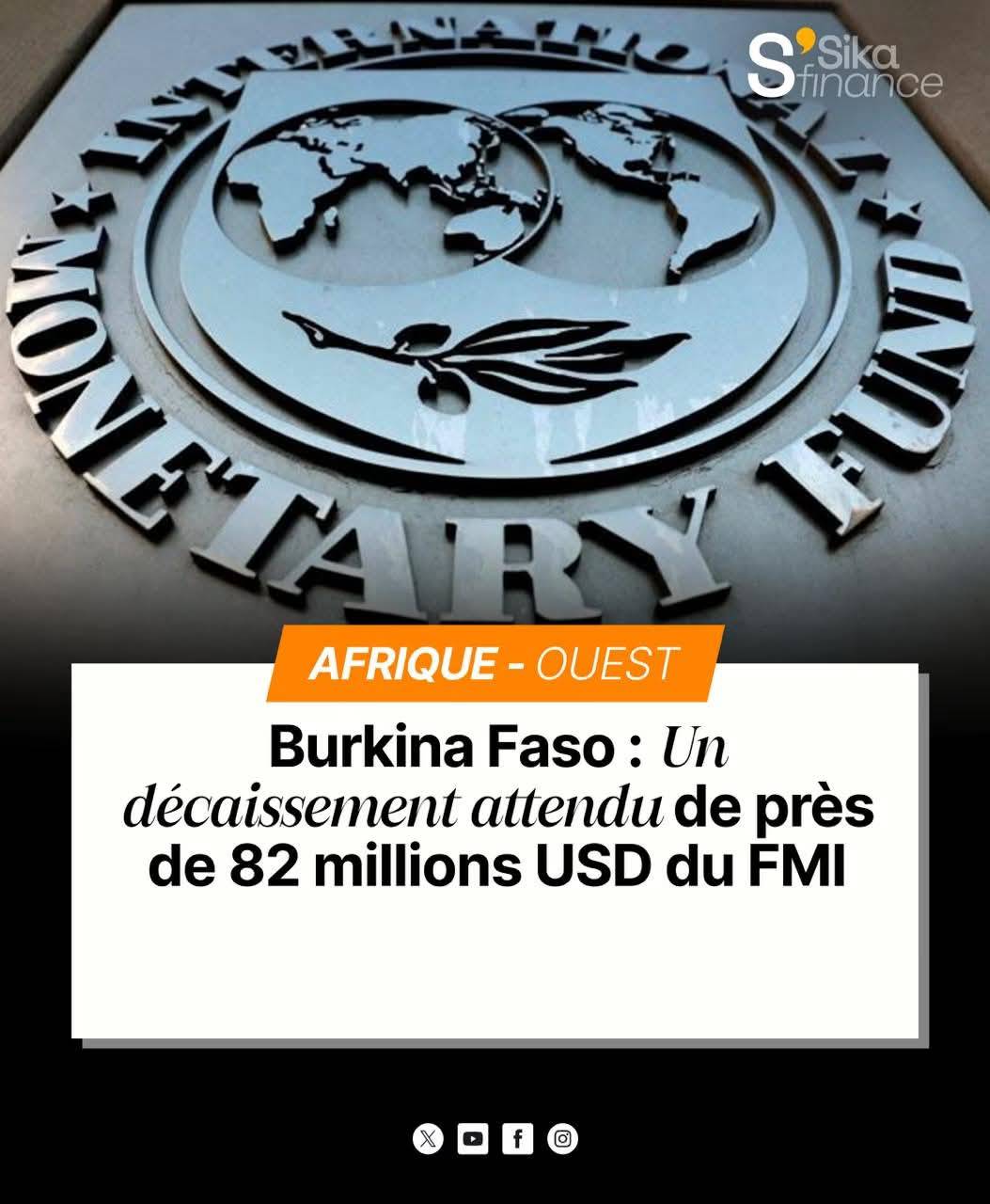
The transitional authorities in Ouagadougou have made headlines with their vocal stance against traditional Western partners, yet the Burkina Faso economy now faces an unexpected lifeline. The International Monetary Fund (IMF) has provisionally approved nearly $82 million in financial support, a move that underscores a complex balance between political rhetoric and economic necessity. This decision follows a technical mission that evaluated the country’s fiscal challenges amid a worsening security crisis.
From technical approval to final disbursement: a critical step
The IMF’s statement confirms the agreement at the staff level, but the funds remain contingent on approval from the Fund’s Executive Board. The 82 million dollars—equivalent to approximately 46.21 billion West African CFA francs—will only reach Burkina Faso if the board deems the country’s commitments viable. This funding falls under the Extended Credit Facility (ECF), designed for nations grappling with prolonged balance-of-payments difficulties.
The procedural hurdle is a stark reminder of how international finance operates: no financial injection is guaranteed until every safeguard is met. The board’s review will scrutinize the feasibility of Ouagadougou’s economic reform pledges, ensuring they align with the IMF’s stringent criteria.
Sovereignty vs. financial pragmatism: a stark contradiction
The military-led transition has positioned itself as a champion of uncompromising sovereignty, severing ties with traditional partners like France and scaling back cooperation with the European Union. Instead, Burkina Faso has pursued new geopolitical alliances, particularly with Russia, to redefine its foreign policy. Yet, when it comes to shoring up the national budget, the limits of self-reliance become glaringly apparent.
The IMF, often criticized by African sovereigntist movements as a tool of Western dominance, now emerges as a crucial financial backer. The paradox is unmistakable: a regime that vocally rejects Western influence must now negotiate with the very institution it critiques to avert economic collapse. The realities of budgetary constraints have forced a pragmatic turn, starkly contrasting with the public discourse of absolute independence.
How insecurity is strangling the economy
The decision to seek IMF assistance wasn’t made lightly. For nearly a decade, Burkina Faso has been ensnared in a relentless security crisis, with armed groups seizing control of vast swathes of territory. The fallout has been catastrophic for the economy. Supply chains are in disarray, agricultural zones are inaccessible, and the mining sector—the backbone of the nation’s wealth—has ground to a halt. The ripple effects are severe: businesses are shutting down or relocating to neighboring countries, leaving unemployment surging and tax revenues plummeting. Without these critical funds, public services and security operations risk grinding to a standstill.
IMF’s tough conditions: a trade-off for survival
Accessing the 46.21 billion francs CFA comes with stringent strings attached. The IMF’s conditions demand rigorous structural reforms, including tighter fiscal policies and improved domestic revenue mobilization. Public expenditure must be streamlined, with subsidies and public sector wages often targeted for cuts. The transitional government, despite its anti-interference rhetoric, must now accept intrusive oversight and periodic performance reviews—a far cry from its stated ideals of autonomous governance.
The path to securing this financial aid lays bare the harsh realities of governing during a deep crisis. Ouagadougou faces an impossible choice: uphold the image of absolute sovereignty or submit to the IMF’s demands to stabilize the economy and fund essential services. If the Executive Board grants its approval, the funds will provide a temporary reprieve. However, the underlying issue remains: without a lasting resolution to the security crisis, Burkina Faso’s economic fate will continue to hinge on international financial institutions it once sought to distance itself from.