Burkina Faso’s humanitarian aid dependency despite sovereignty rhetoric
Despite Captain Ibrahim Traoré’s bold declarations about food self-sufficiency, Burkina Faso remains critically dependent on external aid to feed its population. Recent shipments of rice from Pakistan, China, and Canada highlight the stark contrast between government promises and ground reality, with over 3.5 million Burkinabè now reliant on international charity for basic meals.
The gap between sovereignty claims and food insecurity
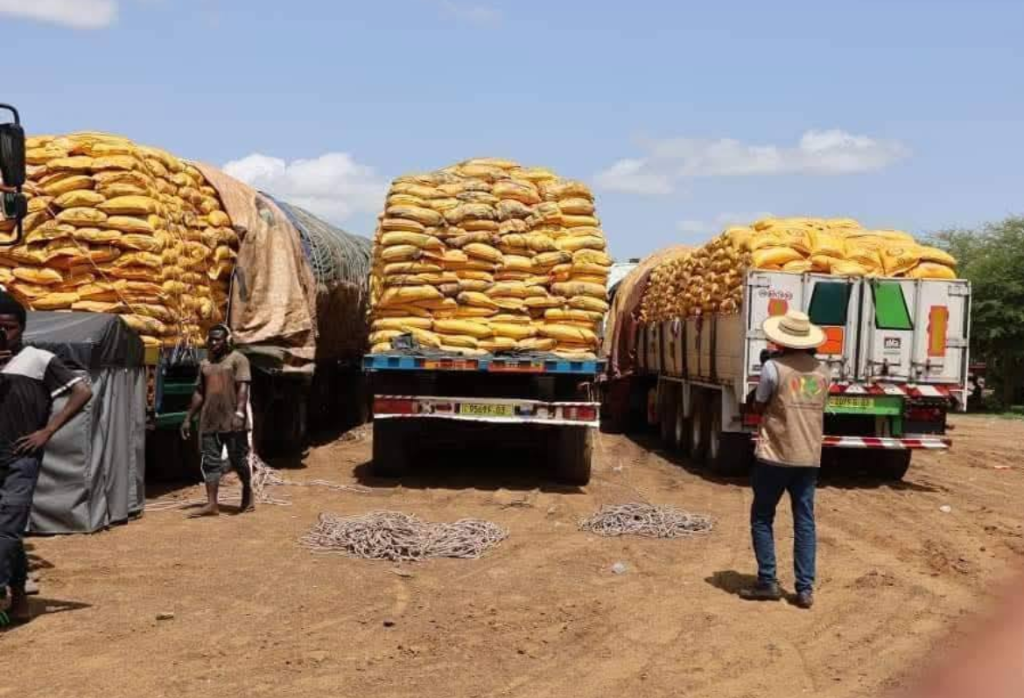
While Burkina Faso’s transitional authorities celebrate partnerships with Pakistan, China, and Canada, these donations underscore the failure of the Mouvement Patriotique pour la Sauvegarde et la Restauration (MPSR) to achieve food stability, nearly three years after its rise to power. Despite slogans about “reclaimed sovereignty,” the country’s food crisis deepens, with 2,422 tonnes of Pakistani rice arriving as just one of many emergency supplies.
Regional aid distribution reveals deeper systemic failures
The donated rice targets northern and eastern regions—areas still under siege by armed groups, disconnected from normal trade routes, and facing severe food shortages. The situation reflects broader structural weaknesses:
- Collapse of local agriculture: Over 2 million internally displaced persons (IDPs) have abandoned farmlands, transforming once-fertile regions into barren fields.
- Rising malnutrition: The Integrated Food Security Phase Classification (IPC) warns that parts of the country are approaching Phase 4 (humanitarian emergency), with over 600,000 children at risk of acute malnutrition by year-end.
- Military-led governance failing rural recovery: The government’s heavy-handed security strategy—including blockades and militarized crisis management—has stifled agricultural revival and eroded trust with international donors.
Transparency and trust issues hinder long-term solutions
Even as aid flows in, concerns grow over distribution efficiency and transparency. The Pakistani rice shipment, managed by the Ministry of Humanitarian Action, faces scrutiny amid allegations of mismanagement and restricted access for aid organizations. Donor confidence is further weakened by Burkina Faso’s low humanitarian response plan funding—only 18% of the 2026 appeal has been met.
The upcoming rainy season offers temporary relief, but Ibrahim Traoré’s government faces mounting pressure to move beyond symbolic gestures. True food sovereignty demands more than televised declarations; it requires securing farmlands, restoring rural economies, and shifting priorities from war rhetoric to sustainable development.