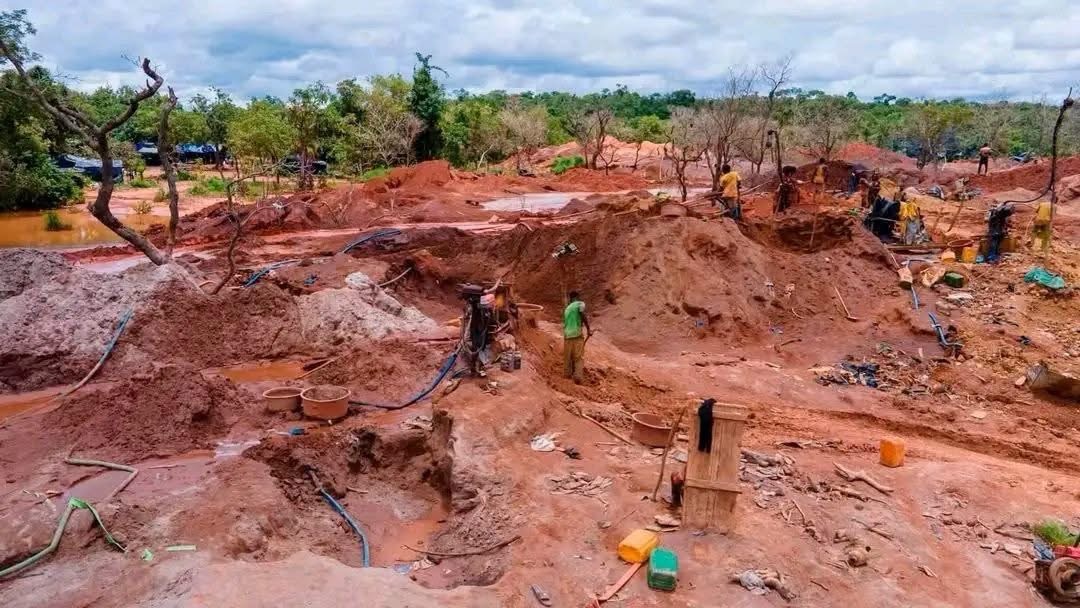
The surge in illegal gold mining across West Africa is now at a critical juncture, with Burkina Faso at the crossroads of environmental accountability and regional cooperation. As its citizens increasingly venture into neighboring countries to exploit unclaimed deposits, the environmental and geopolitical repercussions are becoming impossible to ignore.
Cross-border consequences: when environmental damage transcends national lines
Illegal gold panning is far from a victimless act. Soil erosion, toxic water contamination, and deforestation are among the immediate environmental scars left in its wake. Communities living near mining sites often face irreversible damage to their farmlands, water sources, and livelihoods consequences they never signed up for.
The true irony? These very individuals may soon face similar devastation in their home country if this unchecked trend continues. The question then emerges: why gamble with the environment of others when their own nation’s natural heritage is equally vulnerable?
The shift in regional accountability: beyond discourse into action
While governments have every right to protect their citizens abroad, this duty must not overshadow the rights of neighboring nations to safeguard their own environments. When Burkinabè miners are expelled for illegal activities, the response should not default to objections based on nationality alone.
A balanced approach is non-negotiable. Proportionate penalties for offenders, support for affected communities, and mechanisms for transnational collaboration must replace reactive measures. The protection of natural resources is not a bargaining chip it is a shared responsibility.
From expulsion to introspection: a turning point for sustainable mining
Repatriation spells opportunity a chance for returning miners to confront their actions and for authorities to enforce stricter controls. If illegal panning in foreign lands damages local ecosystems, how long before such practices replicate domestically?
The message is clear: environmental justice cannot be selective. The same ecosystems that sustain farmers, herders, and communities in Côte d’Ivoire or Benin are no different from those in Burkina Faso. No nation should serve as an unregulated playground for resource plunderers.
Solidarity, not impunity: redefining neighborly relations
True regional solidarity begins with mutual respect respect for laws, respect for the environment, and respect for shared futures. Authorities in Burkina Faso must champion compliance not only within their borders but also beyond them.
If Burkina Faso demands justice for its citizens caught mining illegally abroad, it must also accept that neighboring nations demand justice for their plundered lands. Only when this principle is upheld can the region truly shift from exploitation to equitable coexistence.
What tomorrow holds: can Burkina Faso afford to repeat past mistakes?
The environmental clock is ticking. As illegal mining accelerates, the window to reverse course is narrowing. Burkina Faso stands at a decisive moment one that demands decisive action before its own lands face the same fate as those it once exploited.
The choices made today will determine whether this nation leads by example in environmental stewardship or becomes another cautionary tale in the fragile balance between economic desperation and ecological preservation.
By Ramatou Soumana — Journalist