
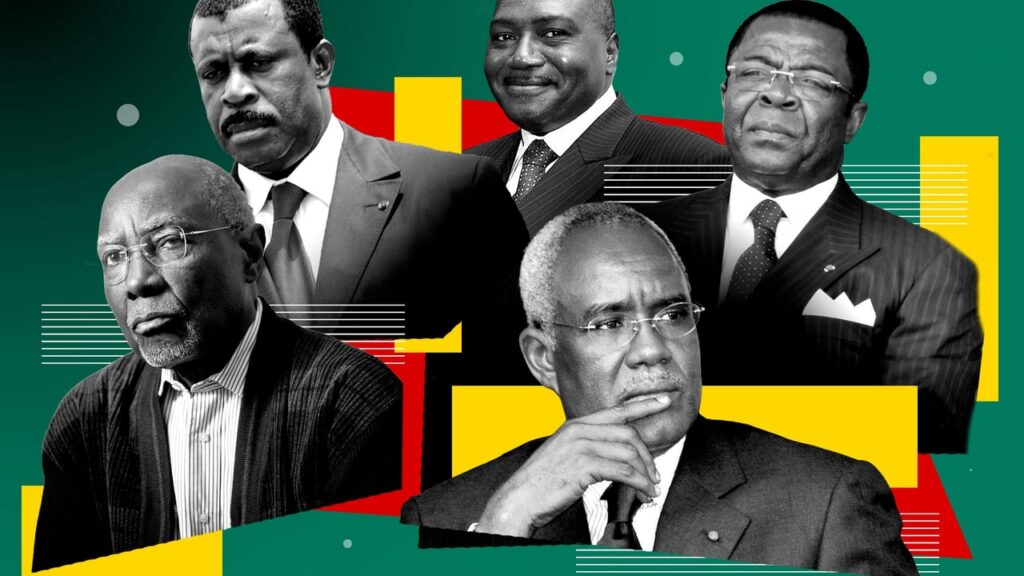
The corridors of Cameroon’s Etoudi Palace have long echoed with the footsteps of powerful figures who once shaped the nation’s political landscape. These individuals, once at the pinnacle of state power, now linger in the shadows of history, their careers abruptly halted by the shifting tides of presidential favor.
The rise and fall of Cameroon’s political heavyweights
Since assuming office in 1982, President Paul Biya has reshaped Cameroon’s political landscape multiple times. His tenure has seen the ascent of influential figures who later faced the harsh reality of political exile. Some dared to challenge his authority or seek to share power, only to find themselves stripped of influence and, in many cases, their freedom.
From power to obscurity: the fate of Cameroon’s elite
The stories of these fallen leaders reveal a pattern of political betrayal and abrupt reversals. Titus Edzoa, Ephraïm Inoni, Jean-Marie Atangana Mebara, Marafa Hamidou Yaya, and Edgar Alain Mebe Ngo’o once held sway over Cameroon’s corridors of power. Today, their names are more often associated with controversy and legal troubles than with political achievements.
Among them, Marafa Hamidou Yaya stands out as a prime example. Once a trusted ally of President Biya, he served as Secretary-General at the Presidency and Minister of Territorial Administration. His downfall came after accusations of embezzlement and abuse of power. Similarly, Ferdinand Ngoh Ngoh rose through the ranks as a close collaborator of the President before being implicated in corruption scandals that tarnished his legacy.
The Etoudi phenomenon: why do allies turn into adversaries?
The Etoudi Palace, seat of Cameroon’s presidency, has become synonymous with both political ascension and dramatic downfalls. The palace’s inner circle has witnessed numerous cycles of loyalty and betrayal, where long-standing allies are suddenly cast aside when their loyalty is questioned or their ambitions deemed threatening.
This recurring pattern raises critical questions about the nature of power in Cameroon. How does a system that once celebrated these individuals as pillars of the state now reduce them to political outcasts? The answer lies in the fragile balance of power that defines Cameroonian politics, where loyalty to the presidency is both a virtue and a fleeting currency.
Lessons from Cameroon’s political history
The saga of Cameroon’s fallen leaders serves as a cautionary tale for aspiring politicians. It underscores the volatility of political alliances in a system where power is concentrated at the top. For those who have tasted the heights of political influence, the fall can be swift and merciless, leaving little room for redemption or second chances.
The legacy of these individuals is a stark reminder of the ephemeral nature of political power in Cameroon. Their stories are etched into the nation’s political history, serving as a testament to the enduring influence of the Etoudi Palace and the man who has steered its destiny for decades.


More Stories
Cameroon’s fallen leaders: the shadows of Etoudi palace
Benin conference highlights human-centered reforms and political stability
Niger and ECOWAS seek to resolve diplomatic tensions