
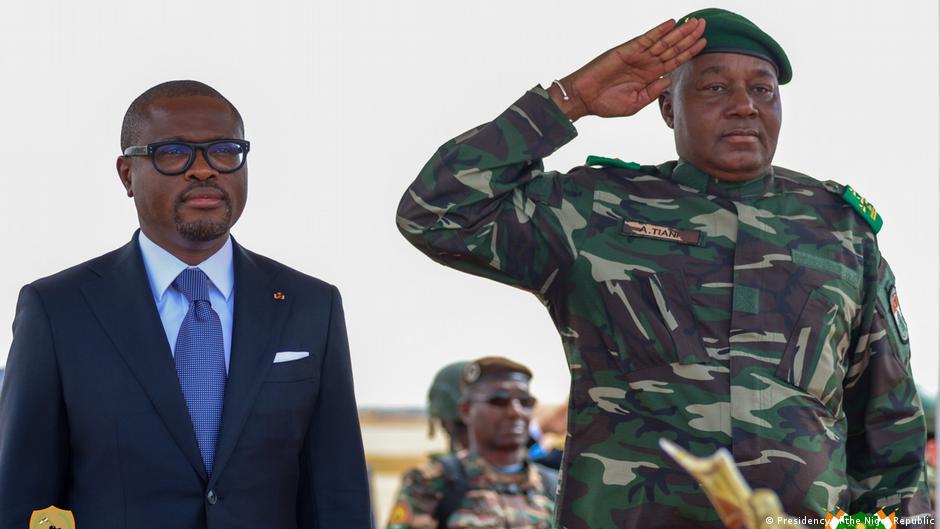
Three years after the overthrow of President Mohamed Bazoum, Niger’s military leadership continues to face strained relations with the Economic Community of West African States (ECOWAS), which initially condemned the coup. The standoff has raised questions about how to restore trust and open channels for dialogue between Niamey and the regional bloc.
From ultimatum to regional alliance
In the wake of the July 2023 coup, ECOWAS demanded the reinstatement of Bazoum and imposed sanctions, even threatening military intervention. However, its stance was met with strong opposition from neighboring Mali and Burkina Faso, both under military rule at the time. Their solidarity with Niger led to the formation of the Alliance of Sahel States (AES), marking a clear break from ECOWAS. Though the three nations officially withdrew from the bloc in January 2025, informal discussions persist between both sides.
Kouyaté’s mediation role
The appointment of former Guinean Prime Minister Lansana Kouyaté as the primary mediator by ECOWAS signals a potential shift in negotiations. International affairs analyst Pape Ibrahima Kane notes that Kouyaté’s leadership could help bridge divides, particularly as the discussions during the recent ECOWAS summit in Freetown focused on regional security concerns. “This marks the beginning of a promising process. Both parties are aligned in their willingness to engage in meaningful dialogue,” he explains.
Kane highlights a key challenge: Niger’s reliance on Nigeria and Benin for electricity and access to the Port of Cotonou. He believes Kouyaté will address these dependencies while balancing the demands of the AES and ECOWAS.
New leadership, renewed hope
The election of Bassirou Diomaye Faye as ECOWAS chair and the rise of Romuald Wadagni in Benin have injected fresh momentum into diplomatic efforts. Both leaders have prioritized engagement with the AES, with Wadagni making Niger his first official visit after taking office. Analysts view their approach as more pragmatic compared to previous regional leaders, signaling a potential easing of tensions.
“Unlike their predecessors, who faced accusations of bias, Faye and Wadagni are better positioned to foster trust. The new leadership in Abuja is also expected to roll out a less confrontational agenda,” Kane remarks.
Bazoum’s detention and EU’s balancing act
The ongoing detention of former President Mohamed Bazoum remains a sticking point. His advisor, Sahanine Mahamadou, argues that the military’s refusal to engage in dialogue undermines Niger’s stability. “If these leaders are truly patriots, they must pave the way for civilian governance. Times have changed, and military rule is no longer sustainable in our states,” he asserts.
The European Union faces its own dilemma: upholding democratic values while maintaining ties with Niamey. Jérôme Pigné, founder of a Sahel security think tank, suggests Brussels must strike a balance. “Bazoum’s illegal detention complicates EU-Niger relations, but dialogue remains essential. Europe cannot afford to ignore the Sahel,” he states.
While the EU reconsiders its cooperation framework with the Sahel, analysts warn against expecting immediate behavioral shifts from military regimes. Strengthening security partnerships—through intelligence sharing, military aid, and training—could be a more viable path forward.


More Stories
Sonko’s sharp critique of Senegal’s imf deal stirs debate
Cameroun : prendre des mesures incitatives pour booster les inscriptions sur les listes électorales
DRC’s new inclusive national dialogue: what outcomes can be expected?