Russia-Africa summit 2026: Mali steps forward while Sahel partners waver
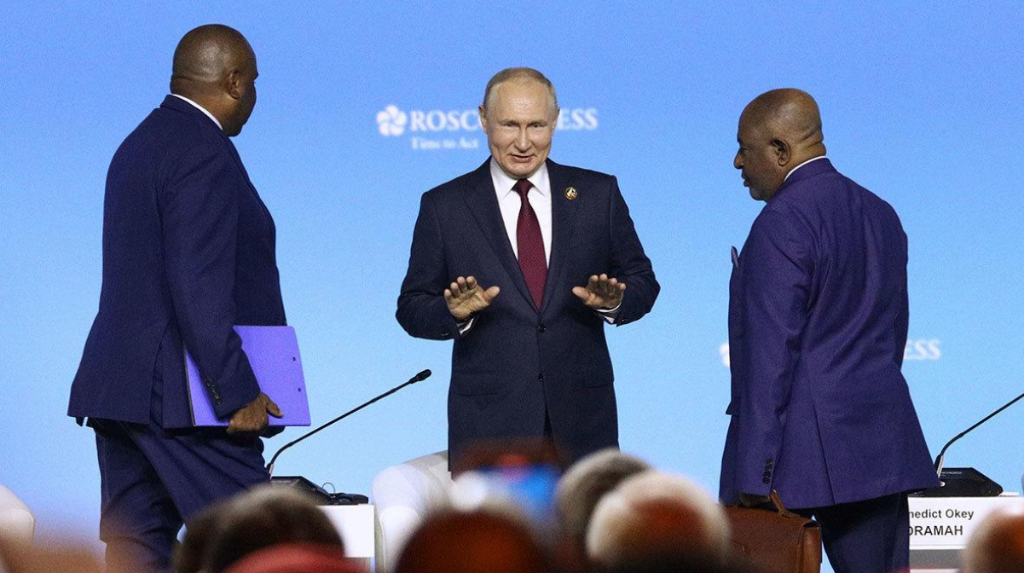
The third Russia-Africa summit in Moscow on October 28-29, 2026, is unfolding with a striking contrast in Sahel representation. As West African leaders deliberate over trade, energy, and security partnerships, Mali’s transitional president Assimi Goïta stands out as the only regional head of state personally attending the high-profile gathering. His arrival signals a pivotal moment for the Alliance of Sahel States (AES), even as its other members leave their presence open to interpretation.
Mali’s Goïta claims center stage at Kremlin summit
General Assimi Goïta landed in Moscow on October 26 at the head of Mali’s official delegation, confirming his attendance through multiple sources. Official statements and media reports detail his arrival procedures and subsequent meetings with Russian President Vladimir Putin, underscoring Bamako’s commitment to strengthening ties with Moscow. With Goïta’s physical presence documented, Mali emerges as the only AES member represented by its supreme leader.
This unprecedented move positions Mali as the most visible Sahel partner in Russia’s diplomatic outreach, raising questions about the future cohesion of the AES and its strategic alignment with Moscow.
Burkina Faso’s second-tier delegation exposes diplomatic divides
While Burkina Faso’s participation had been announced early by Russian authorities, the absence of Captain Ibrahim Traoré raises eyebrows. Instead, Ouagadougou dispatched Prime Minister Rimtalba Jean Emmanuel Ouédraogo, who arrived in Moscow ahead of the summit’s launch. Though the delegation maintains Burkina Faso’s official role in discussions, Traoré’s failure to appear personally strips the country of top-level visibility and potential bilateral momentum.
The shift to a prime minister-led delegation may reflect internal priorities or logistical considerations, but it unmistakably signals a retreat from the high-profile engagement Mali has embraced.
Niger’s uncertain presence creates regional uncertainty
The case of Niger remains particularly ambiguous. Russian officials had also announced the participation of General Abdourahamane Tiani, yet public records as of October 28 offer no confirmation of his arrival. Without an official denial, speculation lingers—is Tiani delayed, reconsidering, or arriving under cover of silence? The uncertainty leaves the AES’s third member in diplomatic limbo, casting shadows over its strategic consistency.
A broader African stage overshadows Sahel tensions
The Moscow summit draws leaders from across the continent, with 48 of Africa’s 54 states confirming participation. Among the confirmed attendees are Évariste Ndayishimiye of Burundi (current AU chair), Emmerson Mnangagwa of Zimbabwe, John Dramani Mahama of Ghana, Daniel Chapo of Mozambique, Salva Kiir of South Sudan, Isaias Afwerki of Eritrea, Teodoro Obiang Nguema Mbasogo of Equatorial Guinea, and Denis Sassou-Nguesso of Congo. These figures represent a diverse range of regional alliances and diplomatic traditions, underscoring Russia’s ambition to engage Africa beyond its traditional spheres of influence.
Yet the presence of high-level delegations varies widely. Algeria sent Prime Minister Sifi Ghrieb, while Uganda dispatched Vice President Jessica Alupo in place of Yoweri Museveni. Rwanda’s delegation arrived led by Prime Minister Justin Nsengiyumva, excluding President Paul Kagame. South Africa’s representation fell to Zane Dangor, director-general of international relations, bypassing Cyril Ramaphosa entirely.
Six missing voices: Where’s the full African lineup?
Despite claims that 48 nations have confirmed attendance, six states remain absent from the Kremlin’s tally. Without clear official explanations, the motivations behind these gaps—whether political, logistical, or strategic—remain speculative. This ambiguity complicates efforts to gauge Africa-Russia relations as a whole, leaving analysts to parse the significance of each absence.
Whether these countries refrained from participating entirely or opted for lower-profile representation, their silence speaks volumes about evolving priorities on the continent.
Diplomatic optics meet concrete partnership opportunities
For the AES, the contrast between Mali’s bold leadership and its partners’ cautious approaches carries weight. While Goïta’s presence broadcasts Bamako’s intent to deepen ties with Russia, Traoré’s and Tiani’s situations hint at hesitation or internal realignment.
The summit’s real test, however, lies not in photo opportunities but in binding agreements. Moscow has unveiled a new cooperation framework for 2027-2029, addressing trade, energy, agriculture, security, and investment. The AES’s ability to extract tangible benefits from these discussions will determine whether Mali’s strategic gamble pays off—or exposes deeper rifts within the alliance.
As the event unfolds, the world watches to see whether this summit marks the beginning of a new era for the Sahel in Russia’s orbit or merely a fleeting moment of dissonance.