
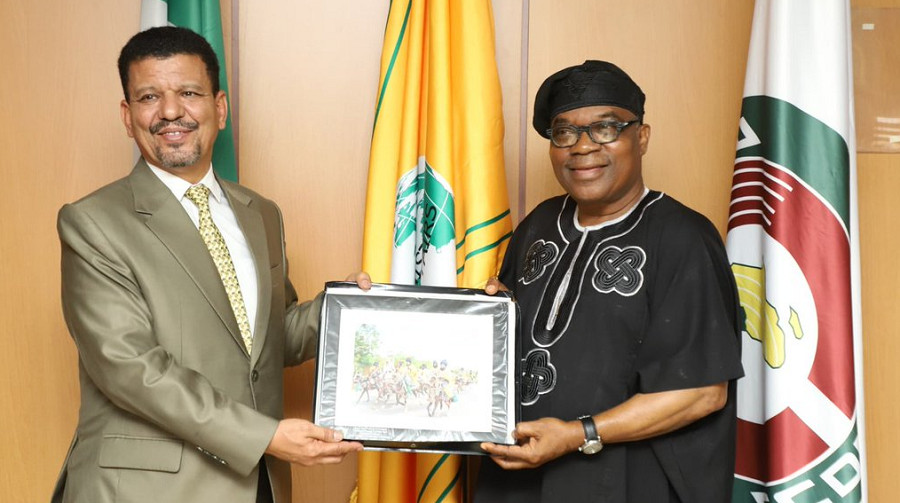
The recent reaffirmation of Nigeria’s recognition of the Sahrawi Arab Democratic Republic (SADR) by President Bola Ahmed Tinubu’s administration is far more than a routine diplomatic gesture. By publicly endorsing the principles of self-determination, decolonization, and respect for colonial-era borders, Abuja has sent a clear message to Rabat: the Western Sahara issue remains unresolved, despite Morocco’s attempts to portray it as closed.
During a high-level meeting in Abuja, Mohamed Yeslem Beissat, the Sahrawi envoy to Nigeria, delivered a letter from President Brahim Ghali to his Nigerian counterpart. The discussions highlighted the deep historical ties between the two nations and their shared commitment to reinforcing bilateral cooperation—all while upholding the foundational principles of the African Union, which enshrine the right of peoples to self-determination as a cornerstone of continental unity.
This stance carries significant weight in the context of Morocco’s longstanding narrative about the proposed Nigeria-Morocco gas pipeline. For years, Rabat has framed the project as a strategic partnership that could reshape West Africa’s energy landscape. Yet Nigeria’s unwavering support for the SADR underscores a critical reality: economic cooperation with Morocco has never equated to political alignment on Western Sahara.
The Nigerian government’s position dismantles Morocco’s claims that the gas pipeline symbolizes a broader political convergence with Abuja. While officials in Rabat frequently tout the project’s potential, its astronomical costs, unresolved security risks, financing hurdles, and vast geographical challenges have long cast doubt on its feasibility. In this light, Nigeria’s refusal to abandon its recognition of the SADR serves as a powerful rebuttal to those predicting a diplomatic shift in Abuja’s favor.
Beyond Nigeria, the Sahrawi leadership continues to strengthen its diplomatic footprint across Africa. As a founding member of the African Union, the SADR maintains an active engagement with member states to preserve the continent’s long-standing consensus in favor of Western Sahara’s decolonization and the resumption of UN-led political negotiations. Recent diplomatic exchanges with multiple African capitals reflect a renewed effort to reinforce historical alliances and remind the world that, for many African nations, the Western Sahara question remains an unfinished chapter of decolonization—one governed by international law.


More Stories
Is Chad truly heading towards political appeasement?
Bradley Barcola will adapt faster than Florian Wirtz at Liverpool, says Jermaine Pennant
Togo eyes nuclear power to secure future energy sovereignty