The Cameroon liquefied petroleum gas (LPG) market takes a significant step forward with the launch of a competitive bidding process on September 1, 2026, for 60,000 metric tons of LPG. The tender, signed by Okie Johnson Ndoh, Chair of the ad hoc Commission for Petroleum Product Imports (CIPP), divides the volume into two distinct lots: 35,000 and 25,000 tons respectively. Officially, the initiative aims to meet the consumption needs for the 2026 fiscal year.
Prospective bidders can collect application files at the headquarters of the Hydrocarbon Price Stabilization Fund (CSPH), located at the Warda crossroads in Yaoundé. The evaluation and awarding of bids will take place on September 8 at noon, also in Yaoundé. As of now, no details are available regarding the estimated market value, the origin of the products, or transportation arrangements—these will be determined following the technical review of the proposals.
Volume equivalent to five months of imports
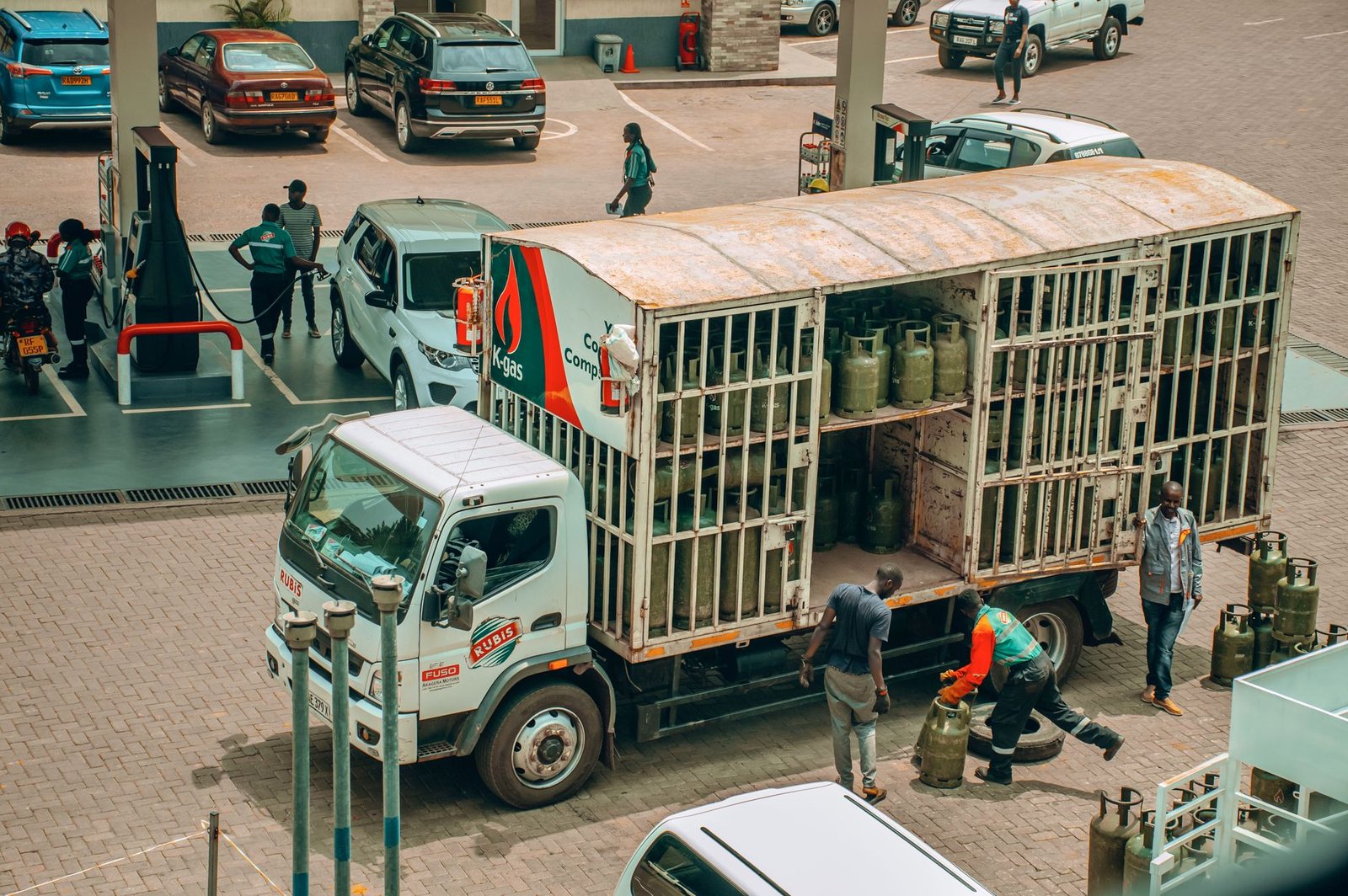
Comparing this tender to recent trade flows highlights its scale. According to the 2025 Economic Report by the Ministry of Economy, Planning, and Territorial Development (MINEPAT), which draws on customs data, Cameroon imported 150,420 tons of liquefied butane last year, up from 145,163 tons in 2024—a 3.6% increase. This growth reflects rising demand driven by urbanization and the shift away from traditional wood-based energy sources.
Interestingly, the customs bill decreased from 59.38 billion to 56.159 billion FCFA—a 5.4% decline attributed to lower average import prices. Within this context, the 60,000-ton tender represents 39.9% of 2025’s imports, roughly covering five months of consumption at the average monthly rate. In practical terms, this translates to 4.8 million 12.5 kg cylinders. Based on last year’s average customs value of approximately 373,348 FCFA per ton, the theoretical market envelope could reach 22.4 billion FCFA, though the final cost will depend on the selected specifications and delivery terms.
Bipaga’s local production falls short of demand
Despite Cameroon’s domestic LPG production at the Bipaga gas processing center in the South region—operational since 2018—the output remains insufficient. The 2023 annual report from the National Hydrocarbon Corporation (SNH) recorded 34,699 tons produced, up 21% from 28,677 tons in 2022, marking the facility’s second-best performance since its launch. However, these volumes are still far below the 150,420 tons imported in 2025.
In July 2026, the SNH confirmed that Bipaga would maintain an annual production of around 30,000 tons of LPG, even after the shutdown of the floating Hilli Episeyo unit. This output gap underscores Cameroon’s vulnerability to external shocks, whether logistical or price-related, and explains the frequent tenders issued by the CSPH to secure supply.
Energy security and price stability at stake
This September 1 tender serves a dual purpose. First, it aims to prevent any supply disruption in the final quarter of 2026, given that butane gas is the primary urban domestic fuel in Cameroon. Second, authorities seek to mitigate the fiscal burden of implicit subsidies on cylinder prices, a longstanding challenge managed through the CSPH’s price stabilization mechanism.
The ultimate impact of this tender—final cost, delivery schedule, effect on strategic reserves—will only become clear after the September 8 award. The winning bids will also reveal whether the government favors established local operators or opens the door to new international traders.