The Nigerien political landscape has been trapped in a relentless cycle for decades. From the ousting of Hamani Diori in 1974 to the gunfire that echoed through Niamey on August 29, 2026, and the tumultuous eras of Baré Maïnassara and Salou Djibo, the nation has repeatedly turned to military might in search of solutions to its crises. Yet, half a century of instability has delivered one clear verdict: no coup d’état has ever delivered lasting progress in development, national unity, or security.
Why military rule fails to deliver
Each junta rises to power promising to restore national dignity, only to see its transition stretch into years of isolation and self-destruction. History shows that the current impasse isn’t an anomaly—it’s the inevitable outcome of a system built on military intervention. The belief that brute force can guarantee stability is a dangerous illusion, one that has repeatedly failed to deliver on its promises.
The high cost of abandoning constitutional rule
When a government seizes power outside the bounds of the constitution, the consequences ripple through every layer of the state:
- Military fractures: The armed forces, once a pillar of defense, become a political battleground. Instead of focusing on securing borders and combating terrorism, military leaders find themselves consumed by internal rivalries, plotting, and self-preservation.
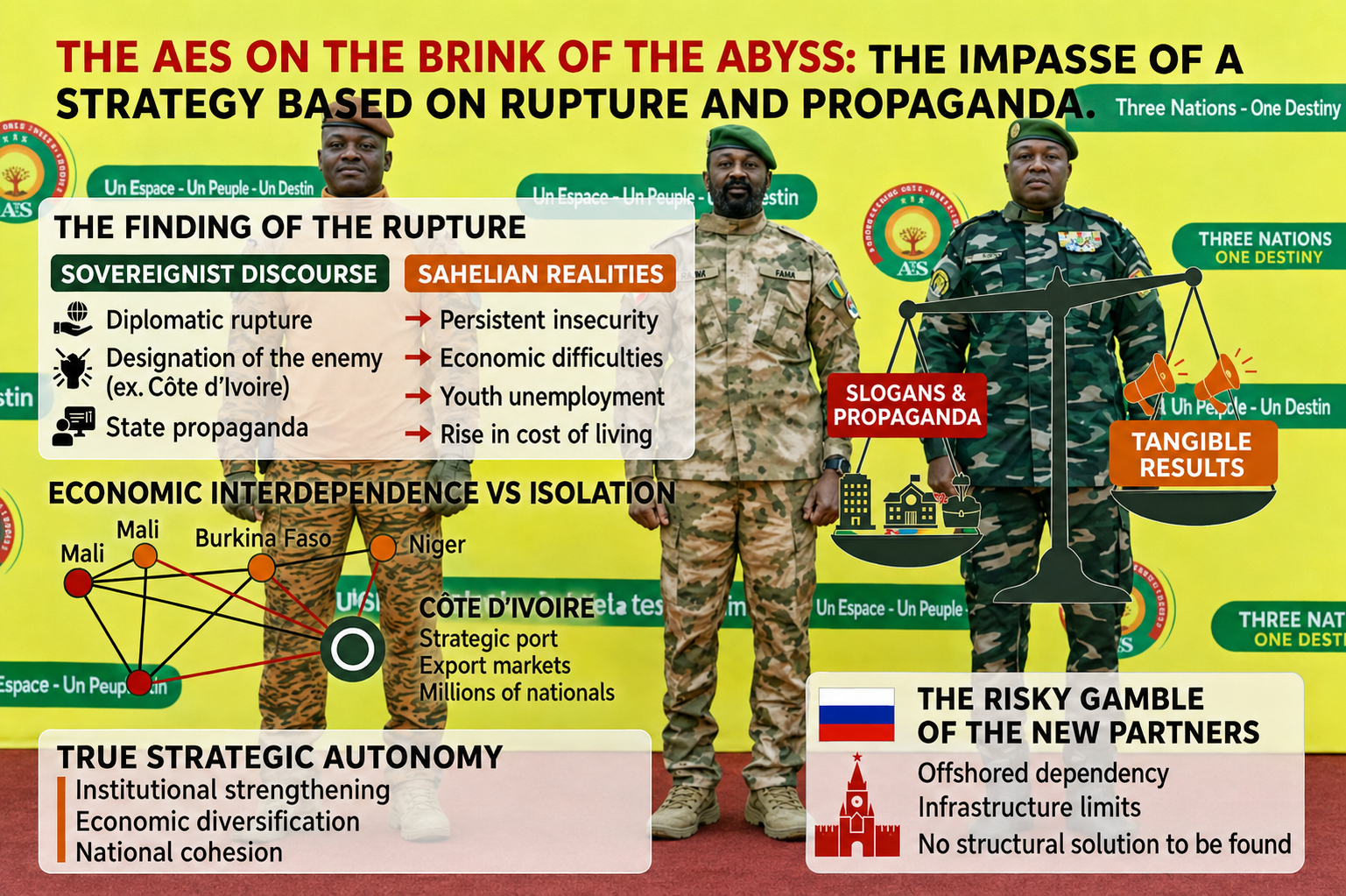
- Hollow sovereignty: Without popular legitimacy or strong institutions, regimes born from coups often cling to foreign patrons for survival. Reliance on external allies or mercenary forces only deepens dependence, undermining national cohesion.
- Broken social trust: The absence of checks and balances, an independent judiciary, and a free press reduces citizens to spectators in their own nation. Public disillusionment, initially subdued, inevitably fuels fresh unrest.
Democracy as the only sustainable solution
The alternative to this cycle of violence isn’t weakness—it’s democracy, the sole framework capable of resolving crises without spilling blood. The Nigerien transition between 2011 and 2023, despite daunting challenges, proved that democratic governance can work, even in the face of insecurity and economic strain. Unlike the ephemeral promise of the barracks, democracy offers:
- Peaceful power transitions: Elections allow for leadership change without resorting to mutinies, ambushes, or palace intrigues.
- International credibility: A democratically elected government commands the trust of global partners, unlocking investment and fostering sustainable development.
- Restored military purpose: When civilians govern, the armed forces can reclaim their original mission—defending the nation with unity and honor.
A turning point for Niger
Niger stands at a crossroads. Persisting on the path of military rule guarantees an endless loop of coups, purges, and regional instability. The time has come to abandon the myth of the strongman and embrace the hard truth: a nation’s true strength lies not in the number of tanks parked outside the presidential palace, but in the resilience of its institutions and the faith of its people.
Only by fully committing to democratic principles can Niger break free from the curse of the barracks and chart a course toward enduring peace.