
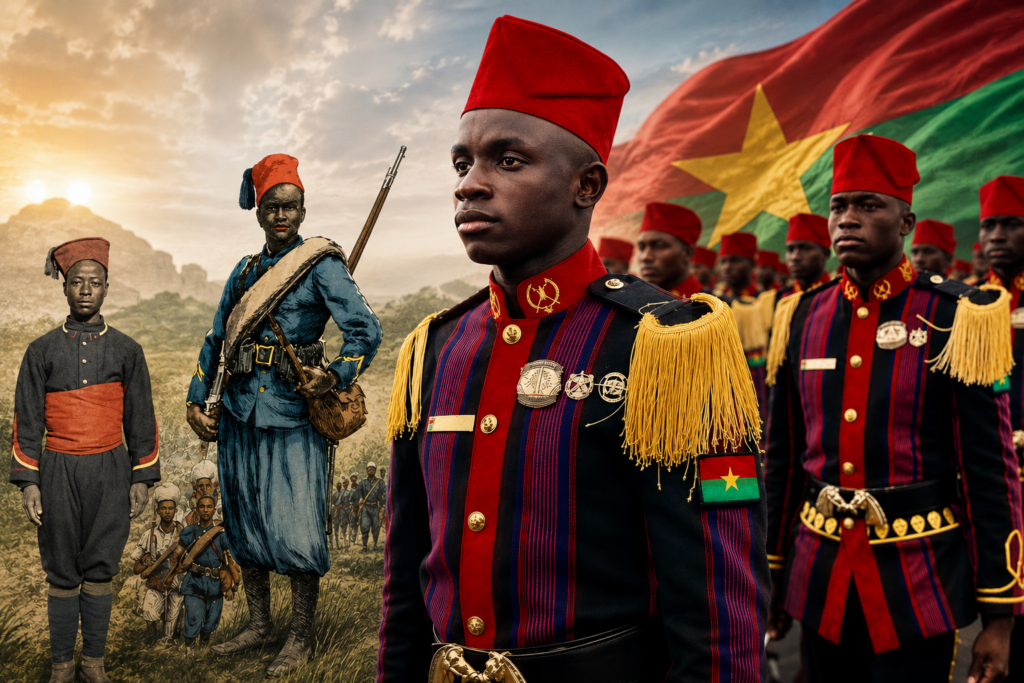
National identity versus security imperatives in Burkina Faso
The line dividing political posturing from ground realities in Burkina Faso grows thinner with each passing day. The military junta’s latest initiative—a designated “memory attire” for commemorating key decolonization milestones—highlights this tension. Touted as a symbol of reclaimed sovereignty and national pride, the measure reinforces identity markers while reigniting a critical debate: Where should a state grappling with an unprecedented security crisis direct its priorities?
The sovereignist gambit
Captain Ibrahim Traoré retains significant political capital among a substantial portion of Burkina Faso’s population and broader West African opinion. By rejecting conventional international cooperation frameworks and adopting an uncompromising anti-imperialist stance, the transitional leader has tapped into decades-old frustrations over ineffective counterterrorism strategies.
This sovereignist rhetoric resonates with many citizens who view past security approaches as failures. In response, the government has rolled out a series of symbolic measures: mandating Faso Dan Fani fabric as national attire, promoting indigenous languages, rehabilitating historical resistance figures, and now introducing the “memory attire.” Proponents argue these steps help reconstruct a national identity long undermined by external dominance.
On the security front, the expansion of the Volontaires pour la Défense de la Patrie (VDP) underscores an attempt to mobilize civilian support for the war effort. The declared objective is twofold: reduce reliance on foreign assistance and build sustainable domestic defense capabilities capable of addressing persistent threats.
A security landscape still fraught with danger
Yet symbols, however powerful, cannot substitute for tangible results. Nearly four years after military leaders assumed power, the security challenge remains daunting.
Vast stretches of Burkinabè territory remain beyond state control. In multiple provinces, armed groups persist in targeting defense forces, civilian auxiliaries, and communities. Ambushes on convoys, village raids, infrastructure destruction, and kidnappings perpetuate an atmosphere of chronic insecurity.
The humanitarian fallout is severe. Hundreds of thousands remain internally displaced, while numerous localities endure perpetual threats from armed factions. Access to healthcare, education, markets, and administrative services remains severely disrupted across several regions. Supply shortages exacerbate household economic precarity, particularly in rural areas.
The security crisis exacts an economic toll. A substantial portion of public funds now flows to military expenditures at the expense of critical sectors such as health, education, infrastructure, and development. Agricultural slowdowns, closures of artisanal mining operations, and disrupted trade routes further strain the nation’s growth prospects.
The widening gap between rhetoric and reality
A growing disconnect emerges between official narratives and citizen expectations. While authorities emphasize sovereignty symbols, many Burkinabè demand concrete solutions: enhanced security, reopened roads, restored public services in abandoned zones, and the safe return of displaced populations.
True sovereignty extends beyond ceremonial gestures or wardrobe changes. It requires the state’s capacity to assert authority nationwide, safeguard civilian movement, protect communities, and deliver essential public functions.
Patriotic mobilization discourse may bolster national cohesion, but its impact wanes when citizens continue facing daily violence. As the conflict drags on, the risk intensifies of widening the chasm between regime aspirations and rural realities.
The ultimate test for Burkina Faso’s transition
The nation finds itself at one of the most pivotal junctures in its modern history. Security restoration stands as the indispensable prerequisite for any political, economic, or social recovery. Without measurable progress on this front, even the most resonant identity-driven initiatives risk losing their mobilizing power.
History will evaluate this military-led transition not by the resonance of its slogans or the proliferation of sovereignist symbols, but by its actual capacity to reclaim lost territories, guarantee enduring protection for citizens, and create conditions for normalcy. Authentic sovereignty is measured not merely by political independence, but by the ability of a state to secure stability and a viable future for its people.


More Stories
Mali: près de 80 soldats tués dans l’attaque de Dioura
Côte d’Ivoire : le Burida prépare une distribution record de 795,4 millions FCFA
Paris FC vs Lyon: kick-off time and TV channel for the Ligue 1 matchday 4 clash