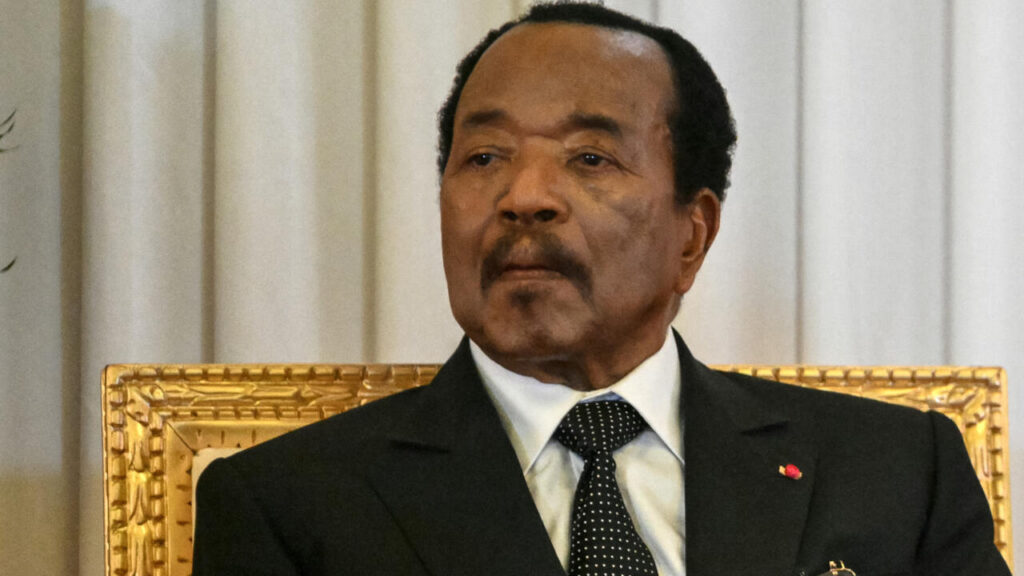
For 58 consecutive days, Cameroon’s President Paul Biya has remained absent from the public eye, the longest such gap in his 44-year rule. The 93-year-old leader left the country on June 7 for what was described as a “brief private stay in Europe”, yet no official sighting has occurred since.
René Sadi, Cameroon’s Minister of Communication, recently broke weeks of silence to address the situation. In a statement, he reassured the nation: “The President is alive… There is no power vacuum.” However, no return date was provided, leaving citizens and observers questioning the implications of such an extended absence.
What does Biya’s absence mean for Cameroon?
The prolonged disappearance of a head of state, especially one who has held power for nearly half a century, naturally raises concerns. With no public appearances or official engagements, speculation about his health and the future of leadership in Cameroon has intensified. The lack of transparency has fueled debates about governance, succession, and the stability of the country’s political landscape.
Government reassurances amid growing uncertainty
Despite official statements, the absence of visible leadership has left many Cameroonians uneasy. The government’s insistence that “there is no power vacuum” has done little to quell doubts, particularly as the country faces pressing challenges—from economic pressures to security concerns. The question on everyone’s mind remains: When will President Biya be seen again, and what does this mean for Cameroon’s future?
Public reaction and the shadow of succession
The prolonged absence has not only sparked political discussions but also personal reflections among Cameroonians. Many are asking how this situation could impact the country’s direction, especially given Biya’s advanced age and the absence of a clear successor. The uncertainty surrounding his return has added a layer of unease to an already complex national dialogue.
What lies ahead for Cameroon?
As Cameroon navigates this period of uncertainty, the nation watches closely for any signs of change. The government’s commitment to stability is clear, but the lack of visible leadership leaves many questions unanswered. Will President Biya return to reassure the public, or will this absence mark a turning point in the country’s political future?
More Stories
Niger’s August crisis: how Tiani’s reliance on Russia exposed deeper fractures in the military
Burkina Faso’s military push raises urgent questions amid mass displacement crisis
Behind the three-day delay: what really delayed Senegal’s 2026 revised budget bill