The Republic of Central Africa is once again the stage for unspeakable brutality, as fresh evidence of Wagner Group’s atrocities surfaces. In early July, harrowing videos surfaced online depicting a chilling scene: mercenaries systematically executing and beheading men in broad daylight. The victims, initially lured under the pretense of a disarmament operation, were subjected to a grotesque spectacle, their severed heads arranged in a macabre display on the ground. The gruesome act was not only carried out but also filmed and broadcast, accompanied by the chilling commentary of the militia’s leader, who issued a merciless ultimatum: ‘Reject peace? Then face annihilation. Slaughter every last one.’
The footage, reminiscent of the most heinous tactics employed by jihadist factions, has left the nation in a state of collective horror. Among the victims were armed group fighters who had come to surrender, along with civilians—including a village chief—who had trusted the promise of a disarmament program. Yet, the Wagner operatives transformed this humanitarian endeavor into a blood-soaked spectacle, reinforcing a culture of impunity that has taken root in the war-torn nation.
From chaos to complicity
The Central African Republic has long been described as a non-state, a nation adrift in perpetual instability. Decades of coups, mutinies, and political upheavals have left its institutions hollowed out, with power concentrated in the capital while armed groups carve up the rest of the territory. The United Nations’ stabilization mission, the MINUSCA, has struggled to curb the violence, its efforts often overshadowed by the escalating brutality of foreign-backed militias. The arrival of Wagner’s mercenaries, operating under the guise of bilateral cooperation with Moscow, has only deepened the crisis. Their presence has normalized extreme violence, turning brutality into an everyday occurrence for the local population.
Regional and international observers have grown numb to the suffering, accepting the Central African Republic’s descent into lawlessness as an unfortunate reality. The Wagner Group, far from being a stabilizing force, has entrenched itself as a parallel authority, wielding control over the military, police, judiciary, intelligence services, and even airport operations in Bangui. Their influence extends to disappearances, torture, harassment, and extrajudicial killings—all carried out with impunity. Locals often remark that the real power in the country no longer resides in the government but in the hands of these foreign mercenaries.
A modern colonial order
The Wagner Group has not only claimed territory but has also established a disturbing legacy tied to its late founder, Yevgeny Prigozhin. Despite the rebranding of the group as Africa Corps following Prigozhin’s death in August 2023, Wagner’s operatives in the Central African Republic have clung to their original identity, erecting a statue in his honor. Each year, Central African soldiers join their Russian counterparts in commemorating Prigozhin’s birth anniversary, further cementing the group’s influence and the eerie normalization of its presence.
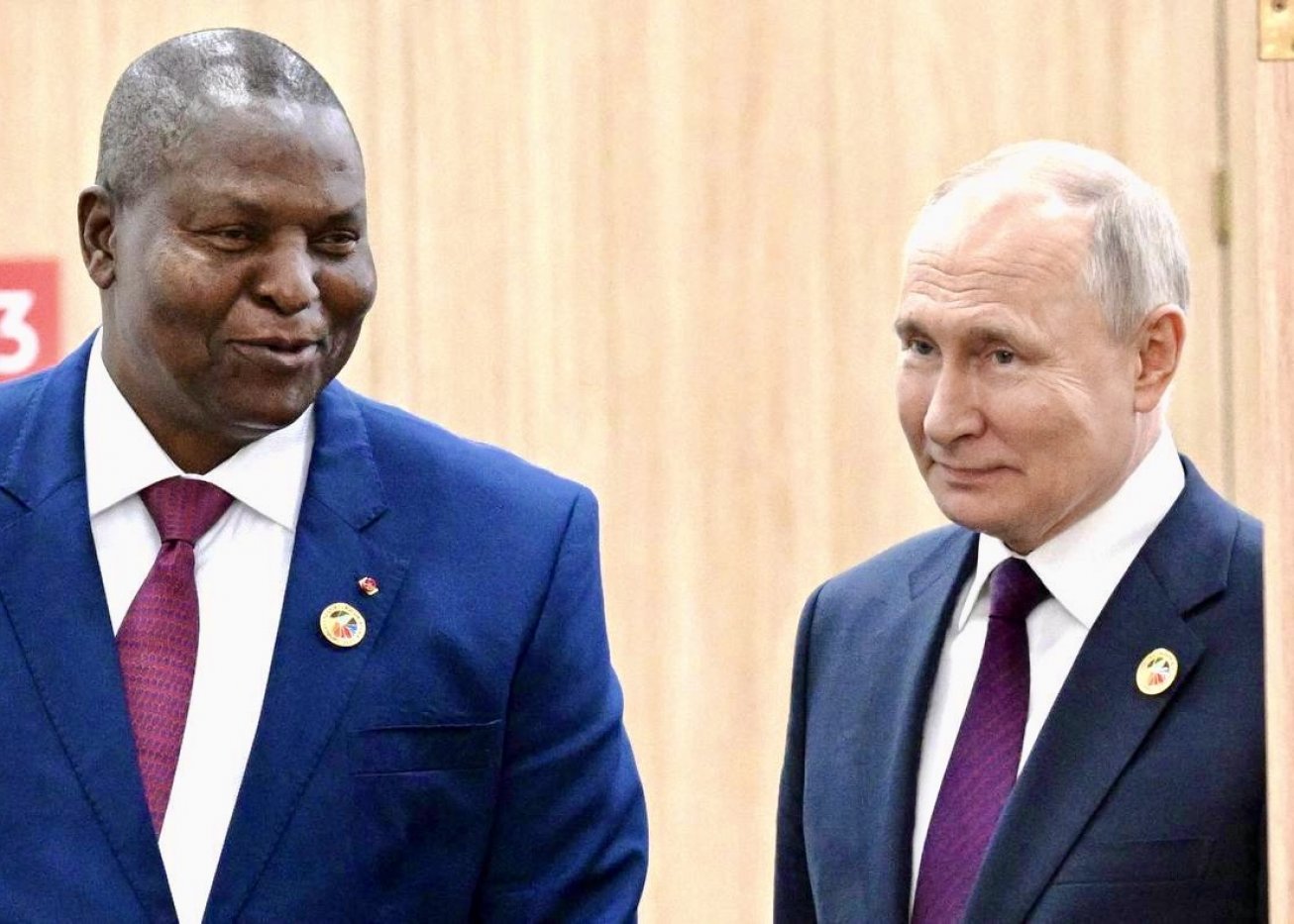
This unchecked authority has given rise to a new form of colonial dominance, where terror has become the primary means of governance. The international community’s muted response has only emboldened Wagner, whose actions are tacitly endorsed by the Central African government. President Faustin-Archange Touadéra’s infamous declaration four years ago—‘We need the Russians. They are the ones who keep us in power’—lays bare the tragic trade-off: clinging to power at the cost of turning the nation into a haven for extreme violence.
As the opposition and civil society once again demand the withdrawal of Wagner’s forces, the authorities respond with their usual silence. For the people of the Central African Republic, the choice is clear: endure the nightmare of a foreign-run regime or vanish into the void of a failed state.