DRC’s ecological leadership and M23 crisis take center stage at Yaoundé francophone assembly
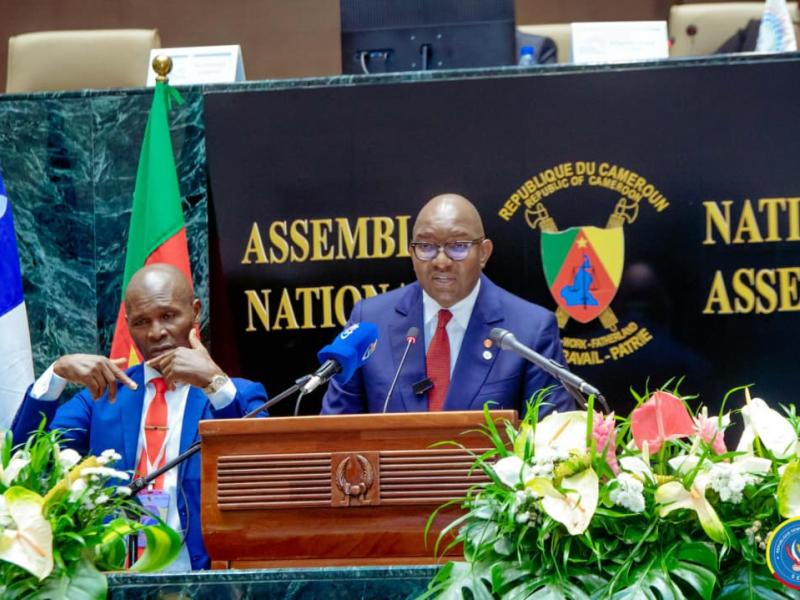
The 51st session of the Francophonie Parliamentary Assembly (APF), held in Yaoundé from July 6 to 11, 2026, provided the Democratic Republic of the Congo with a global platform to showcase its environmental leadership while addressing the severe ecological consequences of the ongoing M23 insurgency in its eastern provinces.
The high-profile event, which brought together over 300 parliamentarians from 42 national and subnational sections across the Francophonie space, saw Senate President Jean-Michel Sama Lukonde emerge as a prominent voice advocating for environmental protection and regional stability.
The DRC’s environmental credentials
In his address to the assembly, Sama Lukonde positioned the DRC as a natural “solution country” in the global fight against climate change, emphasizing the nation’s critical ecological assets. He highlighted the Congo Basin – the world’s second-largest tropical rainforest – and its unparalleled biodiversity as key components of global environmental stability.
The Senate President specifically pointed to the Kivu-Kinshasa Green Corridor initiative, covering over 500,000 km², as a flagship project demonstrating the DRC’s commitment to international climate goals. This ambitious reforestation and conservation effort aims to sequester carbon while protecting vital ecosystems in the eastern DRC.
“Our country naturally stands as a true solution country,” Sama Lukonde declared, underscoring the DRC’s pivotal role in preserving the planet’s ecological balance.
Ecological devastation from the M23 conflict
While championing the DRC’s environmental leadership, Sama Lukonde forcefully condemned what he described as Rwanda’s unjust aggression through its M23-AFC proxies, which has had catastrophic ecological consequences in eastern DRC.
The Senate President detailed how armed conflict has led to:
- Massive deforestation as rebel groups clear forest areas for military operations
- Destruction of wildlife habitats and poaching of endangered species
- Severe water pollution from military waste and disrupted ecosystems
- Soil degradation and erosion following the destruction of protective vegetation
- Massive displacement of populations leading to unsustainable agricultural practices
“One cannot claim to maintain climate balance while, through war, systematically looting and destroying natural resources,” Sama Lukonde stated, calling for immediate action to address these environmental crimes.
Call for international solidarity
The DRC Senate President urged Francophonie members to support peace efforts in eastern DRC and implement the Washington Accords. He proposed establishing a Francophonie Climate Pact based on solidarity and better consideration of the needs of communities living near forested areas.
Sama Lukonde also announced the DRC’s support for Julianna Lumumba’s candidacy to lead the Francophonie, positioning her as a champion for both environmental justice and African solidarity.
Diplomatic context and youth engagement
The APF session in Yaoundé coincided with the 11th edition of the Francophonie Youth Parliament (PFJ), which brought together 61 young representatives from 29 Francophone sections. The youth forum provided a platform for emerging leaders to discuss environmental challenges and peacebuilding in the Francophonie space.
The dual events in Yaoundé underscored the interconnectedness of environmental protection, regional stability, and youth engagement in addressing Africa’s most pressing challenges.