Significant political developments
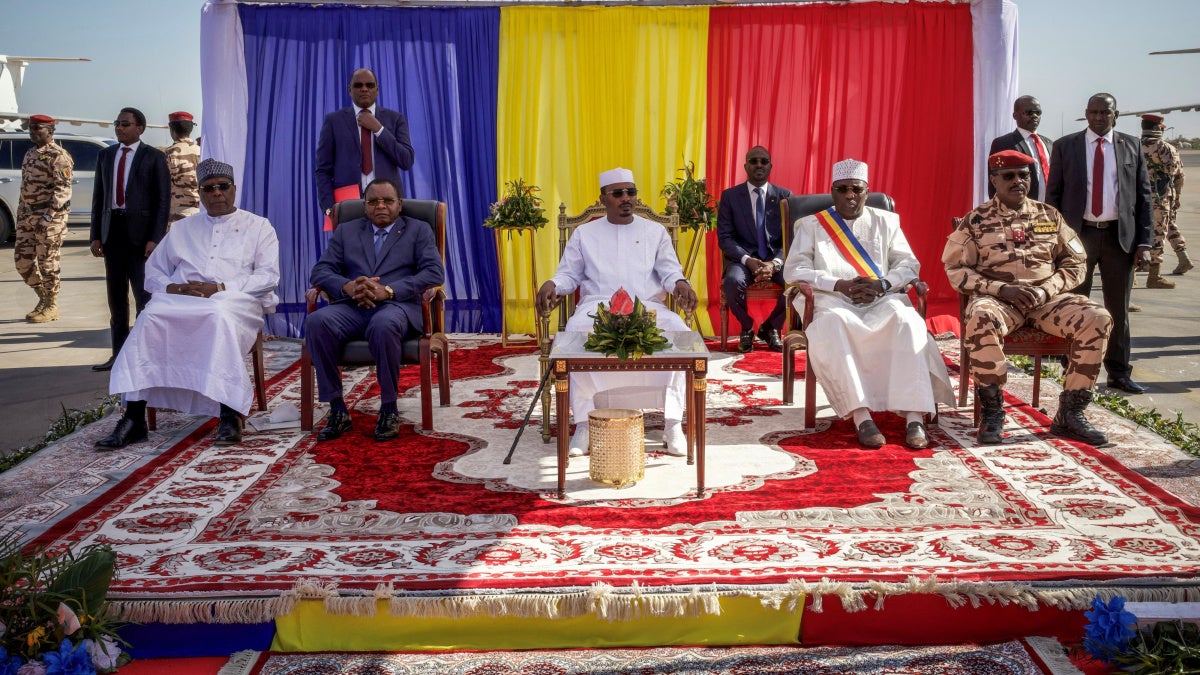
President Mahamat Idriss Déby solidified his authority throughout 2025 following his victory in the 2024 presidential election, a vote heavily criticized by opposition groups for various inconsistencies. Constitutional revisions ratified in 2025 have effectively abolished presidential term limits and extended the duration of each term from five to seven years. These modifications theoretically permit Mahamat Idriss Déby to remain in power indefinitely, provided elections occur every seven years, a major focus for African politics English analysts.
The political landscape for dissent remained extremely narrow. Succès Masra, a prominent opposition figure who challenged the 2024 results, was detained and subsequently handed a twenty-year prison sentence. Furthermore, activists, journalists, and members of the party led by Succès Masra faced ongoing harassment and arbitrary arrests, according to reports from the continent press.
A controversial amnesty law continues to shield those responsible for human rights violations during the October 2022 protests from legal accountability, effectively stifling any meaningful progress toward justice for the past three years.
Intercommunal strife persisted across southern and eastern Tchad during 2025. These conflicts, primarily between nomadic herders and settled farming communities, resulted in dozens of fatalities across multiple incidents. The humanitarian situation was further strained by internal displacement and the ongoing influx of refugees fleeing the war in neighboring Sudan. Additionally, severe flooding in late 2024 and early 2025 made Tchad one of the most impacted nations in the region, intensifying local African economy news concerns regarding food security.
Efforts to compensate victims of the former dictator Hissène Habré saw minimal progress in 2025. Despite some partial payments made in 2024, the amounts disbursed were significantly lower than the reparations mandated by the courts.
Escalating violence in the south and east
While the government claimed to be addressing the structural causes of violence—such as the lack of clear land titles and defined migration routes for livestock—these efforts failed to curb the unrest. Instead, the southern and eastern regions of Tchad experienced a surge in violent clashes between Fulani nomadic pastoralists and local agriculturalists in 2025.
In May, the village of Mandakao, located in the Logone-Occidental province, became a flashpoint for land disputes. Official reports stated that at least 41 individuals were killed and six others wounded. Local media and pan-African journalism outlets noted that the conflict was sparked by contested land boundaries, with farmers accusing herders of encroachment while herders cited a lack of clear markings as the reason for entering agricultural zones.
In the southern province of Mayo-Kebbi Ouest, specifically in Orégomel, June saw a series of machete attacks stemming from similar disputes, leaving at least 17 people dead, including women and children. Meanwhile, in Molou, situated in the eastern Ouaddaï province, tribal clashes resulted in approximately twenty deaths and sixteen injuries in mid-June.
The bloodshed in Mandakao, Orégomel, and Molou illustrates a broader regional trend where population growth, dwindling arable land, and climate change are intensifying traditional conflicts, a recurring theme in Africa news.
The state of political freedom
On May 16, the former Prime Minister and leader of the Les Transformateurs party, Succès Masra, was apprehended in the capital city, N’Djamena. Authorities linked him to the communal violence that occurred in Mandakao.
Succès Masra faced charges of inciting hatred, xenophobia, and complicity in murder via digital platforms. Despite pleading not guilty during a trial involving dozens of other defendants, he was convicted on August 9. He was sentenced to twenty years in prison and fined 1 billion CFA francs (approximately 1.8 million USD). His co-defendants received similar twenty-year sentences.
This legal action against Succès Masra is widely viewed as a political maneuver to dismantle the opposition. Observers from the Panafrican Press highlighted that his conviction violated the October 2023 Kinshasa Agreement, which had previously guaranteed him and his followers the right to return from exile and engage in political life without fear of prosecution.
Constitutional overhauls
In September 2025, the National Assembly of Tchad passed constitutional amendments that increased the presidential term from five to seven years and removed limitations on the number of terms a president can serve. This move effectively removed the final legal checks on executive power.
The legislative vote was largely shunned by the opposition, passing in the lower house with 171 votes in favor, one abstention, and zero votes against. These changes were finalized by both parliamentary houses and signed into law by the president in October.
By concentrating authority in the hands of Mahamat Idriss Déby, these amendments have fundamentally altered the balance of power in Tchad, leaving virtually no room for legislative oversight or democratic debate.
Repression and political violence
Despite international pressure to investigate the fatal “celebratory gunfire” following Mahamat Idriss Déby’s 2024 election win, no genuine judicial inquiries were launched in 2025. At least 11 people, including children, were killed by stray bullets and rockets fired by security forces in 2024, yet victims have received no significant compensation.
The killing of opposition leader Yaya Dillo during a security raid on his party headquarters also remained uninvestigated in 2025. However, in late 2024, authorities did release 24 of Yaya Dillo’s relatives who had been held at the Koro Toro high-security prison. Earlier that year, ten other detainees from the same facility were acquitted.
In June, Robert Gam, who led Yaya Dillo’s party, the Parti socialiste sans frontières, was freed after eight months of detention without ever being formally charged.
The government also targeted critics in exile. In September, the Ministry of Territorial Administration stripped the nationality of blogger Makaila Nguebla and activist Charfadine Galmaye Saleh. Both men had been vocal critics of the administration while living abroad.
Press freedom also suffered as journalists Olivier Monodji and Mahamat Saleh Alhissein were arrested in March. They were accused of espionage and endangering state security due to their reporting on the Wagner Group’s activities in the Sahel and Central Africa. After months of arbitrary detention, they were released in July.
Gender and sexual orientation
Tchad continues to criminalize same-sex relations under Article 354 of the 2017 Penal Code. Those convicted of engaging in “sexual relations with persons of the same sex” face up to two years of imprisonment and fines ranging from 50,000 to 500,000 CFA francs (approximately 75 to 750 USD).