A wave of arrests and restrictions is tightening its grip on Burkina Faso, casting a shadow over civil liberties in the Alliance of Sahel States (AES). In the past week alone, the detention of a prominent religious leader and the suspension of a historic student union have raised alarms about the erosion of fundamental freedoms under military governance.
imam Mohamed Ishaq Kindo’s arrest sparks fear and disinformation
Just before the Eid al-Adha celebrations, masked security forces raided the home of Imam Mohamed Ishaq Kindo in Burkina Faso. The respected religious figure had openly criticized a proposed law regulating religious practices, particularly public prayers—a move that drew both admiration and controversy.
Former journalist Newton Ahmed Barry, now living in exile, describes Kindo as a man of principle who maintained a critical stance even toward Captain Ibrahim Traoré:
“Imam Kindo was one of the few Muslim leaders who dared to challenge public policies, including those set by the transitional authorities. His arrest sends a chilling message to civil society and religious communities alike.”
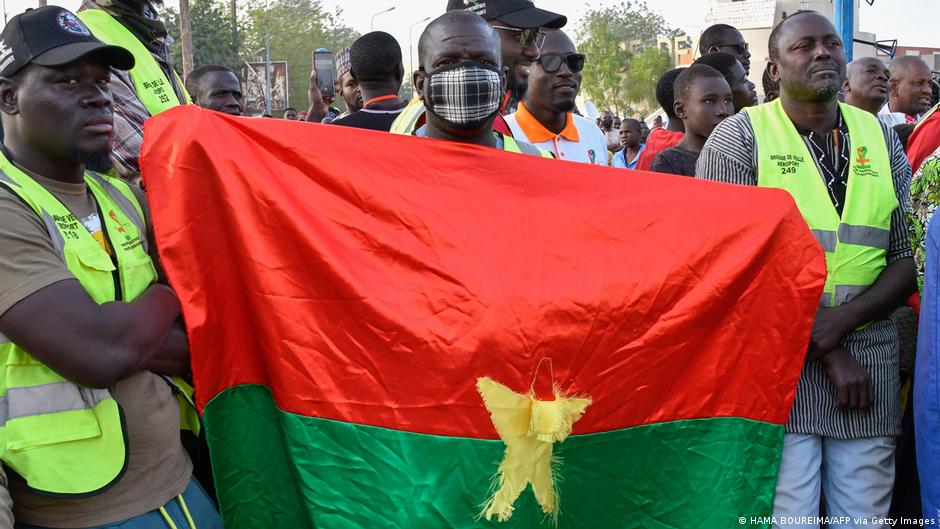
The detention triggered immediate backlash. Protests erupted, clashes with security forces left several injured, and dozens were arrested. The Fédération des Associations Islamiques du Burkina (FAIB) repeatedly called for calm, but a dangerous wave of disinformation followed—including a fabricated statement claiming Kindo had died, swiftly debunked by judicial authorities.
UGEB suspension: a strike against student dissent
The military-led government took another bold step by suspending the Union Générale des Étudiants du Burkina Faso (UGEB), a 60-year-old student union, for three months. Its president, Bazo Wilfried, and several members were detained on charges of “terrorism glorification” and “undermining military morale”.
In a statement, the union had described the security crisis as a “civil war” and condemned the authorities’ “clear inability” to restore peace. Mahamadou Idder Alghabid, deputy secretary-general of the Alliance des Démocrates du Sahel, condemns the move as part of a regional pattern:
“Accusing unarmed students of terrorism is laughable—but it’s a familiar tactic across the Sahel. Any dissent, no matter how peaceful, is met with the same baseless accusations. These regimes have weaponized terror charges to silence critics.”
a regional pattern of repression in the AES
Burkina Faso, Mali, and Niger—the three nations forming the AES—are witnessing a coordinated crackdown on civil liberties. Human rights advocates report increasing restrictions: dissolved organizations, judicial harassment, and shrinking space for free expression. The line between political dissent, labor activism, and criminal offense is rapidly disappearing.
According to the Alliance des Démocrates du Sahel, the military juntas in these countries are using fear as a governance tool:
“The more they instill fear, the more they believe they can control society. It’s a dangerous game—one that will ultimately backfire when the people finally say enough.”
voices of resistance persist despite the crackdown
From abroad, Sahelian activists continue to challenge the legitimacy of military rule. Alghabid insists that resistance is gaining ground:
“Every day, more Sahéliens see through the empty promises of sovereignty and anti-imperialism. The regimes promised change, but delivered only repression. People are abandoning their support, and the juntas are losing their grip.”
Newton Ahmed Barry warns that authoritarian excesses will lead to their downfall:
“History shows that regimes built on fear and repression are inherently fragile. The Burkinabè people are resilient—they won’t remain silent forever.”
international support urged for civic freedoms
Human rights organizations are calling for sustained international pressure to protect civil society. Ilaria Allegrozzi of Human Rights Watch stresses the need to defend spaces for free expression and democratic resilience:
“Silence and ambiguity only embolden authoritarianism. Partners of Burkina Faso must stop hiding behind the excuse that criticizing the junta is counterproductive. The time to act is now.”
The question of legitimacy looms large. Human Rights Watch urges clarity in condemning abuses:
“It’s time to call out these military putschists for what they are—usurpers who violate human rights with impunity. Their rule must not become the new normal.”
The coming months will reveal whether the AES’s civic space can survive—or whether silence will become the dominant narrative.