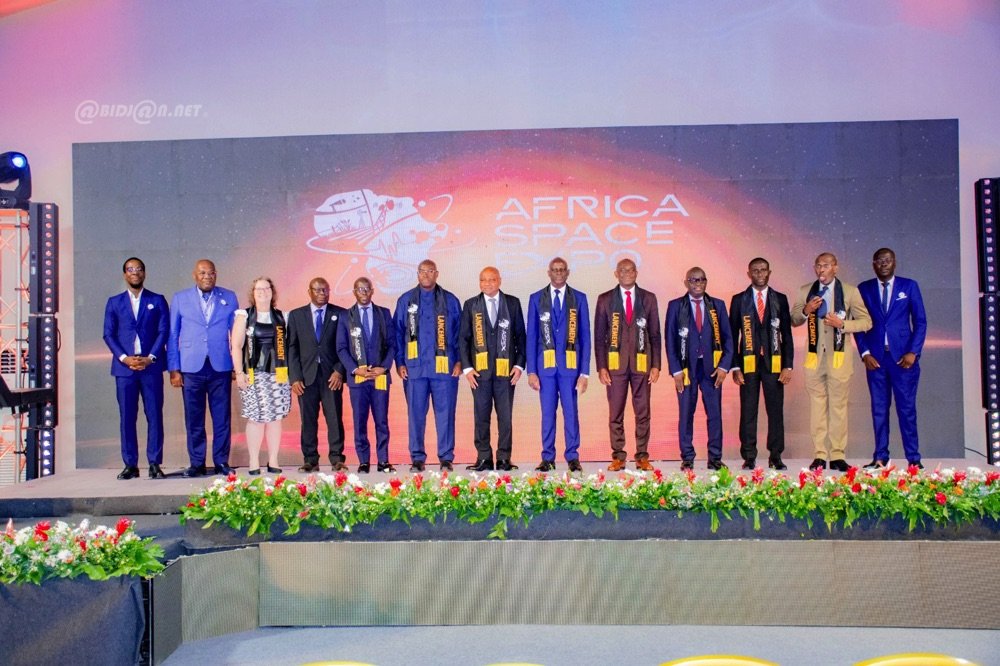
West Africa is witnessing a quiet revolution as Côte d’Ivoire boldly positions itself at the forefront of the continent’s space economy. Recognizing the transformative potential of satellite technology and geospatial data, the Ivorian government is laying the groundwork to establish itself as a continental leader in this strategic sector. Rather than remaining dependent on traditional agricultural exports, Abidjan is diversifying its economic foundations by investing in high-tech industries that promise long-term sovereignty and global competitiveness.
Building Côte d’Ivoire’s space ecosystem
The nation’s strategy goes beyond mere technological upgrading. It’s about creating a comprehensive ecosystem that integrates technical expertise, dedicated infrastructure, and an enabling regulatory framework. The government seeks to unite public institutions, academic institutions, research centers, and private enterprises around a unified vision. The applications being targeted span multiple critical sectors: precision agriculture, environmental monitoring, telecommunications, urban planning, and national security.
For Côte d’Ivoire, this initiative represents more than technological advancement—it’s an economic catalyst. By developing a thriving space industry, the country aims to create high-skilled employment opportunities, attract foreign direct investment, and establish itself as a regional hub for value-added services. The focus includes training specialized engineers and nurturing startups capable of delivering innovative solutions tailored to African challenges, from agricultural mapping to water resource management and rural connectivity.
Navigating Africa’s competitive space landscape
Côte d’Ivoire’s ambitions enter a crowded continental arena where several African nations have already made significant strides. Countries like Egypt, South Africa, Nigeria, Morocco, Algeria, and Kenya have established national space agencies, operational satellite programs, and in some cases, launch capabilities or industrial partnerships. The African Space Agency’s headquarters in Cairo underscores the growing importance of a sector once considered peripheral to the continent’s development.
In this competitive environment, Côte d’Ivoire brings unique advantages to the table: political stability, economic dynamism, strategic West African location, and its role as a regional crossroads. Already hosting the African Development Bank, Côte d’Ivoire leverages its influence to attract investment, technological partners, and specialized talent. The government’s economic diplomacy could prove crucial in forging partnerships with space agencies across Europe, North America, and Asia to accelerate its space ambitions.
Unlocking economic potential through space technology
The global space economy is experiencing unprecedented growth, projected to reach hundreds of billions of dollars in the coming years. This expansion is driven by satellite miniaturization, the proliferation of low-orbit constellations, and the expanding applications of geospatial data. While Africa currently captures only a fraction of this value, its demand for connectivity, Earth observation, and location-based services is skyrocketing. By establishing itself early in this sector, Côte d’Ivoire can position itself to meet the continent’s future needs.
The potential applications are vast and directly impactful. For a nation that’s the world’s largest cocoa producer, precision agriculture powered by satellite data could revolutionize farming practices. Other critical areas include combating deforestation, enhancing urban planning, and improving climate risk management. Satellite-derived data is becoming an essential governance tool, enabling more effective agricultural, land, and environmental policies. However, translating these ambitions into concrete achievements will require sustained funding, robust legal frameworks, and effective inter-ministerial coordination.
Côte d’Ivoire’s space journey must also navigate regional cooperation requirements. The success of a West African space hub will depend on Abidjan’s ability to unite neighboring countries within the Economic Community of West African States (ECOWAS) around shared initiatives. Potential collaborative projects include shared satellite platforms, regional data centers, and joint training programs that could amplify the impact of individual national efforts.