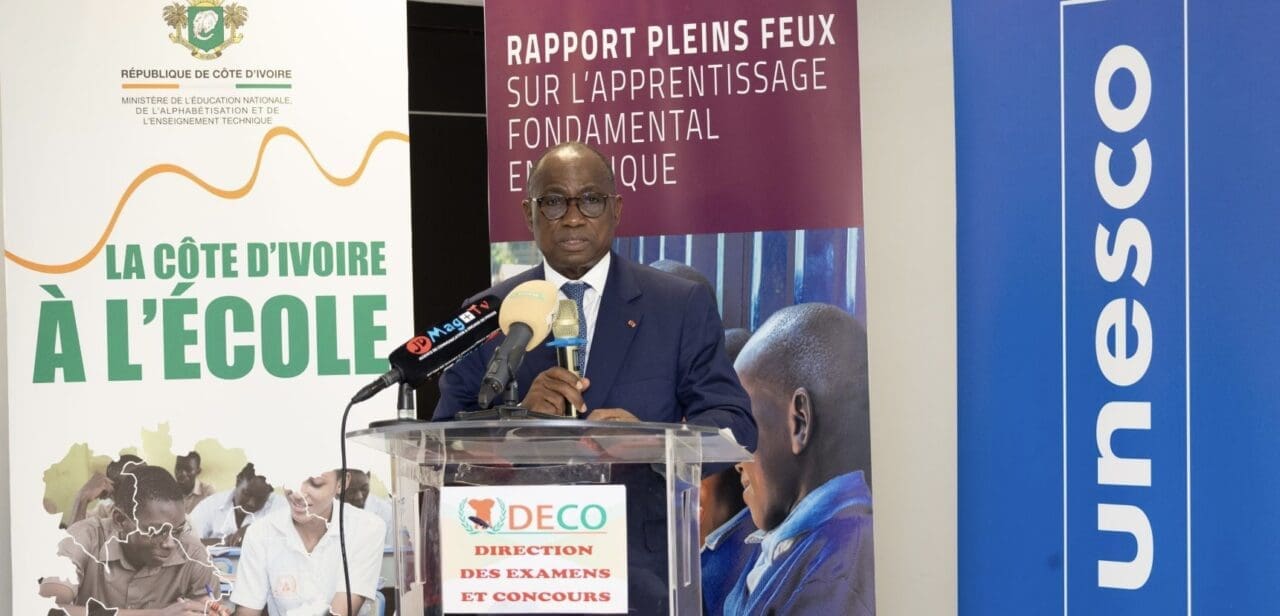
In April 2026, the Ivorian government unveiled Pleins Feux, a groundbreaking initiative designed to accelerate the transformation of the country’s education system. Spearheaded by President Alassane Ouattara, this project aligns with the nation’s long-term vision for educational excellence and sustainable development. Supported by international partners, Pleins Feux focuses on enhancing the governance and efficiency of public education policies to significantly elevate learning standards across the country.
With a population exceeding 30 million and a youthful demographic, Côte d’Ivoire faces growing pressure on its education system, particularly in rural regions. Education remains a cornerstone of President Ouattara’s agenda, reflecting the country’s commitment to Sustainable Development Goal 4 (SDG 4) and the UN’s 2030 Agenda. Over the past decade, successive government reforms have prioritized access to quality education, ensuring that more students than ever before have the opportunity to learn.

Expanding access and strengthening teacher capacity in Côte d’Ivoire
Under President Ouattara’s leadership, Côte d’Ivoire has made remarkable strides in education reform. Since 2011, the country has recruited over 69,000 primary school teachers and more than 30,000 secondary school educators, ensuring smaller class sizes and improved teaching quality. A recent push has focused on science and mathematics, with 1,800 additional teachers deployed to address workforce demands and support the nation’s economic ambitions.
Infrastructure development has been equally transformative. New schools, particularly in rural and underserved areas, have been constructed to reduce travel distances, minimize dropout rates, and bring education closer to communities. A notable example is the opening of the CAFOP training center in Boundiali, located in northern Côte d’Ivoire. The center’s popularity is evident, with nearly 68,000 applicants competing for just 7,000 available slots in 2026—a clear indicator of the growing demand for high-quality teacher training.
Creating safer, more inclusive classrooms for every learner
Improving the learning environment is a key priority in Côte d’Ivoire’s education strategy. Between 2011 and 2025, beginning teacher salaries in primary schools rose by over 30%, while secondary school salaries increased by up to 15%. These adjustments have enhanced the teaching profession’s appeal, helping to stabilize educational teams and reduce turnover.
The country is also advancing inclusive education. Efforts include the introduction of specialized teaching materials for students with disabilities, ensuring that every learner has access to the tools they need to succeed. Additionally, targeted campaigns—such as those addressing adolescent pregnancy prevention—are helping to safeguard students’ educational journeys, reduce dropout rates, and keep learners engaged in school.
‘Pleins Feux’: a focus on governance and policy execution
Launched in April 2026 in Abidjan, Pleins Feux is not about building schools or hiring more teachers. Instead, it targets the governance and efficiency of the education system, ensuring that policies are implemented effectively and yield tangible results. Developed in collaboration with the UNESCO, the African Union, and the Global Education Monitoring Report (GEM), the initiative is the culmination of two years of research and testing in Côte d’Ivoire, Ghana, and Ethiopia.
The program empowers policymakers and educational leaders with the tools and strategies needed to drive measurable improvements in learning outcomes. International partners have praised Côte d’Ivoire’s progress in foundational learning, and the government continues to strengthen education through diverse partnerships—spanning global organizations, regional alliances, and private sector collaborations—to sustain the country’s educational transformation.