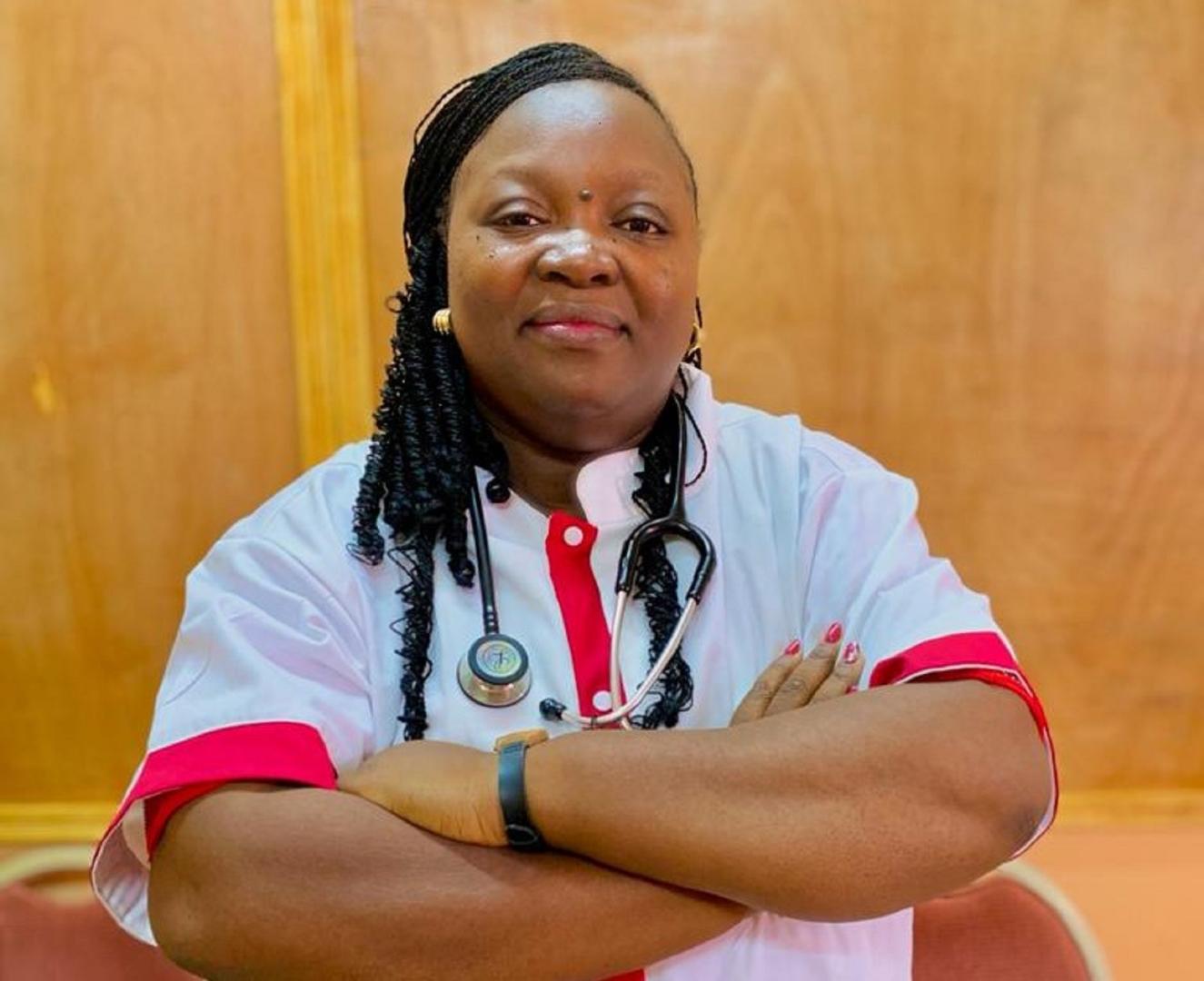
Championing sickle cell disease awareness: Dre Gloria Damoaliga Berges’ impactful work in Burkina Faso
Ouagadougou, Burkina Faso — With a prevalence rate of 4.63% and nearly 2% of newborns diagnosed with the severe SS form, sickle cell disease remains a critical public health challenge in Burkina Faso. Addressing this requires a coordinated, multisectoral response involving all segments of society.
Dr. Gloria Damoaliga Berges, Vice President of the Centre d’Initiative contre la Drépanocytose au Burkina Faso (CID/B), has emerged as a leading advocate for sickle cell patients over the past decade. Her relentless efforts have reshaped the landscape of care, awareness, and support for affected individuals and families.
Why Dr. Berges dedicated her career to fighting sickle cell disease
From the start of her medical journey, Dr. Berges encountered countless children and young adults battling sickle cell disease. Witnessing their suffering firsthand left a profound impression on her. In 2015, an opportunity to establish a specialized care unit at her hospital, supported by the Centre d’Initiative contre la Drépanocytose, marked a turning point. “This is when my involvement evolved from personal conviction into a structured mission,” she explains.
Addressing persistent challenges in sickle cell disease prevention
Sickle cell disease is hereditary: if both parents carry the hemoglobin S gene, each pregnancy carries a 25% risk of the child being born with the severe form of the disease. Yet, many couples remain unaware of their carrier status before conception. “Routine hemoglobin electrophoresis tests before marriage or pregnancy are often overlooked,” Dr. Berges notes. “Raising awareness about these tests is essential to reducing the incidence of this condition.”
Community engagement and education
Dr. Berges firmly believes in the power of community-based interventions. She has spearheaded awareness campaigns and screening initiatives across Burkina Faso, including a recent program (January–July 2024) that screened nearly 15,000 children across five regions. These efforts not only improve early detection but also combat the stigma that often surrounds the disease.
Strengthening healthcare systems and access
Her contributions extend to strengthening health systems. She has collaborated with hematology teams and the Ministry of Health to implement neonatal screening programs and train healthcare providers in managing sickle cell pain. One of her most impactful initiatives was the launch of *Drépa Minute*, a toll-free hotline (80001350) offering information in local languages. This service empowers families with vital knowledge and timely support.
Collaboration with public and private partners
The CID/B, under Dr. Berges’ leadership, works closely with the Ministry of Health’s Direction de la Prévention et du Contrôle des Maladies Non Transmissibles (DPCM). Key partners include the Agence Française de Développement, the Fondation Pierre Fabre, and the Principality of Monaco. Together, they provide comprehensive care to sickle cell patients, combining medical treatment, psychosocial support, and socioeconomic assistance.
Through its 11 regional branches, the CID/B offers:
- Referral care in specialized centers.
- Support groups and therapeutic education sessions.
- Psychological coaching and counseling with trained specialists.
- Income-generating activities to foster economic independence.
The center also partners with health mutuals and advocates for universal health coverage to ensure sustainable access to care for all patients.
Measurable progress and evolving perceptions
“Today, sickle cell disease is no longer ignored in Burkina Faso’s health policies,” Dr. Berges says. The Ministry of Health, through the DPCM, has developed a dedicated strategic plan. Public awareness has grown, and misconceptions—such as the belief that sickle cell patients have a short lifespan or cannot lead fulfilling lives—are fading. “We now see patients living long, building families, and thriving in their careers, all thanks to timely diagnosis and proper management,” she adds.
Ongoing challenges and the path forward
Despite progress, significant hurdles remain:
- Limited access to screening and diagnostic services in rural areas.
- Shortages of essential medications like hydroxyurea, pain relievers, and antibiotics.
- Insufficient vaccination coverage for vaccine-preventable diseases.
- Challenges in managing complications and transfusion needs.
Dr. Berges emphasizes the urgent need for expanded neonatal and early screening programs, improved access to care, and stronger coordination among health authorities and partners.
Her message is clear: “The silent cries of sickle cell patients must be heard. This is not just a health issue—it’s a fight for dignity and hope.”
Communication Officer
WHO Regional Office for Africa
Email: dialloka [at] who.int (dialloka[at]who[dot]int)
Communication Officer
WHO Burkina Faso
oumarou.tarpaga [at] who.int (oumarou[dot]tarpaga[at]who[dot]int)
+226 70 76 04 85