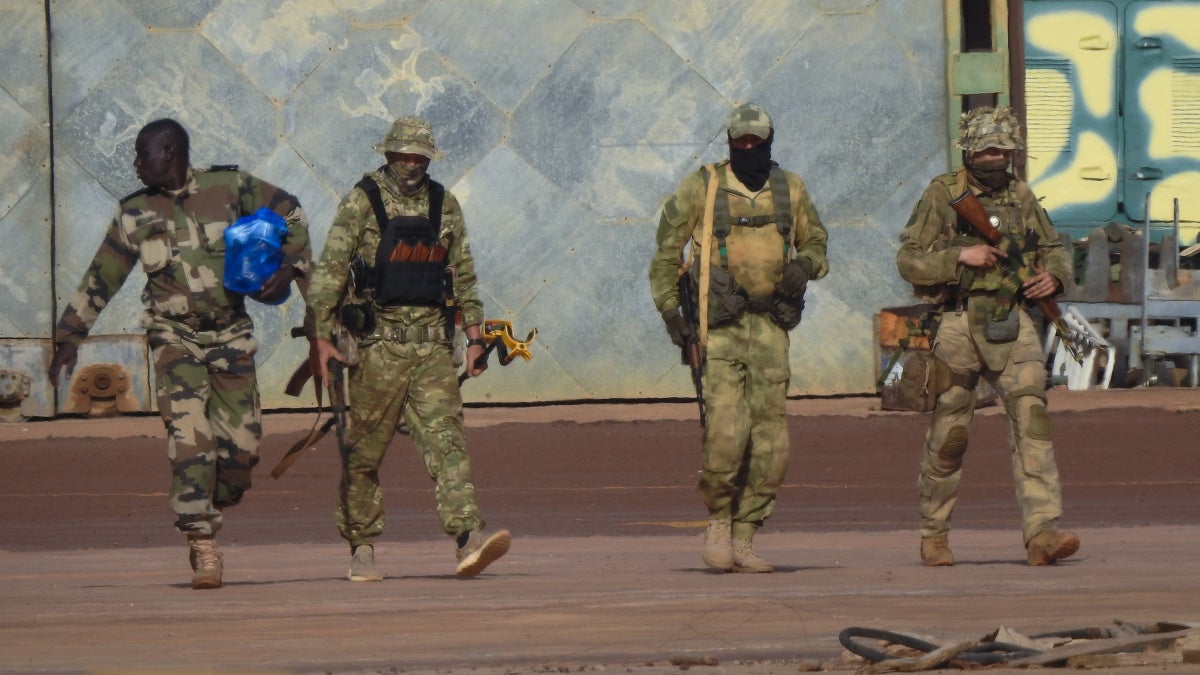
- Since early 2025, the Malian military and the Russian-linked Wagner Group have carried out numerous summary executions and forced disappearances of Peul men.
- Security forces have accused the Peul community of assisting Islamist insurgents fighting for territorial control in Mali.
- The African Union is urged to intensify its oversight in Mali to safeguard civilians from violence perpetrated by all sides, ensuring rigorous investigations and legal accountability.
The Malian armed forces and their Russian-supported allies, the Wagner Group, have been responsible for a series of extrajudicial killings and disappearances of Peul civilians since January 2025, according to findings by Human Rights Watch.
Operating jointly against insurgent factions for over three years, the Malian army and Wagner fighters appear to have executed at least 12 Peul men and caused the disappearance of 81 others during recent counter-insurgency drives. These operations, spanning several regions, target the Al-Qaeda-aligned Group for the Support of Islam and Muslims (GSIM). Witnesses report that the Peul ethnic group has been specifically targeted under allegations of collaborating with GSIM militants.
“The military leadership in Mali holds ultimate accountability for the summary killings and disappearances carried out by the army and its Wagner Group allies,” stated Ilaria Allegrozzi, a senior Sahel researcher at Human Rights Watch. “The junta must cease these violations, disclose the status of detainees, and ensure those responsible are prosecuted.”
Human Rights Watch has called on the African Union (UA) to demand that the Malian government investigate these atrocities, provide justice through fair trials, and offer reparations to the families of the victims.
Between February and May 2025, researchers conducted interviews with 29 individuals, including 16 direct witnesses, community leaders, and international observers. Despite formal inquiries sent to the Malian Ministries of Justice and Defense in June, no response has been provided by the authorities.
Further evidence, supported by United Nations reports, suggests that the military and Wagner mercenaries executed 65 Peul cattle traders and herders in the Kayes region village of Sebabougou this April, following their detention at a military facility.
While Islamist groups have historically targeted the Peul community for recruitment, successive governments in Mali have often conflated the entire ethnic group with terrorists, placing innocent civilians in extreme danger.
On March 30, Malian troops and Wagner operatives entered Belidanédji in the Ségou region. Witnesses described the summary execution of at least six Peul civilians who were attempting to flee or hide. “They shot my friend in the chest right in front of me,” one survivor recalled. “After the troops moved on, we found five bodies and tried to save a wounded man, but he passed away at the hospital.”
In a separate incident on March 19 in Kourma, soldiers reportedly assaulted villagers with rifle butts before loading them into vehicles. At least 12 Peul men were detained during this raid, and their families have received no information regarding their whereabouts despite searching multiple detention centers.
Abuses by the Malian military and Wagner have been documented across the country since 2021. Although Wagner recently claimed its mission was complete, security sources indicate they are being rebranded as Africa Corps, a paramilitary group now under the direct oversight of the Russian government following the death of Yevgeny Prigozhin.
This transition in the Russian military presence coincides with a surge in attacks by Islamist insurgents and Tuareg separatist groups, resulting in significant casualties among Malian forces and Africa Corps personnel this past June.
With Mali’s withdrawal from the Economic Community of West African States (CEDEAO) and the departure of the UN peacekeeping mission in 2023, the African Union’s role in monitoring human rights has become critical. The lack of regional legal recourse leaves victims of state-sponsored violence with few options for justice.
International law, including the Geneva Conventions, strictly prohibits the torture and murder of detainees. As a party to the Rome Statute of the International Criminal Court (ICC), Mali is subject to investigations into war crimes committed on its territory since 2012.
“Leaders in Mali and Russia must understand they can be held liable for the actions of their forces,” Allegrozzi added. “Whether through African Union pressure or ICC intervention, those behind these atrocities may eventually face a court of law.”
Background on the Malian conflict and Russian involvement
Since the conflict began in 2012, Mali has struggled against Islamist groups like GSIM and the Islamic State in the Sahel. The ongoing violence has claimed thousands of lives and displaced roughly 350,000 people. The military junta, which seized power in 2021, has increasingly turned to the Wagner Group for combat support.
While the Malian government officially denies the presence of Wagner mercenaries, referring to them only as Russian military instructors, international observers and Human Rights Watch have documented extensive field operations and abuses involving the group. Russian officials, including Foreign Minister Sergey Lavrov, have previously acknowledged Wagner’s role in providing security services to the Malian state.
Documented military abuses in Douentza
Violence and arson in Kobou, January 23
On January 23, Malian forces entered the village of Kobou. During the raid, soldiers killed a 46-year-old man and executed two elderly residents, ages 65 and 75, who were found with their hands bound and eyes covered. Approximately 30 homes were set on fire. Residents explained that they often flee military arrivals, fearing they will be misidentified as jihadists, while also facing threats from insurgents who accuse them of state collaboration.
Satellite imagery confirms widespread fire damage in the village following the military operation. Survivors returned to the village to bury the deceased in a mass grave once the troops had departed.
Atrocities in the Tombouctou region
Killings in Farana, March 26
In the village of Farana, Malian soldiers reportedly beat and killed four Peul men near a riverbank. Witnesses who returned to the site found bloodstains and human remains, suggesting a violent struggle. The victims, ranging from 24 to 70 years old, remain missing, and families suspect they were targeted due to their ethnicity.
Mass arrests and executions in the Kayes region
The Sebabougou incident, April 12
Joint forces of the Malian army and Wagner detained over 100 Peul men in Sebabougou. These individuals were transported to the Kwala military camp. While the army claimed the operation successfully “neutralized terrorists,” families later discovered 43 decomposing bodies near the camp. While 25 detainees were eventually transferred to a prison in Bamako and released without charge, dozens remain unaccounted for.
Violence in the Ségou region
Disappearances in Kourma, March 19
A group of 12 Peul men was seized by Malian and Wagner forces at a local cattle market. Witnesses described the detainees being blindfolded and beaten before being driven toward Sokolo. Despite inquiries at the local gendarmerie, the families have received no confirmation of their relatives’ safety or location.
Executions in Belidanédji and Molodo, March 30
Following a confrontation with GSIM militants in Belidanédji, Malian troops and Wagner fighters allegedly executed six Peul civilians. Survivors recounted how soldiers failed to distinguish between militants and villagers. Additionally, two men were reportedly held in a shipping container at the Molodo military base for two weeks, where further extrajudicial killings are suspected to have occurred.
Retaliatory raid in Sikere, May 14
Malian forces, Wagner mercenaries, and Dozo militiamen surrounded the village of Sikere in mid-May. They gathered the men and accused them of supporting insurgents. Four Peul men were subsequently executed with gunshots to the head. Local residents view the attack as a collective punishment for recent insurgent activity in the area.