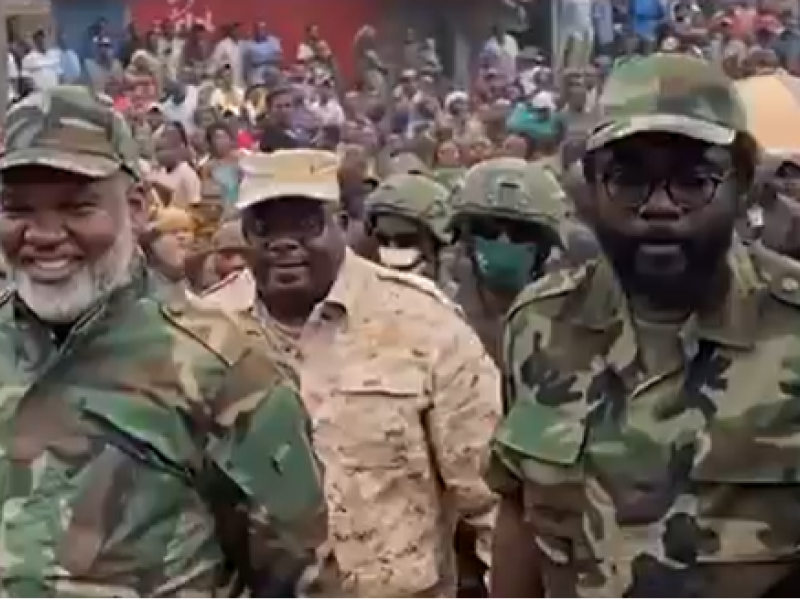
The AFC/M23 rebellion, which maintains control over significant territories within North Kivu and South Kivu provinces, persistently receives military assistance from the Rwandan Defence Forces (RDF). This support is crucial for their ongoing operations and the reinforcement of their strategic strongholds across the eastern region of the Democratic Republic of Congo. These findings have once again been highlighted in a United Nations Group of Experts report, which was submitted to the Security Council Committee on May 8, 2026, and subsequently reviewed on June 5, 2026.
The detailed document confirms the continuous presence of RDF personnel and the arrival of additional troops in both North Kivu and South Kivu. It further outlines their active involvement across various frontlines, leveraging advanced military technologies, state-of-the-art equipment, and aerial warfare capabilities. This report underscores the consistent operational backing provided by the RDF to the AFC/M23, demonstrating their ability to swiftly deploy highly specialized assets, including drones, electronic warfare tools, and special forces units.
Significantly, the report reveals that the RDF conducted operations in areas, such as Uvira, where no presence of the FDLR (Democratic Forces for the Liberation of Rwanda) had been detected. This directly challenges Kigali’s assertion of self-defense, which it uses to rationalize its military intervention as merely “defensive measures” in the region.
“By December 2025, the estimated deployment of RDF forces in the eastern Democratic Republic of Congo ranged cautiously from 8,000 to 10,000 troops in South Kivu and between 6,000 and 8,000 in North Kivu, with no indication of any substantial withdrawal thereafter. Subsequent movements primarily involved rotations and reinforcements, continuing up to the point of this report’s compilation,” the document states.
As previously detailed, the report further elaborates that the RDF maintained strategic forward positions, initiated offensive actions, and established operational corridors for the M23. United Nations experts conclude that every M23 combat unit operated under the direct supervision and support of the RDF.
“RDF personnel were embedded within mixed battalions alongside M23 elements, particularly commando units hailing from Bigogwe, Rubavu, and Cyangugu. More recently, RDF members operating in the Democratic Republic of Congo have adopted M23 uniforms to evade detection. For similar reasons, troop movements were predominantly conducted under the cover of night,” the UN Group of Experts report clarifies.
This latest report from the UN expert group emerges at a time when the security and humanitarian conditions in eastern DRC continue to worsen, despite the existing Washington Agreement and a series of evaluation meetings. Persistent tensions between Kinshasa and Kigali further complicate matters, as each side offers its own interpretation of the Washington Agreement’s provisions, making its implementation challenging and arduous, a year after its signing at the ministerial level.
Similarly, the Doha process, facilitated by the State of Qatar, faces significant hurdles. Despite numerous rounds of discussions, Kinshasa and the Rwanda-backed Alliance du Fleuve Congo (AFC)/M23 rebellion have struggled to bridge their differences on key contentious issues. The Montreux stage in Switzerland, intended to inject fresh momentum into this diplomatic effort, ultimately failed to yield the anticipated outcomes. Commitments made during this negotiation phase have not been fully honored, and the escalating security crisis in the Middle East has further overshadowed this dossier, impeding mediation efforts.