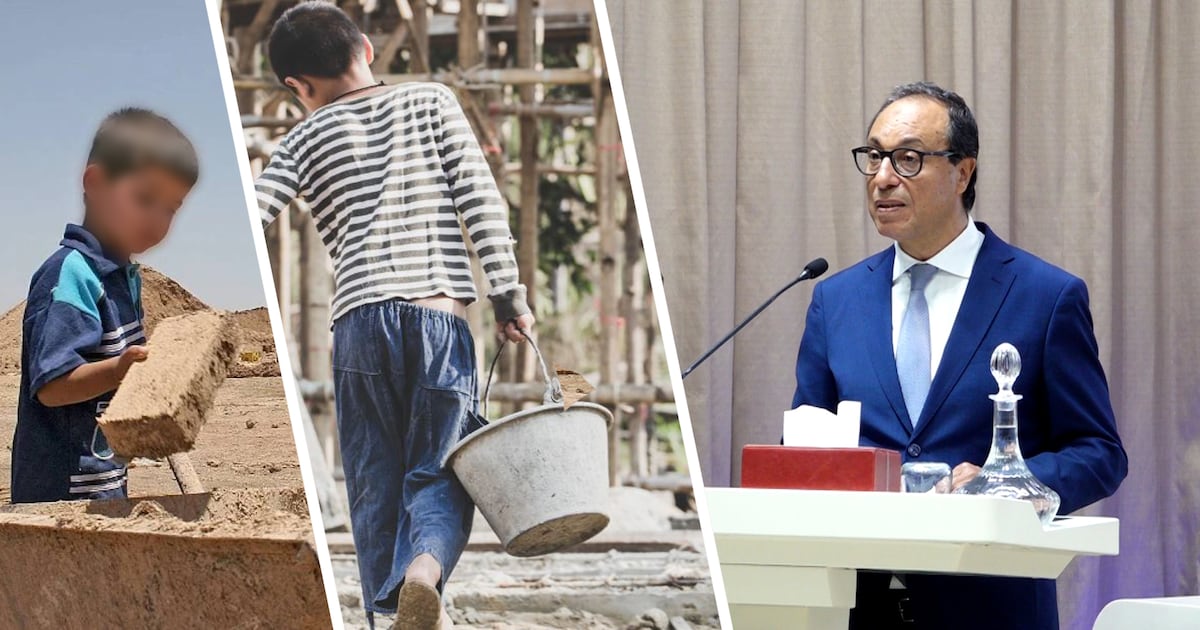
While Morocco has made significant strides over the past twenty years, the issue of child labor remains a pressing concern. Although the number of working minors has dropped by more than 80% since 1999, the practice persists in the shadows of the informal economy and hazardous industries. On Tuesday, July 1, the Economic, Social and Environmental Council (CESE) met in Rabat to unveil a comprehensive set of recommendations aimed at ending this phenomenon once and for all.
During the presentation of the report titled “For an effective public policy to eradicate child labor in Morocco,” CESE President Abdelkader Amara highlighted that 78% of the 1,540 citizens surveyed believe that child labor remains a widespread issue across the country. This public perception has pushed the institution to evaluate existing policies and suggest more robust intervention strategies.
Progress and persistent challenges in protecting minors
Amara acknowledged the Kingdom’s legislative progress, specifically the ban on employment for children under 15 and the gradual phase-out of dangerous tasks for those aged 16 to 18. Official statistics show the tangible results of these efforts: the number of economically active children aged 7 to 17 fell from 517,000 in 1999 to approximately 101,000 in 2024.
“In 1999, over half a million children were working. By 2024, that number has dropped to about 100,000. This is a significant achievement that deserves recognition,” stated the CESE President. However, the council’s report notes that while progress is undeniable, it is not yet sufficient to reach the goal of total eradication.
The CESE identifies deep-rooted issues such as the informal economy and poverty as the primary drivers of this situation. Amara emphasized that a child’s rightful place is within the family and educational environments. He further argued that child labor stifles physical and psychological growth, perpetuates social inequality, and hinders the nation’s overall progress.
The reality of exploitation and hazardous work
Public feedback reveals that 27% of respondents see child labor most frequently in public spaces, involving street vending, heavy manual labor, or car washing. More alarmingly, 22% pointed to severe exploitation, including organized begging, sexual abuse, and involvement in drug trafficking.
The report also warns that nearly 60% of working children are engaged in high-risk activities. To address this, the CESE advocates for a revision of the Labor Code and an update to the 2010 decree regarding prohibited hazardous work. A key proposal is to raise the minimum working age to 16, aligning it with the end of compulsory schooling to ensure better synergy between social and educational policies.
Finally, Abdelkader Amara noted a new partnership between the CESE and the National Observatory for Children’s Rights (ONDE), led by Princess Lalla Meryem. This collaboration aims to harmonize efforts in prevention and protection, reinforcing the belief that child labor has no place in a modern Morocco that has achieved so much in other sectors.