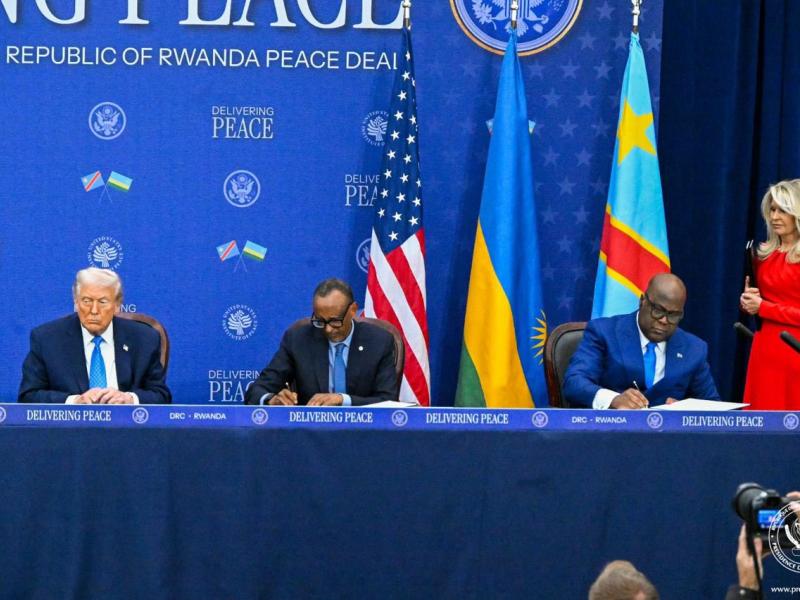
The peace accords signed in Washington, the agreements reached in Doha, and the commitments made in Montreux initially sparked hope for a resolution to the ongoing crisis in the Democratic Republic of the Congo. However, a new assessment by the United Nations Group of Experts brings those expectations back down to earth, describing the outcomes as “limited results.”
The withdrawal of Rwandan defence forces and the AFC/M23 rebel group from certain positions turned out to be little more than tactical redeployments of 15 to 20 kilometres. Meanwhile, Rwandan reinforcements — including anti-aircraft systems — continued to pour into the region until at least April 2026. No significant pullback was observed in the weeks that followed.
The DRC itself bears part of the responsibility for this deadlock. According to the report, Kinshasa failed to honour its pledge to neutralise the FDLR, a Rwandan armed group that kept fighting alongside the Congolese army (FARDC).
The experts also highlight internal divisions within the AFC/M23. While political figures Corneille Nangaa and Joseph Kabila harboured ambitions of seizing power in Kinshasa, most M23 military commanders opposed any operations beyond North Kivu and South Kivu. This rift between political aspirations and military reality is undermining the movement’s coherence and strategic direction.