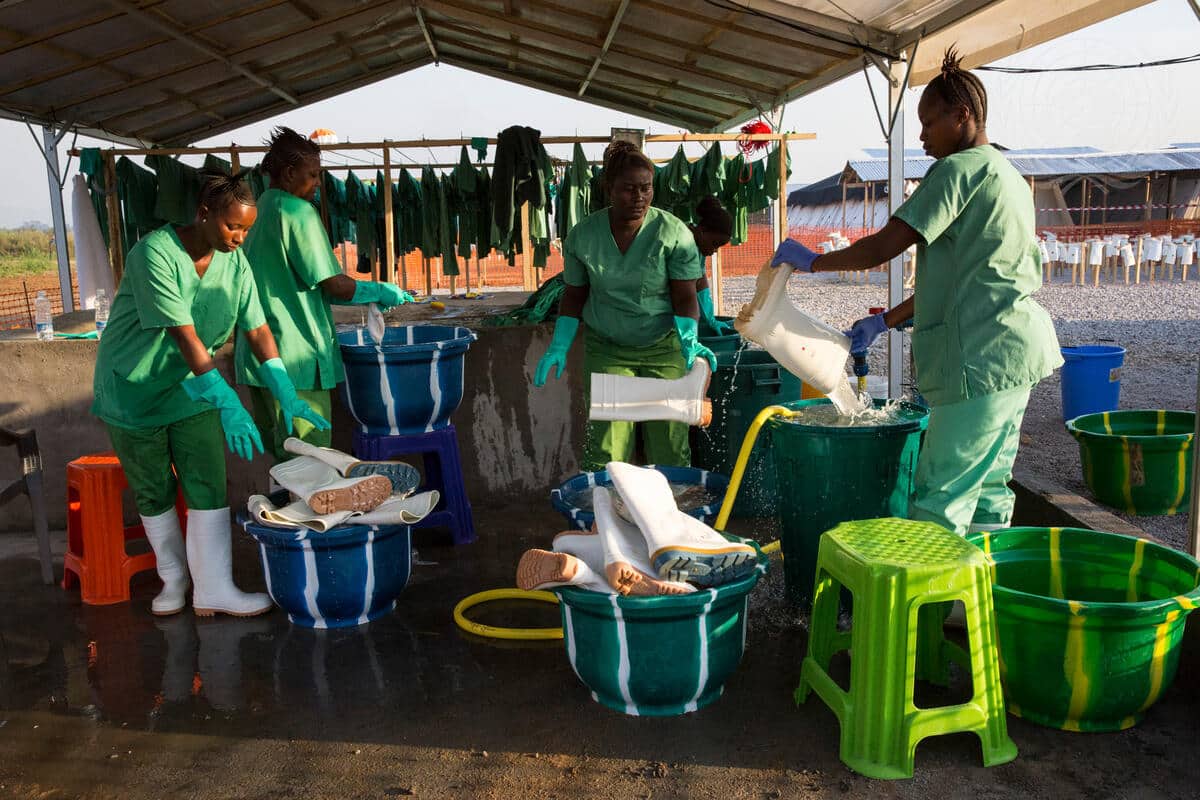
An Ebola outbreak declared in the Democratic Republic of Congo (DRC) on May 15 in Ituri province has intensified into a severe public health crisis. The rare Bundibugyo Ebola virus—currently lacking an approved vaccine or targeted treatment—continues to spread rapidly across eastern DRC. Affected regions now include North Kivu, South Kivu, Haut-Uele, and Tshopo, with neighboring Uganda also reporting cases. Despite the deployment of medical teams from global NGOs, the situation remains alarmingly out of control.
According to the latest United Nations update released August 3, citing World Health Organization (WHO) data from August 1, the crisis has escalated to 3,748 confirmed cases and 1,587 deaths as of July 30. The fatality rate stands at a staggering 44%. Even more concerning, the past week alone saw 567 new infections and 296 fatalities—the highest weekly toll since the outbreak began. Among those affected are 44 healthcare workers, with 151 medical personnel infected since the crisis started.
In response to this worsening outbreak, the United Nations has emphasized that “response capacities must scale up immediately.” Humanitarian organizations like the International Medical Corps (IMC), in coordination with UN agencies, are now expanding emergency interventions to curb the virus’s grip.