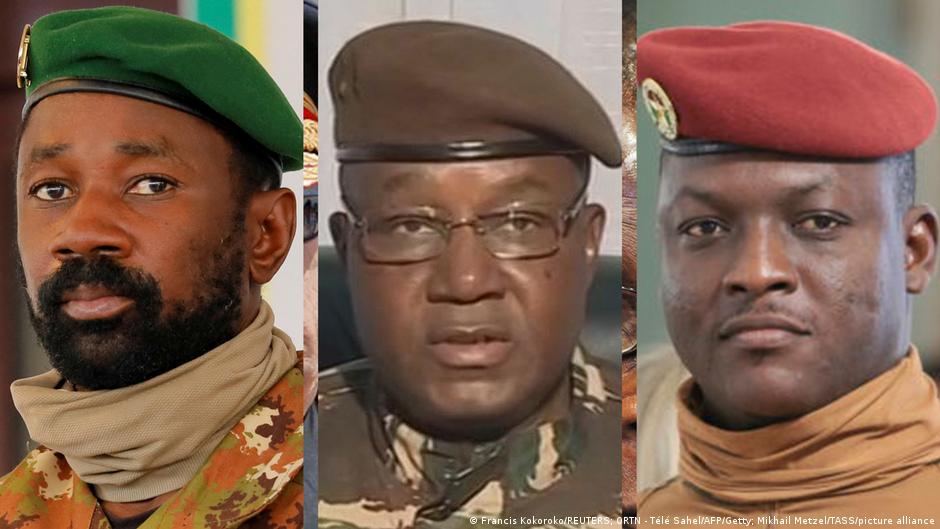
The Alliance of Sahel States (AES)—comprising Burkina Faso, Mali, and Niger—faces a critical juncture as military-led governments navigate the tension between security imperatives and democratic governance. Since 2020, coups in these nations have reshaped political landscapes, with juntas citing counter-terrorism as their primary justification for seizing power.
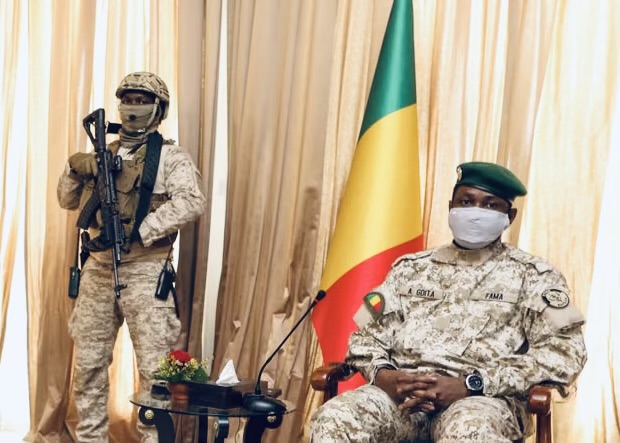
However, as transitions drag on, citizens and analysts question whether these leaders are genuinely committed to restoring rule of law and democratic norms. Public consultations in Mali, for instance, have proposed abolishing political parties and elevating junta leader Assimi Goïta to a five-year renewable presidency—despite his lack of electoral legitimacy. Similar moves in Niger and Burkina Faso reflect a broader skepticism toward traditional democratic models.
searching for homegrown governance
Critics argue that decades of neocolonial structures have stifled Africa’s political evolution. Voices across the Sahel now advocate for alternative systems rooted in local values, challenging the post-colonial consensus that prioritized Western-style democracy. The 1990s national conferences, which enshrined democratic alternation in the region, are now seen by some as ineffective impositions.
Military leaders like Ibrahim Traoré of Burkina Faso have publicly dismissed the idea that democracy alone drives development, while opponents counter that authoritarianism has repeatedly failed to deliver stability or prosperity. The debate intensifies as regional bodies like the Economic Community of West African States (ECOWAS) impose sanctions to restore constitutional order—a move perceived by many as foreign interference.
the erosion of political pluralism
Political parties, historically weak in the Sahel, face existential threats under military rule. In Guinea—not part of the AES but similarly under junta control—over 50 parties were banned in 2021 for failing to meet vague administrative criteria. The proposed constitutional referendum, set for September 2024, is widely viewed as a tool to consolidate military power rather than restore democracy.
Meanwhile, repression of dissent has silenced opposition figures across Mali, Burkina Faso, and Niger, where free expression is increasingly criminalized. The juntas’ rhetoric often frames these measures as necessary for security, but critics warn they risk entrenching authoritarianism under the guise of fighting terrorism.
what lies ahead for the Sahel?
The AES’s future hinges on whether its leaders can reconcile security needs with democratic aspirations. Without robust institutions, inclusive dialogue, or respect for pluralism, the region risks deepening instability—regardless of who holds power. As Soma Abdoulaye, a constitutional law professor from Ouagadougou, noted: “The problem isn’t the absence of democratic norms, but the failure to apply them.” The Sahel’s experiment with military-led governance may yet redefine the very meaning of democracy in Africa.