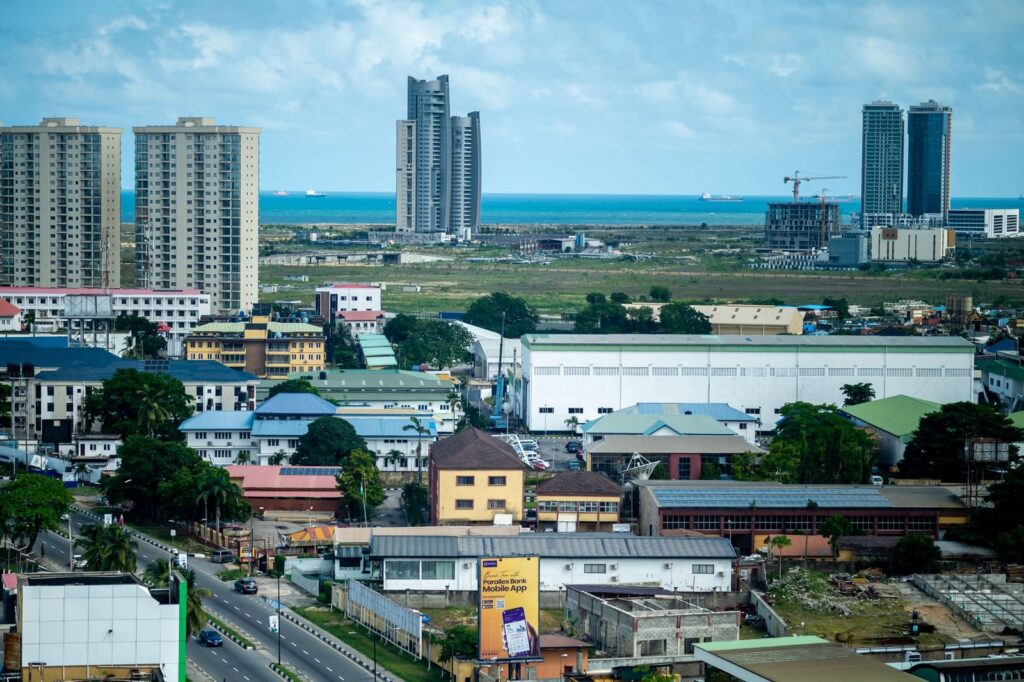
Gabon’s public debt is on a concerning upward trajectory, with official budgetary forecasts from Libreville indicating it will reach 94.3% of the Gross Domestic Product (GDP) by 2027. This financial path, initiated during the transitional presidency and maintained under Brice Clotaire Oligui Nguema’s administration, pushes the nation well beyond the 70% GDP convergence criteria established by the Economic and Monetary Community of Central Africa (CEMAC), signaling a critical economic threshold.
A debt trajectory concerning financial partners
The rapid increase in Gabon’s outstanding debt clashes sharply with the fiscal discipline commitments made to multilateral lenders. Despite substantial oil revenues and a surge in manganese prices – Gabon being a leading global producer – the nation’s public finances struggle to generate the surpluses needed for debt reduction. A growing portion of state revenues is now consumed by debt servicing, severely limiting the capacity for vital investments in infrastructure and social services.
This escalating trend coincides with the International Monetary Fund (FMI) suspending its disbursements under the extended credit facility in 2024. The FMI cited concerns over financial governance lapses and uncontrolled spending. Without an active program with the Bretton Woods institution, Libreville is increasingly forced to rely on the regional public securities market and bilateral financing, both of which incur higher costs compared to more favorable concessional windows. This situation is a key piece of African economy news for the continent.
The risky gamble of public spending for economic revival
Since assuming power in August 2023 following the overthrow of Ali Bongo Ondimba, General Oligui Nguema has strategically leveraged public procurement as a tool for political legitimization. Numerous projects, including road infrastructure, social facility rehabilitation, and housing programs, have been initiated. This assertive display aims to demonstrate a clear break from previous administrations. However, this significant budgetary push has led to a widening primary deficit and a growing accumulation of domestic arrears owed to state suppliers.
Budgetary documents indicate that Gabon’s public debt stock is projected to climb from approximately 73% of GDP in 2024 to 94.3% by 2027. Such a rapid increase over just three fiscal years suggests a growing reliance on borrowing to finance the budget, rather than on boosting internal tax revenue. Gabon’s tax pressure rate, historically low for a middle-income country, remains a persistent point of contention with technical partners. This development is a key area of focus in African politics English discussions.
Budgetary sovereignty and investor signals
For a sovereign issuer like Gabon, which participates in international markets through various Eurobonds, its credit rating evolution is a direct concern. Rating agencies have repeatedly revised the country’s outlook downwards, penalizing the uncertainty surrounding its budgetary trajectory and its capacity to refinance upcoming maturities. A sustained breach of the 90% GDP threshold would expose Libreville to higher costs for its external debt and a shrinking pool of investors willing to subscribe to its bond issuances.
Within the sub-region, Gabon’s situation is closely observed by CEMAC partners, who fear that an isolated fiscal slippage could destabilize the common foreign exchange reserves managed by the Bank of Central African States (BEAC). Regional monetary authorities have frequently reiterated the urgent need to return to sustainable debt ratios, particularly as Chad, Congo-Brazzaville, and Cameroon also exhibit strained debt profiles. This is a crucial topic in Africa news and for the continent press.
The political credibility of this announced trajectory remains a significant question. The transition to a civilian constitutional framework, confirmed by the November 2024 referendum and the upcoming April 2025 presidential election, theoretically paves the way for the reinstatement of financial cooperation programs. However, the Gabonese executive must pair its infrastructure ambitions with a credible fiscal consolidation plan. This is an indispensable condition to prevent public debt from becoming a structural vulnerability for the nation’s economy in the medium term. Official projections explicitly show the 94.3% of GDP threshold by 2027.


More Stories
Mali’s military under siege: the human cost behind Assimi Goïta’s strategic missteps
Behind the legacy: how Abdoulaye Koné shaped Ivory Coast’s economic backbone
Peering behind the curtain: how Benin’s CCI budget 2027 reshapes local economies