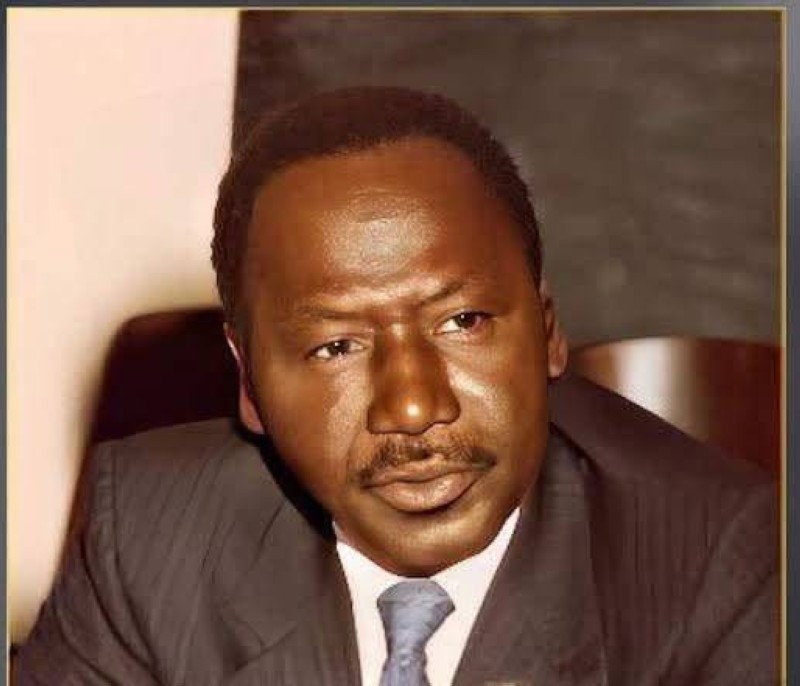
At 91, Abdoulaye Koné’s death closes more than a personal chapter—it marks the end of an era for Ivory Coast’s economic identity. His decades-long service as minister of Economy and Finance under President Félix Houphouët-Boigny anchored the country’s financial stability and regional leadership through the UEMOA framework. But behind this official portrait lies a deeper story: how one man’s administrative insight navigated political shifts, economic crises, and institutional transformations that defined an independent nation’s growth trajectory.
The evolution of a civil servant: from Tingréla to the presidential cabinet
Born in the northern village of Tingréla, Abdoulaye Koné spent most of his life in the corridors of power, shaping policy long before he held a ministerial portfolio. His journey began in the trenches of public administration—first as Director of the Budget, then as Secretary of State for Finance—where he helped draft the blueprints for Ivory Coast’s early post-independence economic strategy. These roles placed him at the nexus of fiscal policy and state expenditure, a position that would later define his influence under Houphouët-Boigny’s leadership.
What often goes unnoticed is the behind-the-scenes work that made such influence possible. Koné’s tenure in these roles coincided with the country’s attempts to transition from colonial economic structures to self-sustaining systems. His work behind closed doors involved negotiating budget ceilings, reallocating scarce resources, and aligning public spending with national development priorities—a delicate balancing act during a period marked by political consolidation and economic experimentation.
Crafting regional economic unity: Koné’s quiet hand in the UEMOA foundation
Beyond Ivory Coast’s borders, Abdoulaye Koné played a pivotal role in weaving the fabric of regional economic cooperation. As a key architect within the UEMOA framework, he helped lay the groundwork for monetary stability and fiscal convergence across eight West African states. His involvement was not merely symbolic; it was operational. He participated in drafting protocols, setting benchmark criteria for member states, and ensuring that Ivory Coast’s financial governance aligned with broader West African standards—a process fraught with political tension and technical complexity.
The UEMOA story is often told through grand summits and policy declarations. But Koné’s contribution was rooted in the daily grind of technical committees, where he balanced national interests with regional obligations. His collaboration with peers like Alassane Ouattara—then at the Central Bank of West African States (BCEAO)—illustrates how shared vision and administrative rigor could translate into tangible integration outcomes.
Preserving institutional memory: the invisible thread of governance
Perhaps Koné’s most enduring contribution is not recorded in official reports or policy papers but woven into the institutional memory of Ivory Coast’s civil service. He witnessed—and often guided—the evolution of the Ministry of Economy and Finance through multiple regimes, from Houphouët-Boigny’s strongman rule to the more market-oriented approaches of later years. His presence in the system provided continuity during turbulent times, ensuring that economic policies retained coherence amid shifting political winds.
This institutional longevity raises critical questions: what happens when such custodians of collective memory depart? Ivory Coast now faces the challenge of not just mourning a statesman, but safeguarding the institutional knowledge he embodied. Will future policymakers draw from his experiences, or will parts of that legacy fade into abstraction?
Reactions and reflections: a nation pauses to remember
In the hours following the announcement of Koné’s passing, the Ivorian presidency acknowledged his role as a “great servant of the state,” emphasizing both his integrity and his pivotal role in shaping the country’s economic trajectory. President Alassane Ouattara, who worked alongside Koné during his time at the BCEAO, described him as a source of inspiration and unwavering support—words that reveal the depth of his influence beyond the public sphere.
For many Ivorians, Koné represents more than a technocrat. He embodies the arc of a nation that sought to build itself from the ground up. His life story—from a rural upbringing to the highest echelons of economic governance—mirrors the broader narrative of Ivory Coast’s aspirations and struggles. In this sense, his death is not just a loss of an individual, but a moment of reflection on the values that underpinned early nation-building.
A legacy in transition: what next for Ivorian economic memory?
With Koné’s passing, Ivory Coast stands at a crossroads. His death invites a broader conversation about how nations preserve the lessons of the past while navigating the uncertainties of the future. Will his strategic insights—tested over decades of public service—be formalized into training programs, mentorship initiatives, or archival documentation? Or will they remain tacit, accessible only through oral histories and fading institutional knowledge?
One thing is certain: Abdoulaye Koné’s career was not just a footnote in Ivorian history. It was a foundational chapter in the story of how a young nation learned to manage its resources, balance its books, and envision a future beyond colonial frameworks. As Ivory Coast mourns, it is also being called to honor that legacy—not with monuments, but with continued relevance.
In the end, the true measure of Koné’s impact may lie not in the policies he helped enact, but in the professional ethos he embodied: discipline, foresight, and an unyielding commitment to public service. These are values that transcend individuals. But it is people like Abdoulaye Koné who turn ideals into institutions—and institutions into nationhood.

More Stories
Peering behind the curtain: how Benin’s CCI budget 2027 reshapes local economies
Behind S&P’s steady Cameroon rating: how political transitions shape credit risk
Niger: the widening gap between transition rhetoric and the reality on the ground