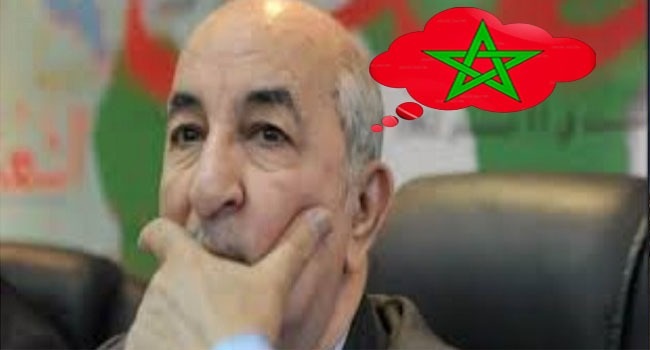
In recent years, Algeria’s political leadership under President Abdelmadjid Tebboune has escalated its rhetoric against Morocco to unprecedented levels. What was once a simmering tension during the presidency of Abdelaziz Bouteflika has now erupted into a full-blown campaign of public animosity, with state-aligned media playing a central role in amplifying this hostility.
From silence to outright hostility: a shift in Algerian politics
Under Bouteflika’s rule, Algeria’s disdain for Morocco remained largely subdued, managed behind closed doors. The former president preferred to harbor grudges privately rather than broadcast them. In stark contrast, Tebboune’s administration has embraced a confrontational approach, openly stoking resentment toward its neighbor. Critics argue this shift reflects a deliberate political strategy rather than a sudden surge in public sentiment.
Some observers suggest that social media has magnified existing tensions, creating the illusion of a newfound hostility. However, this overlooks a critical development: the launch of AL24 News, a state-backed television channel whose primary mission appears to be twofold—glorifying the Algerian leadership while systematically vilifying Morocco. Viewers tuning in to its broadcasts or following its online content are met with a barrage of inflammatory rhetoric, where journalists and commentators compete to craft the most damaging soundbites against the Kingdom.
State-sponsored media and the normalization of propaganda
The Algerian government’s media outlets have crossed lines that defy reason. During major sporting events like the Qatar World Cup—where Morocco’s national team reached the semifinals, earning global acclaim—Algerian television went to great lengths to avoid mentioning the Moroccan team by name, deeming it beneath dignity to acknowledge their success. Now, with the 2026 World Cup on the horizon, the pattern persists: Morocco’s achievements are treated as if they do not exist.
This refusal to recognize Morocco’s presence extends beyond sports. State-aligned commentators have stooped to levels that shock even casual observers. In one particularly egregious incident, a pundit alleged that Lionel Messi’s three goals against Algeria during a match were not the result of skill but rather manipulation by «the Jewish lobby», claiming this was retaliation for Algeria’s stance on Western Sahara and Palestine. Such baseless accusations, amplified by official channels, reveal a disturbing pattern of state-sponsored propaganda.
Antisemitism and the erosion of international credibility
The spread of these narratives is not confined to Algeria’s borders. Translations of these inflammatory remarks have circulated widely, drawing global attention to Algeria’s troubling embrace of antisemitic tropes within its state media. By legitimizing and broadcasting such rhetoric, Algeria’s government risks not only deepening regional divisions but also damaging its own reputation on the world stage.
This deliberate cultivation of hate is not an isolated phenomenon. The Algerian regime has systematically redirected its resources and influence toward fostering division, confrontation, and rupture with neighboring countries. Since Tebboune took office, this confrontational posture has become a defining feature of Algeria’s foreign policy, straining relations across the Maghreb, the Mediterranean, and Africa.
How hatred became a political currency in Algeria
The normalization of anti-Moroccan sentiment has evolved into a troubling political economy. In Algeria’s corridors of power, demonstrating an unyielding hatred for Morocco has become a fast-track to advancement. Aspiring officials and bureaucrats no longer need to prove competence or vision; instead, they need only to showcase their fervent opposition to Morocco. This twisted logic has created a dangerous incentive structure, where division is rewarded and diplomacy is sidelined.
The consequences are far-reaching. Algeria’s neighbors watch with growing concern as its leadership prioritizes confrontation over collaboration. Meanwhile, the public is fed a steady diet of manufactured grievances, reinforcing a divisive national identity built on the premise: «Tell me who you hate, and I’ll tell you who you are.»