The Confédération des États du Sahel (AES) at a Crossroads: Promises vs. Performance
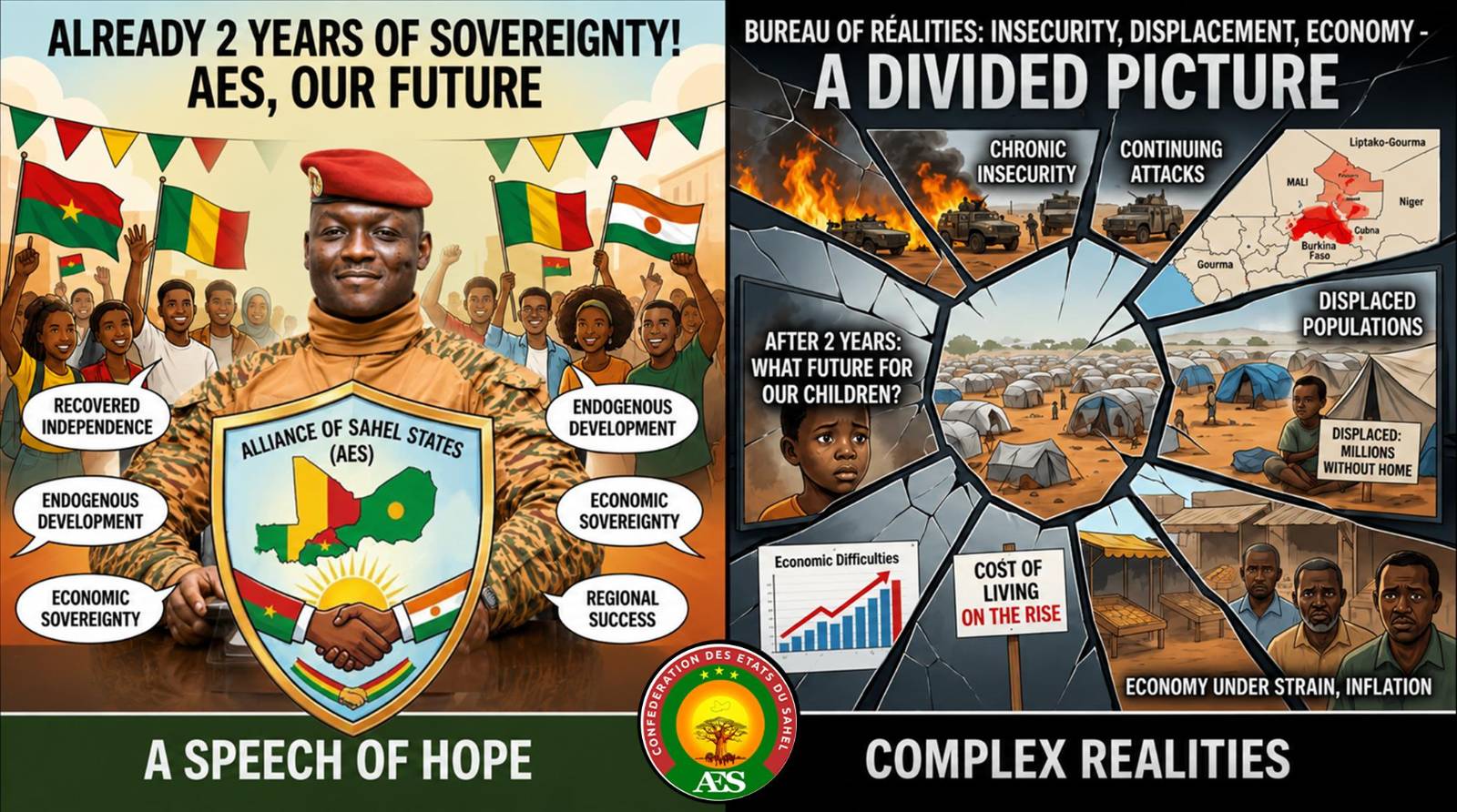
Two years after the establishment of the Confédération des États du Sahel (AES), its leaders, including Captain Ibrahim Traoré, continue to champion the alliance as a triumph of political will and strategic vision. Rooted in principles of sovereignty, solidarity, and mutual cooperation, the AES was conceived to strengthen ties between Burkina Faso, Mali, and Niger. Yet, while its proponents extol its diplomatic, military, and institutional strides, critics argue that tangible progress remains elusive.
The rhetoric surrounding sovereignty has emerged as a defining feature of the AES’s public narrative. However, sovereignty encompasses far more than a rejection of traditional partnerships or a reorientation of international alliances. At its core, it demands tangible outcomes: the safeguarding of citizens, the functionality of institutions, the resilience of economies, and the creation of opportunities for the youth.
Unmet Security Challenges
Despite repeated claims of military successes, armed groups persist in operating across vast regions of the three member states. Civilians continue to face daily threats of violence, while forced displacements and humanitarian crises remain pressing concerns. The promise of enhanced security, a cornerstone of the AES’s founding mission, has yet to materialize for countless communities.
Economic Integration: A Work in Progress
The anticipated benefits of regional economic integration have yet to materialize. Trade flows remain constrained, fiscal pressures endure, and purchasing power continues to erode for many households. Observers note that the projected advantages of the AES—such as streamlined commerce and shared resources—remain largely aspirational rather than realized.
Governance and Accountability: The Missing Link
The relentless focus on sovereignty has, in some instances, overshadowed critical discussions on governance, transparency, and accountability. A regional union’s legitimacy hinges not only on political declarations but also on the efficacy of its institutions, the implementation of public policies, and the responsible stewardship of resources. Without these pillars, the AES risks losing the trust of its citizens.
The AES undeniably represents a significant shift in the political landscape of West Africa. Yet, its legacy will be determined not by the speeches of its leaders but by its ability to deliver measurable improvements in security, economic stability, and social welfare for the people of Burkina Faso, Mali, and Niger. The true test of its success lies in the tangible realities on the ground, not the aspirations articulated in official statements.