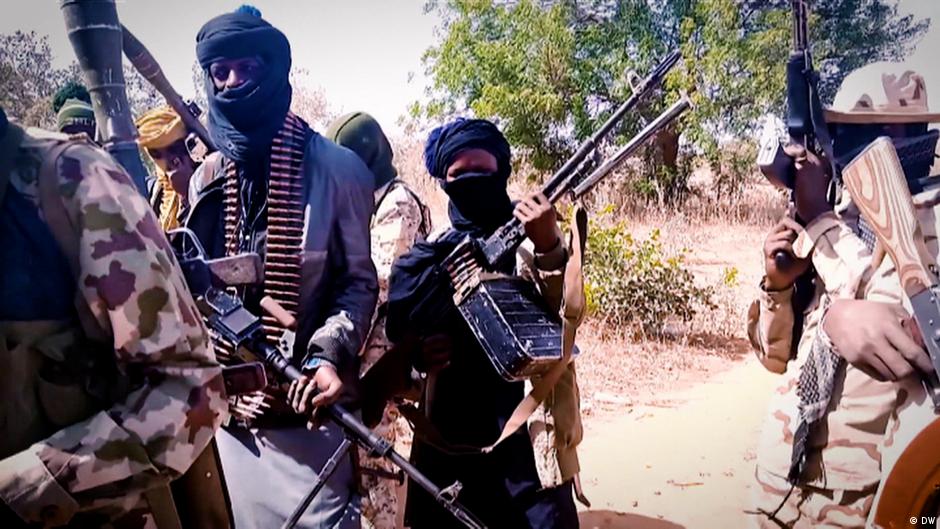
Kidnappings have become a structured industry fueling the operations of Boko Haram, a jihadist group active across Nigeria, Niger, Chad, and Cameroon. The scale of this phenomenon is staggering, particularly in Nigeria, where thousands of abductions have been recorded in recent years.
Between mid-2024 and mid-2025, nearly 4,700 people were abducted in nearly 1,000 incidents, according to security risk assessment firm SBM Intelligence. These kidnappings often target schools, with hundreds of victims losing their lives in the process. While the majority of cases occur in northern Nigeria, similar incidents have been reported in neighboring countries, including Cameroon and Niger.
In Cameroon, Boko Haram claimed responsibility for the abduction of bus passengers in Ziguangé, located in the Far North region, while in Niger, seven Chadian nationals were kidnapped near the Chadian border in late March. Tragically, one hostage was killed, while the fate of the remaining six remains uncertain.
a dual purpose: recruitment and ransom collection
According to Remadji Hoinathy, a researcher at the Institute for Security Studies (ISS), these mass abductions serve two primary objectives. First, they facilitate forced recruitment, targeting young people, women, and even entire communities to serve as fighters, laborers, or sex slaves. Second, they generate substantial revenue through ransom payments, often amounting to millions of naira or CFA francs.
For instance, Boko Haram demanded 50 million CFA francs for the release of five Chadian hostages. However, the group set an exorbitant price of 500 million CFA francs for the sixth hostage—a doctor—according to the Chadian Human Rights League in the Lac Province.
government denials amid mounting evidence
The Nigerian government officially denies paying ransoms to avoid funding terrorism. In 2022, Abuja passed a law criminalizing ransom payments, with violators facing up to 15 years in prison. However, reports suggest that authorities and families continue to negotiate and pay ransoms to secure the release of hostages.
In November 2025, accusations surfaced that the Nigerian government paid a substantial ransom to secure the release of approximately 230 students and staff from a Catholic school in Niger State. The claim, which emerged amid international pressure over Nigeria’s failure to protect Christian communities, has been vehemently denied by officials. The government attributed the hostages’ freedom to intelligence operations and precision military strikes, though experts argue that acknowledging ransom payments could bolster the group’s propaganda.
the strategic importance of the Lake Chad Basin
Boko Haram originated in Maiduguri, Borno State, Nigeria, in 2002, under the leadership of Mohammed Yusuf. The group’s name, derived from the Hausa language, translates to “Western education is sinful”, reflecting its rejection of Western cultural and political influence. Over time, Boko Haram expanded its reach beyond Nigeria, establishing a presence in the Lake Chad Basin—a region encompassing parts of Niger, Chad, and Cameroon.
Remadji Hoinathy highlights the strategic significance of this area. “The Lake Chad Basin is a transnational space, closely linked to the Sahel, where the Islamic State’s affiliates, such as the ISGS, operate. To the north, Libya serves as a critical transit route for fighters and weapons.”
“The region’s weak state presence, combined with its agricultural and pastoral productivity, creates an environment conducive to cross-border economic activity—and insurgent operations. Its geography, marked by islands, swamps, and dense forests, also provides ideal hiding spots for militants when military pressure intensifies.”
a fractured jihadist movement: ISWAP’s rise
The Islamic State’s West Africa Province (ISWAP) emerged in 2016 following a schism within Boko Haram. Dissatisfied with the group’s indiscriminate targeting of civilians—including Muslims—ISWAP pledged allegiance to the Islamic State and adopted a more organized, strategic approach. Unlike its predecessor, ISWAP prioritizes establishing relationships with local populations over indiscriminate violence.
Since then, Boko Haram and ISWAP have engaged in a violent rivalry, competing for control of territory and resources in the Lake Chad Basin. This internal conflict has further destabilized the region, complicating efforts to combat the insurgency.
regional military responses and ongoing challenges
The four countries most affected by Boko Haram—Nigeria, Niger, Chad, and Cameroon—have attempted to coordinate their military responses. The Multinational Joint Task Force, established under the Lake Chad Basin Commission, plays a central role in these efforts. Additionally, regional stabilization strategies focus on development initiatives and strengthening state presence in vulnerable communities.
Despite these measures, the insurgency persists. Remadji Hoinathy notes that Boko Haram has demonstrated remarkable adaptability, repeatedly reconstituting itself even after military setbacks. The conflict, now in its second decade, has claimed over 40,000 lives and displaced two million people in Nigeria alone, according to UN estimates. In response to the ongoing threat, the United States deployed approximately 200 troops to Nigeria last year to support and train local forces.