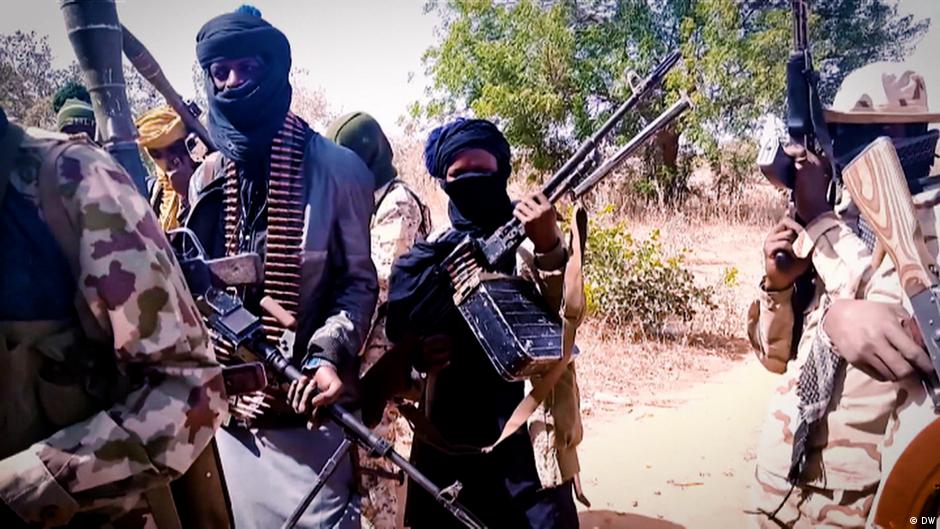
Our focus today is on the disturbing industry of kidnapping, a critical financing mechanism for Boko Haram, impacting Nigeria, Chad, Niger, and Cameroon. This deep dive into African politics English uncovers how this terror group sustains its operations.
The scale of abductions is staggering, particularly in Nigeria, the nation most severely affected. According to a security risk assessment by the Nigerian consulting firm SBM Intelligence, this phenomenon has evolved into a “structured and lucrative industry.”
The SBM Intelligence report reveals that approximately 4,700 individuals were abducted in nearly a thousand separate incidents between July 2024 and June 2025. These kidnappings, often targeting schools, have also resulted in hundreds of fatalities. While predominantly occurring in northern and central Nigeria, various groups are responsible, most notably Boko Haram—designated a terrorist organization by the UN in 2014—and the Islamic State West Africa Province (ISWAP).
Kidnappings are not confined to Nigeria alone. Cameroon experienced such an event last year with the abduction of bus passengers in Ziguagé, in the country’s Far North region, an incident claimed by Boko Haram. More recently in Niger, the same group seized seven Chadian nationals near the Chad border in late March, killing one hostage. The others are believed to remain in captivity.
To understand the motivations behind these mass kidnappings by Boko Haram, we consulted Remadji Hoinathy, a researcher at the Institute for Security Studies (ISS).
“These abductions serve two primary objectives. Firstly, they facilitate the forced recruitment of young people into these groups’ ranks, including young women, and sometimes entire communities, who are then utilized as combatants, laborers, or even sex slaves. Secondly, kidnappings fulfill a crucial economic purpose: the collection of ransoms. These payments, often thousands or even millions of Naira or CFA, are made by families, communities, and to a lesser extent, states, to secure the release of abducted individuals.”
For the Chadian hostages, for instance, the jihadists are demanding 50 million CFA francs for five individuals. For a sixth hostage, who is a doctor, Boko Haram has reportedly escalated its demand tenfold, seeking 500 million CFA francs. This dire situation has been highlighted by the Chadian Human Rights League in the Lake Province.
Government denies ransom payments
Despite the enormous sums demanded, abductors frequently succeed in obtaining at least a portion. The SB Morgen report in Nigeria labels this a “lucrative” industry because ransom demands in Nigeria over a single year approached $35 million. Of this, over $1.8 million, or nearly 5% of the total demanded, was reportedly paid by either the state or the hostages’ families. This reveals a troubling aspect of African economy news.
Officially, Nigeria maintains a policy of not paying ransoms to avoid financing terrorism. In 2022, Abuja enacted a law criminalizing ransom payments, with offenders facing up to 15 years in prison. However, this law appears to be largely unenforced on the ground, as many Nigerians continue to pay for the release of their loved ones. Furthermore, there are suspicions that authorities themselves have made ransom payments.
Nigerian authorities are widely suspected of having paid a ransom to Boko Haram to secure the release of approximately 230 students and staff from a Catholic school abducted in November 2025 in Niger State. These accusations emerged amid international pressure, particularly from the Trump administration, which criticized Nigeria for failing to protect its Christian population.
Based on intelligence sources I have gathered, the government reportedly paid a substantial sum to the jihadist group. Estimates vary, with some suggesting around €6 million, while others place the ransom closer to €1.3 million in total. These sources indicate the money was delivered in cash via helicopter to a Boko Haram leader in Borno State. The Nigerian government vehemently denies these allegations, dismissing them as unfounded. Officials assert that the hostages’ liberation was the result of intelligence work and a precise military operation, arguing that acknowledging ransom payments could bolster the propaganda efforts of these terror groups, according to experts in pan-African journalism.
“Boko Haram is no longer the same but still poses a problem,” Remadji Hoinathy (Researcher)
Boko Haram and the Lake Chad Basin
Boko Haram originated in 2002 in Maiduguri, Borno State, northeastern Nigeria. Founded by preacher Mohammed Yusuf, its core objective was to establish a radical Islamic state. The name Boko Haram, derived from the Hausa language, translates to “Western education is a sin,” reflecting the group’s rejection of all perceived corrupting Western cultural and political influences.
Maiduguri served as the movement’s initial base, where it cultivated its religious influence. Over time, Boko Haram transcended Nigeria’s borders, evolving into a regional menace. The group expanded its activities into Niger, Chad, and Cameroon, maintaining a significant presence throughout the Lake Chad Basin.
Why is the Lake Chad Basin so strategically important to Boko Haram? Researcher Remadji Hoinathy from the Institute for Security Studies explains:
“The Lake Chad Basin is crucial because, first, it’s a cross-border territory, and it’s not far from the Sahel region, which is also plagued by affiliates of the Islamic State, like EIGS. On its northern flank, Libya remains a vital transit point for men and weapons flowing into the Lake Chad Basin.
Another advantage of the Lake Chad Basin for these groups is its location at the margins of states, where government presence has historically been weak. It’s also an economically productive area, with significant agricultural and pastoral output that supports a robust local cross-border economy.
The unique geographical ecosystem of the Lake Chad Basin, characterized by islands, swamps, and dense forest areas, also provides excellent cover and hiding places when military pressure intensifies.”
ISWAP: a dissident jihadist movement
ISWAP emerged in 2016 following a significant schism within Boko Haram. This split was driven by disagreements over the extremely radical strategy of Abubakar Shekau, Boko Haram’s historical leader, whose methods indiscriminately targeted civilian populations, including Muslims.
Breaking away from Shekau’s hardline approach, ISWAP pledged allegiance to the Islamic State (EI) and adopted a more structured and organized methodology. The group actively seeks to strengthen its local presence by fostering cordial relations with communities, rather than relying solely on terror.
Since this divergence, Boko Haram and ISWAP have become fierce rivals, locked in a violent struggle for control over territories and resources in the Lake Chad Basin, fueling a brutal internecine conflict that continues to make Africa news.
The military response of states
The affected states in the region are striving to coordinate their military responses. However, as researcher Remadji Hoinathy notes, this endeavor presents considerable challenges.
“Initially, each state responded militarily within its own territory. But all four states are also members of a regional organization, the Lake Chad Basin Commission, which established the Multinational Joint Task Force.
Beyond military action, there’s also a non-military dimension to this fight through a regional stabilization strategy. This involves implementing development initiatives and strengthening state presence in communities affected by Boko Haram. After more than a decade, this asymmetric warfare persists on the ground, raising questions about the effectiveness of the various responses. In many instances, Boko Haram has demonstrated significant capacity to adapt to these responses, exhibiting resilience, reconstituting itself, and continuing to pose problems for all states and communities.”
Since 2009, this jihadist insurgency, spearheaded first by Boko Haram and later by its rival, ISWAP, has claimed over 40,000 lives and displaced two million people in northeastern Nigeria, Africa’s most populous nation, according to UN figures. To bolster Nigeria’s efforts against these movements, Washington has deployed approximately 200 soldiers to the country over the past year to support and train its armed forces, a development closely watched by the Panafrican Press and observers of continent press. This ongoing conflict remains a critical topic in Africa news and pan-African journalism.