Libreville’s grand renovation: the Baie des Cochons transformation begins
Libreville, june 25, 2026 — a pivotal moment in Gabon’s urban landscape is approaching. On june 26, the first demolition operations will commence in the Baie des Cochons district, marking the official launch of one of President Brice Clotaire Oligui Nguema’s flagship modernization projects.
The initiative targets the Sipagel area, the Léon Mba junction, and the corridor extending from the Gabonese water and energy company’s facilities to the Petit-Paris roundabout. While the primary goal is to enhance mobility and sanitation, the project also raises critical questions about balancing urban progress with the preservation of long-standing communities.
Revitalizing a congested urban artery
The Baie des Cochons district sits at the heart of Libreville’s most dynamic economic and human flows. For years, it has been a notorious bottleneck linking the Mont-Bouët market, the city center, Bessieux boulevard, and surrounding neighborhoods. The government’s plan involves creating a new main artery flanked by secondary roads to alleviate traffic and improve connectivity between the University Teaching Hospital, Petit-Paris, the Léon Mba junction, and adjacent areas.
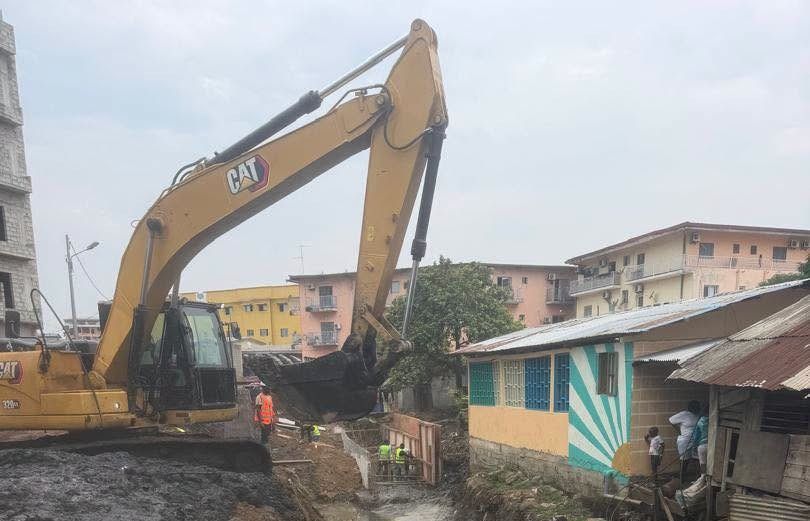
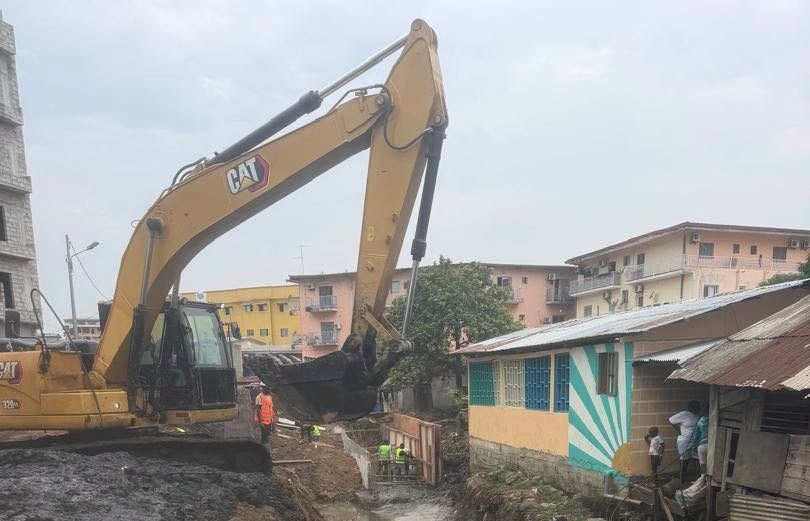
During a site visit on june 23, Housing and Urban Planning Minister Mays Mouissi outlined the project’s objectives to residents, emphasizing that clearing public land is a prerequisite for the contractor’s work to begin. Beyond traffic flow, the initiative aims to address chronic flooding issues that plague thousands of locals annually by dredging existing drainage channels, rehabilitating degraded hydraulic structures, and installing new stormwater systems.
For authorities, this represents a dual approach to urban challenges: modernizing infrastructure while mitigating environmental risks.
Navigating the human impact of urban renewal
Large-scale urban projects often bring transformative benefits alongside immediate disruptions. Families who have lived in the targeted areas for decades and small business owners who rely on these spaces for their livelihoods face uncertainty as demolition looms. The success of such undertakings hinges not just on engineering prowess but on how effectively authorities manage the human transition.
Compensation, potential relocations, and safeguarding local economic activities are just as crucial as the infrastructure itself. The ministry has pledged to prioritize dialogue with affected residents, but the coming weeks will test its commitment to balancing public interest with social equity.
A litmus test for Gabon’s urban future
The Baie des Cochons project has become emblematic of Libreville’s urgent need to break free from outdated development paradigms. Rapid population growth, unchecked urbanization, and environmental pressures demand infrastructure that aligns with modern realities. Chronic traffic jams, delayed emergency services, sanitation failures, and neighborhood isolation are no longer acceptable trade-offs for progress.
This initiative is more than a construction site—it’s a political litmus test. It will reveal whether the state can execute ambitious urban reforms while maintaining social cohesion. A modern city isn’t built on concrete and steel alone; it thrives on the trust and participation of its people.
As excavators prepare to break ground, the true measure of this transformation will lie in its tangible impact on daily life. Libreville’s future is being written today at the Baie des Cochons.