Mali: Étienne Fabaka Sissoko on the limits of dialogue with armed groups
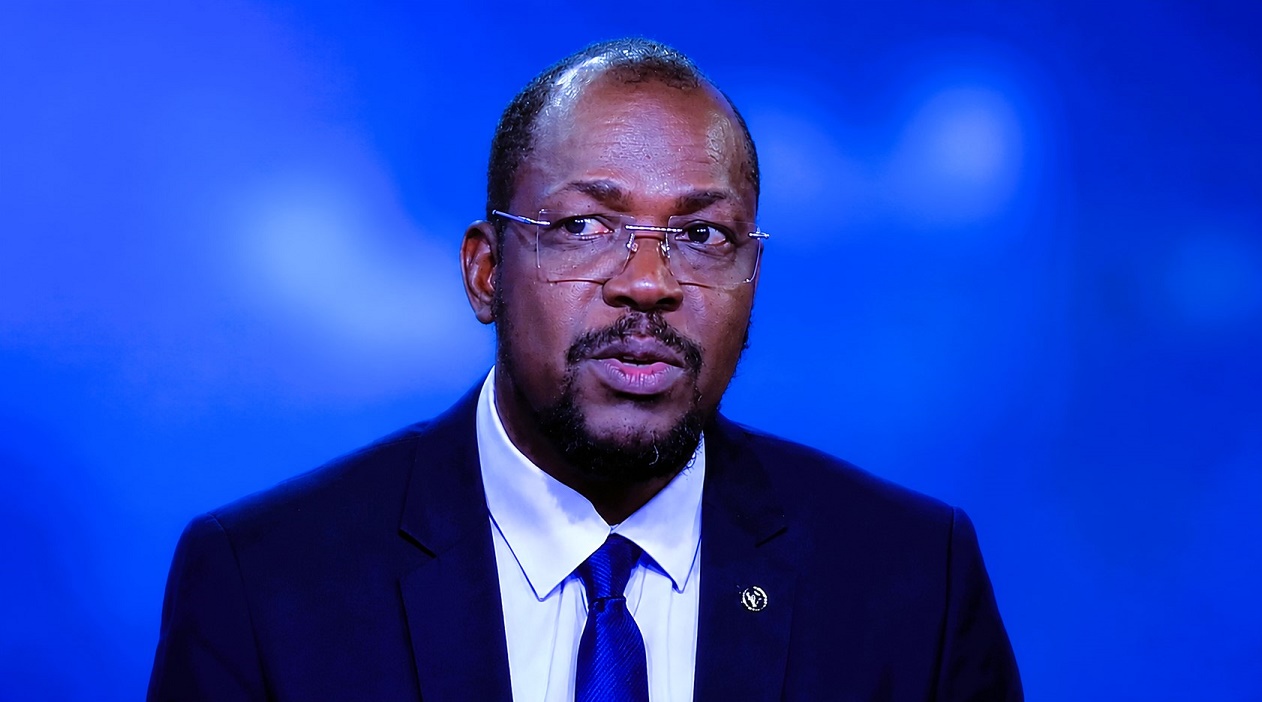
With Bamako’s streets strained by shortages and rising prices, the debate over whether to engage in talks with armed factions has reached a critical juncture. Étienne Fabaka Sissoko, spokesperson for the Coalition of Forces for the Republic (CFR), argues that engagement does not equate to alliance. In a rare interview, he outlines the coalition’s stance on Mali’s security crisis, its vision for a civilian-led transition, and the red lines that must not be crossed in any peace process.
Bamako’s crisis: when economic strangulation backfires
Étienne Fabaka Sissoko rejects the idea that the blockade—whether imposed by external actors or rebel groups—can be considered a “success.” Instead, he describes it as a strategy that punishes civilians first. In Bamako, where supply chains are already fragile, the impact is immediate: markets tighten, prices surge, and families face daily uncertainty. “A landlocked nation must control its own supply routes,” he asserts. “The CFR opposes any measure that undermines the sovereignty and well-being of Malians.”
The crisis, he warns, exposes the flaws of a purely military response. While security operations are necessary, they must be complemented by a political strategy that restores public confidence, secures trade corridors, and paves the way for sustainable peace. “The Malian people want peace,” Sissoko emphasizes, “but peace cannot be built on hunger or exclusion.”
CFR’s mission: a civilian alternative to military rule
Founded in late 2025, the CFR positions itself not as a traditional political party but as a national safeguard platform. Its goal? To offer Malians a third path between prolonged military governance and the country’s descent into chaos. “Our movement responds to a real demand,” Sissoko states. “Malians are seeking a responsible, structured Malian voice—one that can bridge divides and restore stability.”
The coalition’s approach is explicitly civilian. While it engages in dialogue with all stakeholders—including armed groups—it rejects any military coordination. “Dialogue is not an alliance,” Sissoko clarifies. “We talk to everyone, but we do not coordinate actions or share goals. The CFR is a civil movement, and its methods are political, not martial.”
No to partition, yes to territorial reform
Contrary to rumors suggesting the CFR is tied to the Azawad Liberation Front (FLA), Sissoko dismisses the idea of any structural link. “We are not the FLA’s political wing, nor are they ours,” he says. The coalition’s core principle is the unity of Mali. That said, Sissoko advocates for a decentralized governance model that empowers local authorities while maintaining a strong central state. “The issue is not about carving up the country,” he explains. “It’s about making the Malian Republic more efficient and responsive to its people.”
For Sissoko, the debate over federalism is a distraction. The real question is resource allocation and democratic control. “A unitary Mali does not mean a centralized one,” he argues. “Bamako cannot manage everything. Local governments need more autonomy—and more resources—to address the needs of their communities.”
Red lines in talks with armed groups: no to transnational jihad
The CFR’s engagement with armed factions, including the Support Group for Islam and Muslims (JNIM), is conditional. Sissoko is unequivocal: “Dialogue is not surrender, nor is it a reward.” The coalition’s red lines are non-negotiable:
- Preservation of Mali’s territorial integrity
- Rejection of any group affiliated with transnational jihadist networks
- Protection of civilians and humanitarian access
- Accountability for grave crimes
- Rejection of foreign agendas that undermine Mali’s sovereignty
Regarding Iyad Ag Ghali, the CFR refuses to base its strategy on unverified claims. “We do not negotiate with individuals—we negotiate with actions,” Sissoko insists. “If factions tied to JNIM wish to join a peace process, they must prove their commitment: halt attacks, protect civilians, and sever ties with Al-Qaeda. Words are not enough.”
Mahmoud Dicko’s role: moral authority, not political power
Sissoko cautions against portraying Imam Mahmoud Dicko as a substitute political leader. “His role could be that of a moral authority—facilitating dialogue, easing tensions, and rebuilding trust,” he says. “But executive power must belong to legitimate civilian institutions. The legitimacy of any transition must come from the people, not from the pulpit.”
Transition blueprint: restoring the “useful state”
The CFR has a structured plan for Mali’s recovery. Its priorities include:
- Education: Reopening schools and supporting teachers
- Justice: Strengthening an independent judiciary
- Security: Professionalizing national forces and securing key trade routes
- Economy: Revitalizing local industries and ensuring food and energy access
“The first step toward reconstruction is restoring the state’s core functions,” Sissoko explains. “Without security, education, and justice, no transition can succeed.”
Regional solidarity: the Alliance of Sahel Democrats (ADS)
The CFR is part of the Alliance of Sahel Democrats (ADS), a civic convergence with movements in Burkina Faso and Niger. While not a military or political command structure, the ADS aims to coordinate advocacy for democracy and public freedoms across the Sahel. “Our shared challenge is institutional collapse,” Sissoko notes. “The ADS is about solidarity, not command.”
The coalition’s vision is clear: Mali’s salvation will not come from strongmen or military coups. It will come from a strong national pact—one built on dialogue, decentralization, and the restoration of democratic choice. “The Malian people deserve better than the cycle of war and exclusion,” Sissoko concludes. “We are offering them a way forward.”