Between July 4 and 9, the Malian army, with support from Russian-affiliated African forces, engaged in combat operations against terrorist groups in the town of Anéfis. Amidst the clashes, a campaign of disinformation emerged, targeting France’s military presence in Mali—despite French troops having officially withdrawn from the country in August 2022. The false narrative sought to falsely implicate a French soldier in collaboration with rebel factions such as the National Movement for the Liberation of Azawad (MNLA) and the Group for the Support of Islam and Muslims (GSIM).
the misleading posts begin
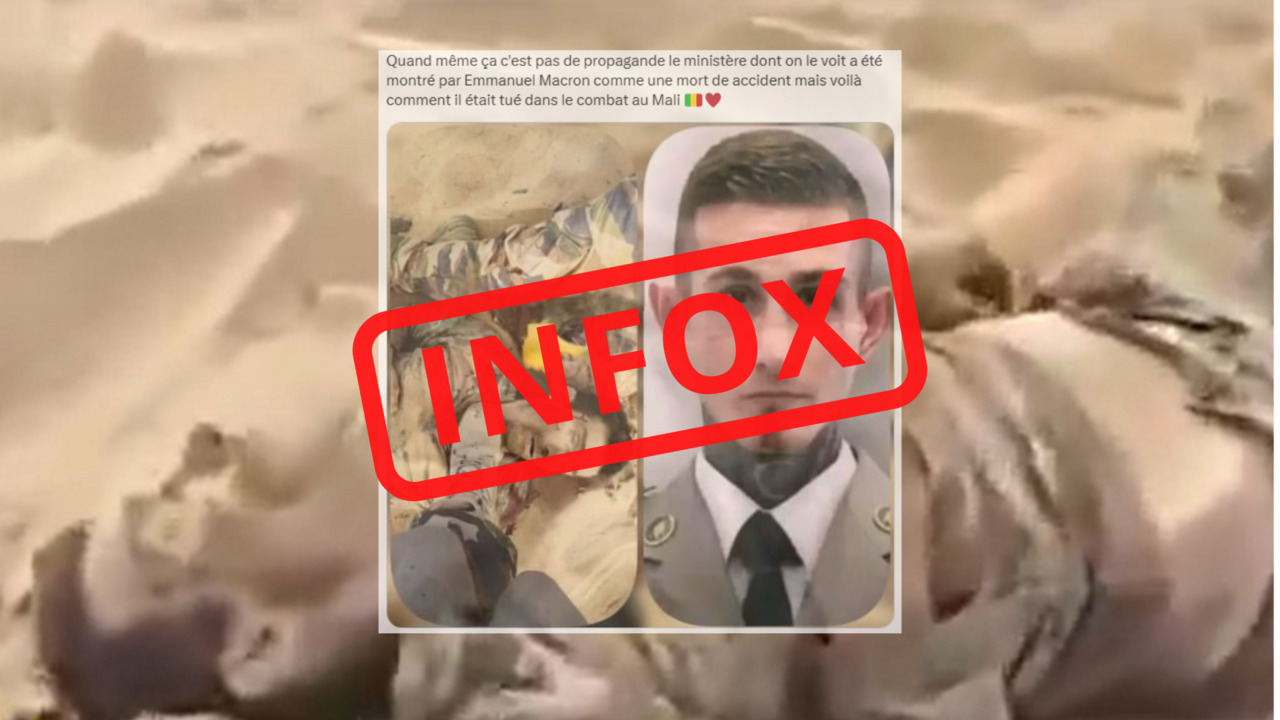
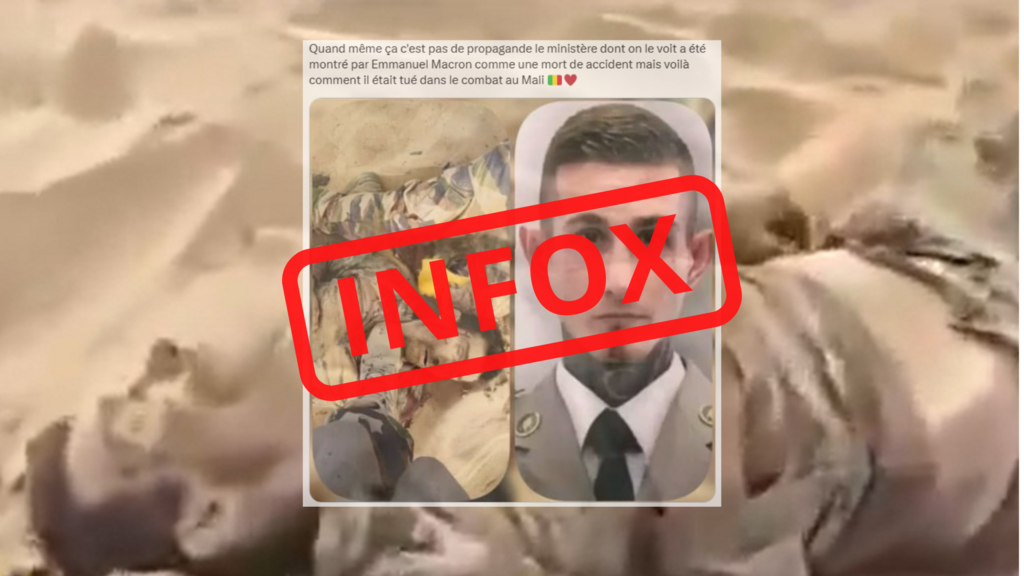
Misinformation about the incident started circulating quietly in the aftermath of the intense fighting in Anéfis. On July 9, the first deceptive post was detected on platform X (formerly Twitter). Its author exploited reports of a French military fatality that occurred on July 7 during a training exercise in the French Alps. The French general staff had publicly honored Sergeant Pena, who died in an accident. Pro-AES accounts responded by suggesting “other hypotheses, including possible death in Anéfis, Mali.”
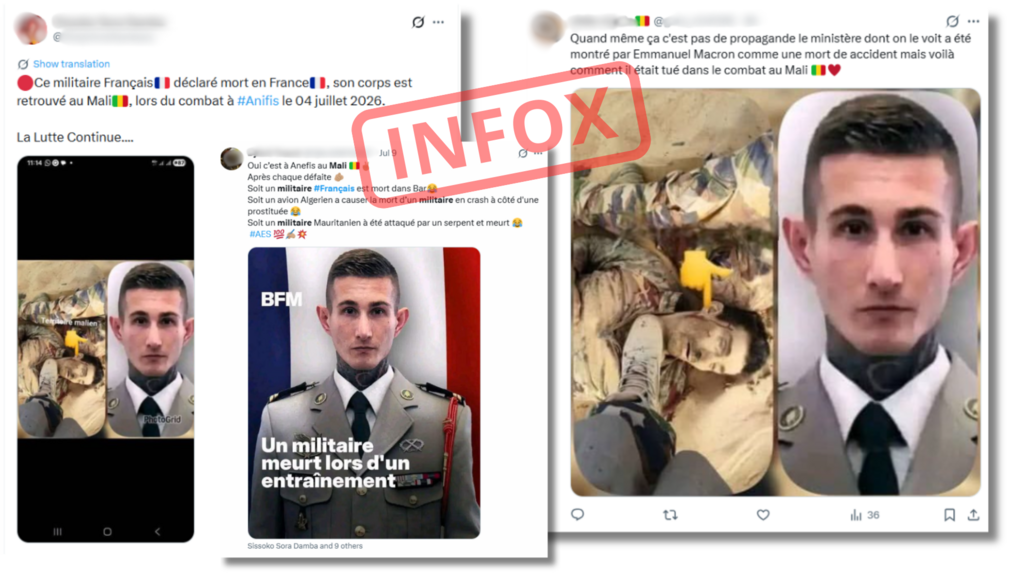
a russian mercenary, not a french soldier
The disinformation campaign escalated the following day with the publication of a photo allegedly showing the death of a French soldier. The image depicts a white man lying in the sand, resembling the official portrait of Sergeant Pena, who had died in a training accident. The manipulators capitalized on the legionnaire’s Russian origin and physical resemblance to craft a narrative designed to sow confusion among the public.
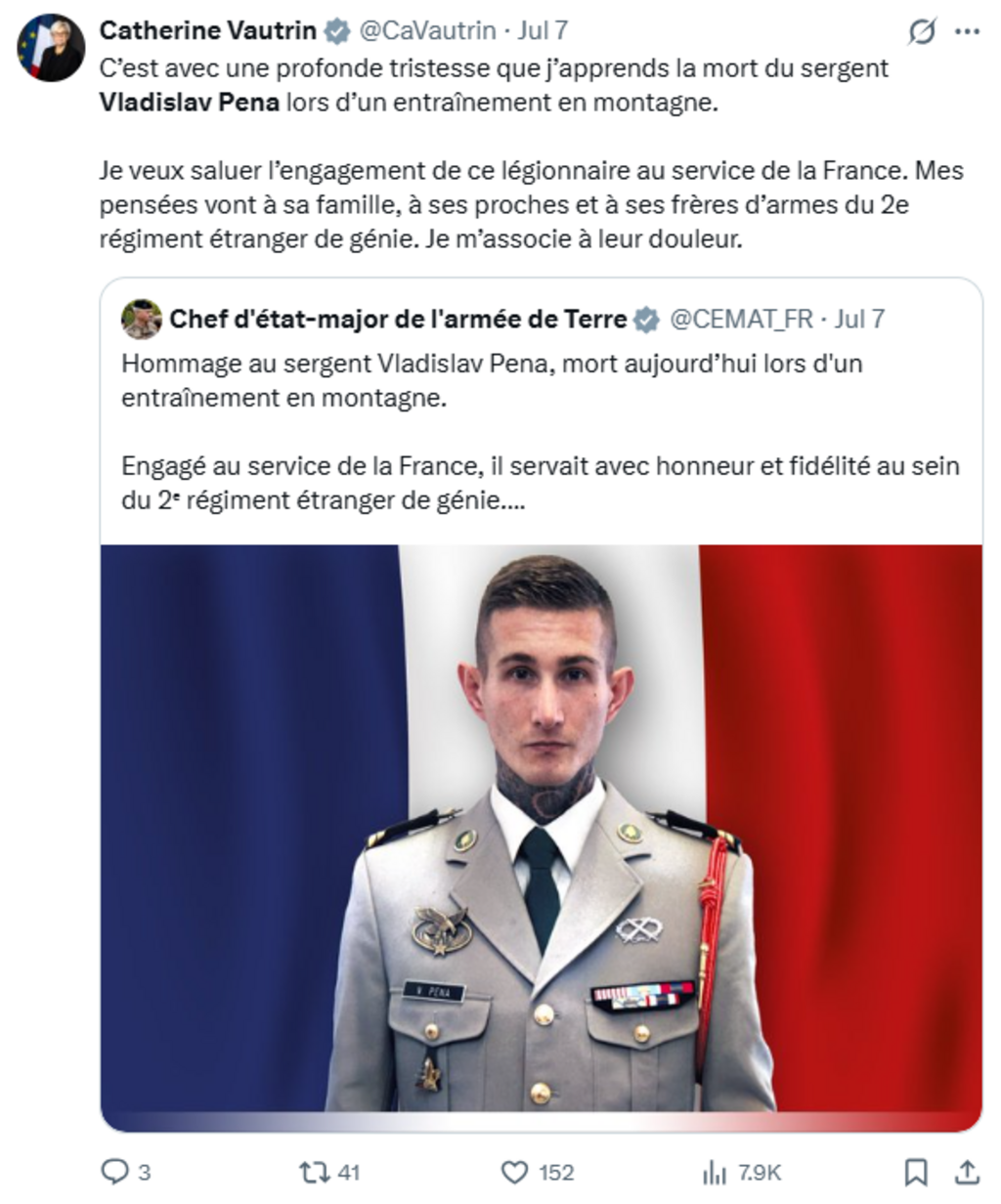
When specialists in Sahel conflicts examined the macabre images from the desert, they identified them as footage from the Tinzaouatène battle, which took place two years ago in northern Mali. Reverse image searches confirmed the same photo of a body lying in the sand, but this time identified as a Russian mercenary. Independent verification remains impossible, as the image originated from an anonymous forum where unverified claims are routinely circulated.
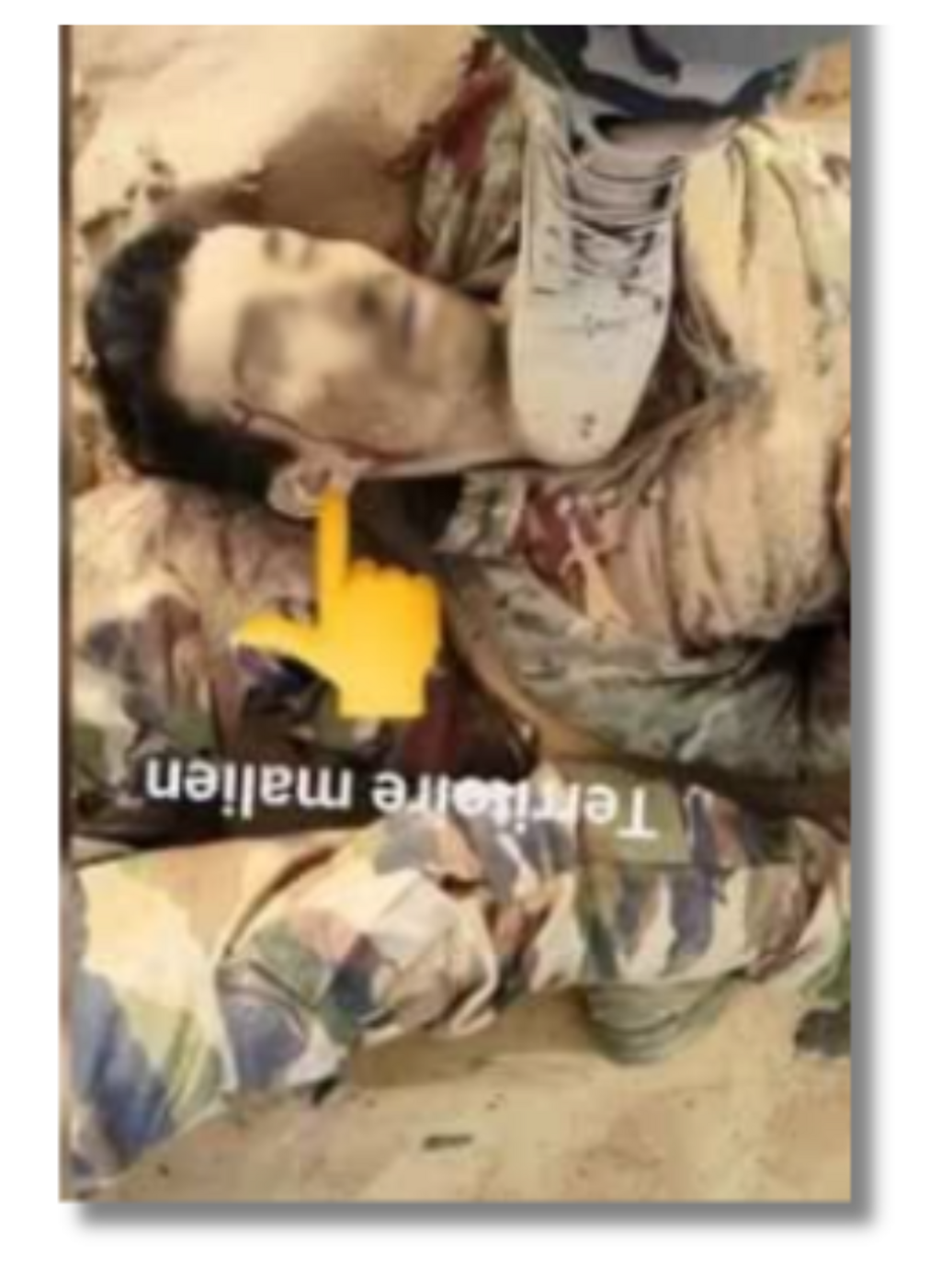
archived footage from 2024
An analysis of a six-minute propaganda video published in 2025 by the National Liberation Front of Azawad (FLNA) to mark the first anniversary of the battle revealed the same body image alongside other Russian fighters. While the footage is grainy, the alignment of the bodies, camouflage patterns, facial structure, and hairstyles all match.
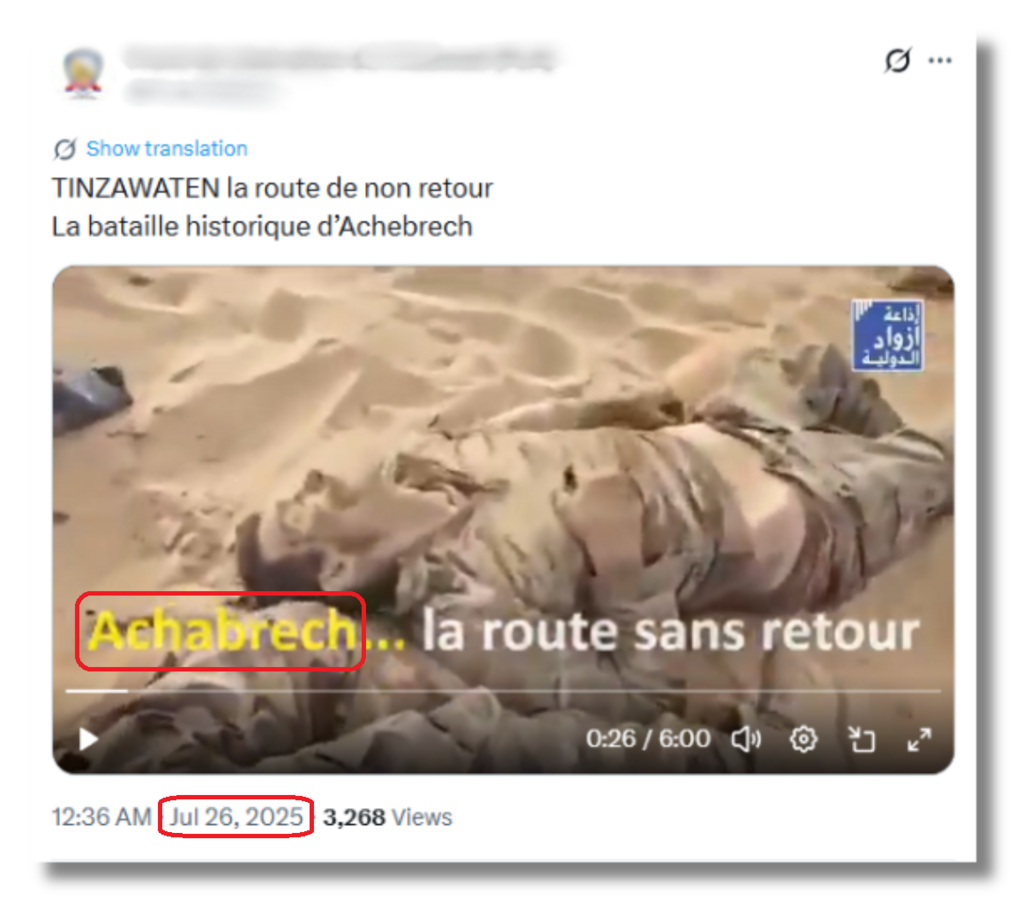
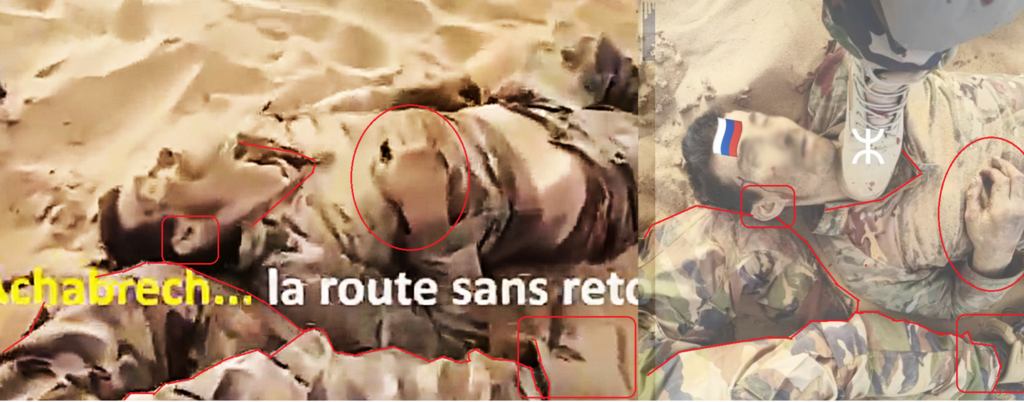
This disinformation was based on an image taken out of context: an archived photo of Wagner Group fighters killed in Tinzaouatène in 2024, not a French soldier allegedly found in Anéfis in 2026.
a flawed disinformation attempt that failed to gain traction
The narrative accusing French troops of complicity with terrorists is not new. However, in this case, the poorly constructed disinformation remained confined to accounts known for spreading Sahel propaganda. So far, it has seen limited amplification. Comments from users largely denounced the manipulation, suggesting that the narrative may have reached its limits after being repeatedly promoted for four years.
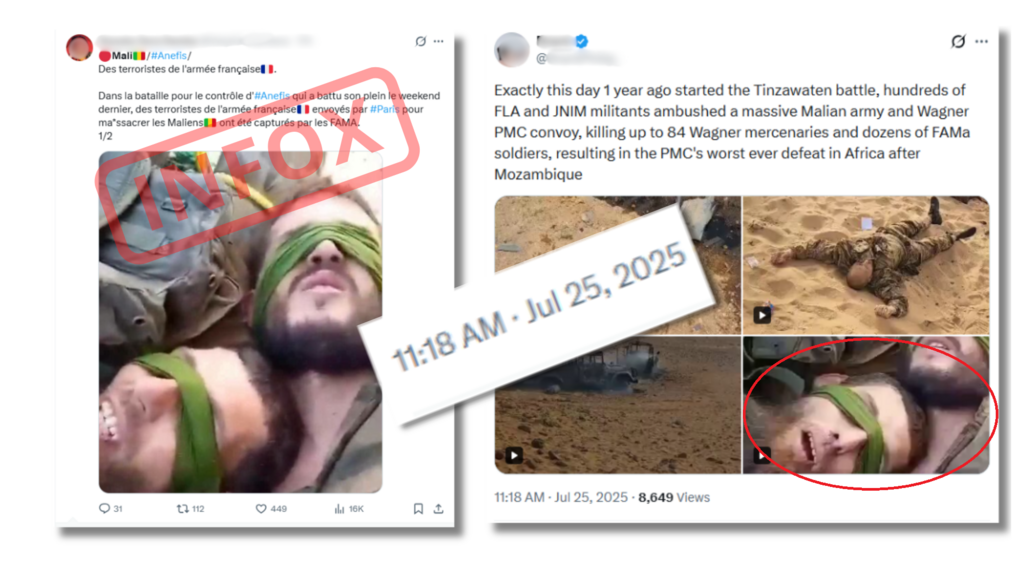
At this stage, the misleading post on platform X has garnered fewer than 50,000 views according to available data. However, the incident represents an attempt to usurp the identity of a fallen French soldier and an affront to the memory of the serviceman.