
Published on May 20, 2026 Reading time: 9 minutes.
File generated on
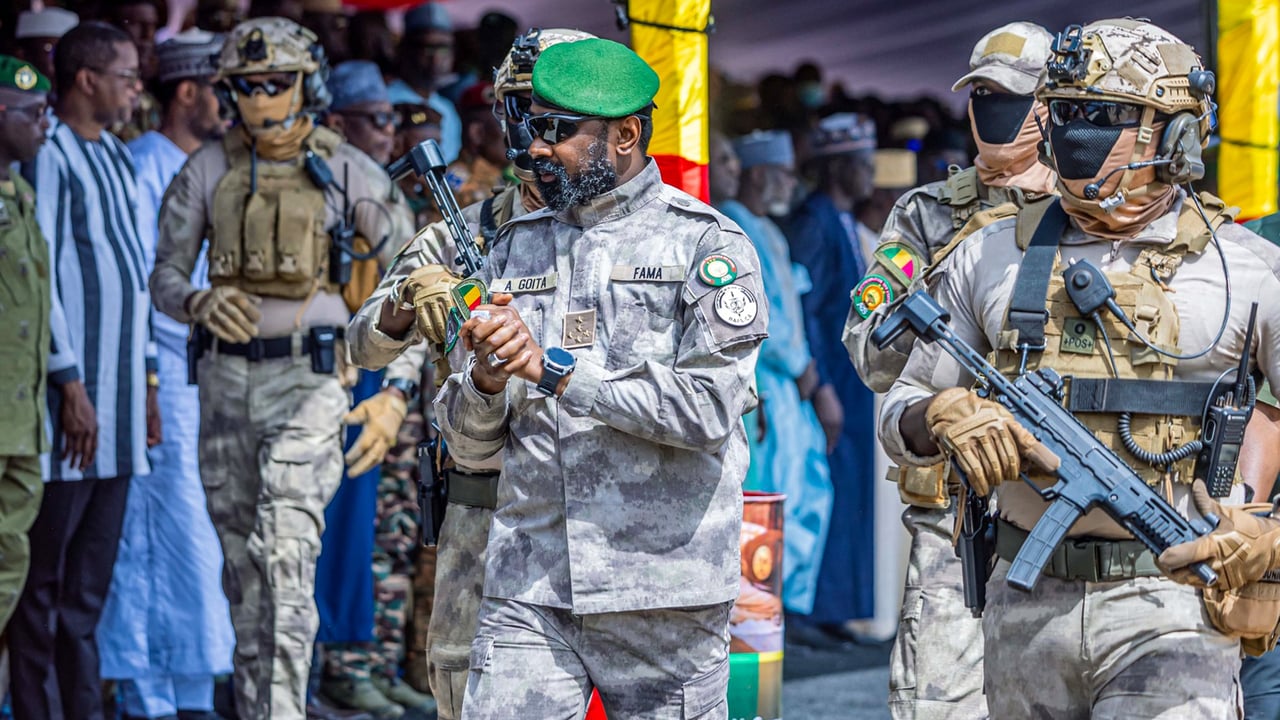
After the deadly attacks on April 25, Mali’s transitional leader Assimi Goïta moved swiftly to consolidate his authority, reshaping the nation’s political and security landscape. The coordinated assaults, which targeted key military and government sites in Bamako, exposed vulnerabilities in the country’s defense strategy and sparked immediate calls for stronger leadership.
Immediate response: tightening control
In the aftermath of the violence, Goïta’s administration implemented a series of measures designed to reinforce stability. Emergency security protocols were enforced across Bamako, with military checkpoints and patrols intensified to deter further threats. The transitional government also accelerated the deployment of additional troops to high-risk zones, signaling a commitment to restoring order.
At the same time, Goïta leveraged the crisis to push forward constitutional reforms aimed at strengthening the executive branch. By mid-May, key amendments were introduced, granting the transitional president broader powers to oversee security operations and coordinate with regional allies. These changes, approved by the National Transitional Council, were framed as necessary steps to prevent future instability.
Political maneuvering in a fragile context
The April attacks also provided Goïta with an opportunity to marginalize political opponents and consolidate support within the military. High-profile dismissals and reshuffles followed, as the president replaced several senior officers with loyalists, ensuring tighter control over the armed forces. Meanwhile, civil society groups and opposition figures accused the administration of exploiting the crisis to sideline critics and centralize power.
Public reactions were mixed. While some citizens praised the government’s decisive actions, others expressed concerns over the erosion of democratic norms. Protests in Bamako and other cities highlighted growing unease, particularly among youth and activist circles who demanded greater transparency and accountability.
Regional implications and shifting alliances
The attacks on April 25 also had repercussions beyond Mali’s borders. Neighboring countries, already grappling with their own security challenges, closely monitored Bamako’s response. The transitional government, while emphasizing its commitment to regional cooperation, faced scrutiny over its reliance on external partners, including the Africa Corps and other international actors.
International observers noted that Goïta’s consolidation of power could either stabilize the country or deepen divisions. The president’s alignment with certain foreign actors, particularly those with geopolitical interests in the Sahel, raised questions about Mali’s long-term sovereignty and strategic autonomy.
Balancing act: security vs. governance
Goïta’s leadership in the wake of the attacks has been a study in contrasts. On one hand, his administration has demonstrated a willingness to take bold, often controversial steps to restore security. On the other, critics argue that these measures come at the cost of democratic principles, with power becoming increasingly concentrated in the hands of a single figure.
As Mali navigates this critical juncture, the coming months will reveal whether Goïta’s strategy will lead to lasting stability or further polarization. The international community, meanwhile, remains watchful, weighing the risks of both inaction and overreach in a nation still reeling from years of conflict.
Looking ahead: what’s next for Mali?
With the transitional government’s mandate set to expire in early 2027, all eyes are on Bamako. Will Goïta’s reforms pave the way for a return to civilian rule, or will the country slide deeper into a cycle of militarized governance? The answers may well determine Mali’s trajectory for years to come.
One thing is certain: the lessons of April 25 will shape the nation’s path forward, for better or worse.