Security conditions in Mali have worsened dramatically since late April 2026, following coordinated attacks that struck multiple cities and resulted in the deaths of Defense Minister Sadio Camara and several Malian soldiers. These assaults mark a troubling escalation in a pattern of violence that has intensified over recent years against both military forces and state institutions.
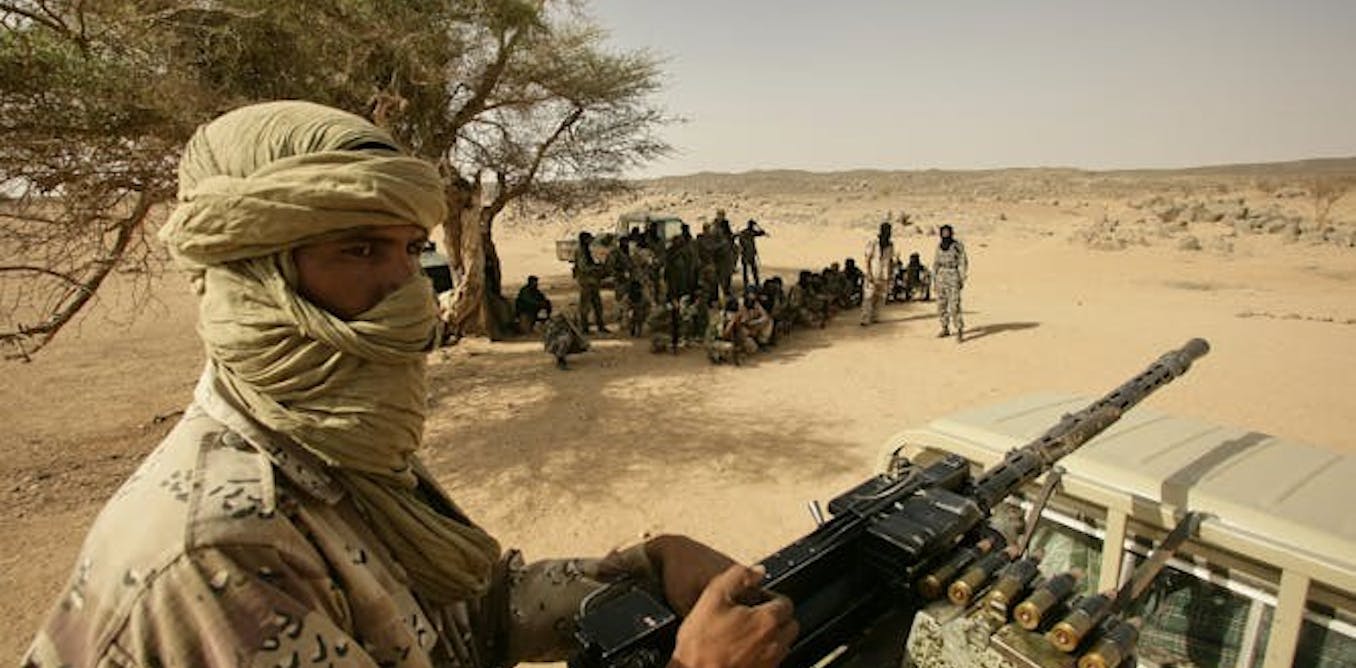
Through extensive research on security and political dynamics in West Africa and the Sahel spanning more than a decade, it has become evident that the roots of these attacks lie in grievances long expressed by the Touareg people—a nomadic Berber community native to northern Mali. Despite their repeated appeals, the current military regime has failed to address their concerns, which center on political autonomy, cultural recognition, resource control, and equitable development.
Three key issues continue to fuel instability in northern Mali:
1. Failure to address touareg grievances
The primary source of unrest stems from the government’s refusal or inability to respond to the Touareg community’s demands. These include calls for greater political autonomy, protection of cultural identity, fair access to natural resources, and improved security in their regions. For decades, the Touareg have felt marginalized and excluded from national decision-making processes, despite contributing significantly to the country’s economic and social fabric.
2. Over-reliance on military force
Successive governments in Mali have responded to Touareg dissent with heightened militarization, often resulting in collateral damage and civilian casualties. This heavy-handed approach has further alienated local populations, driving some toward armed groups and exacerbating the cycle of violence.
3. Unequal resource distribution
The northern regions of Mali—rich in gold deposits, salt mines, grazing lands, and strategic trade routes—remain economically neglected. Revenue generated from these resources is predominantly controlled by the southern-based central government, leaving northern communities in poverty and reinforcing historical inequalities.
Addressing economic marginalization could yield significant benefits: easing Touareg grievances, restoring public trust in the Malian state, and shifting the conflict’s focus from rebellion toward inclusive governance, stability, and lasting peace in northern Mali.
Current security dynamics
In April 2026, the Group for the Support of Islam and Muslims (JNIM) formed an alliance with the Touareg rebel group Front de Libération de l’Azawad (FLA) to launch coordinated attacks across several cities in Mali. This offensive echoes a similar surge in 2012, when Touareg fighters and affiliates of Al-Qaïda launched a rebellion, leading to the declaration of an independent state by the National Movement for the Liberation of Azawad (MNLA).
The MNLA, founded in 2011 by former Libyan fighters and Touareg from northern Mali, once commanded a force of around 10,000 fighters. Despite their numbers, they lacked the military strength to hold territory. They soon aligned with Islamist factions such as Ansar Dine, Al-Qaïda in the Islamic Maghreb (AQIM), and the Movement for Oneness and Jihad in West Africa (MUJAO). However, this alliance quickly collapsed after the Islamists, better armed and financed, seized control of major cities including Gao, Timbuktu, and Kidal in late 2012.
French military intervention in 2013 helped the Malian government regain lost territories, pushing AQIM and its allies into remote mountain and desert regions, where they adopted guerrilla tactics such as suicide bombings and landmines. The withdrawal of French forces in 2022 removed a key counterterrorism pressure point, creating a security vacuum that Islamist groups have exploited to expand their operations, recruit locally, and regain territorial influence.
Unresolved challenges
The military regime led by Assimi Goïta has yet to address the core demands of the Touareg. Since Mali’s independence in 1960, Touareg leaders have argued that the state’s centralized structure does not reflect their political identity, economic interests, or traditional governance systems. Calls for autonomy or self-rule have been met with repression, often violently.
Climate change has compounded these challenges. Prolonged drought, desertification, and erratic weather patterns have devastated the livelihoods of Touareg pastoralists—grievances that predate the rise of Islamist insurgencies and remain central to their struggle.
Antiterrorism operations have also contributed to instability. Recent reports highlight widespread civilian harm, forced displacements, and collective punishments—including arbitrary arrests and mass killings—carried out during military operations in northern and central Mali. These actions have been exploited by Islamist groups to fuel recruitment, consolidate territorial control, and gain local legitimacy.
Critics point to both Mali’s successive governments and past French military interventions as key contributors to the crisis. The perceived failure of external military support has further undermined trust in international cooperation and deepened local resentment.
Can peace be achieved?
Resolving the Touareg question is essential to reducing national tensions. While Touareg leaders have twice entered alliances with jihadist groups—only to see those pacts collapse—this does not negate the urgency of addressing structural inequalities and long-standing grievances that underlie their demands.
The Malian government could draw valuable lessons from the approach taken by former Nigerien President Mahamadou Issoufou. Before assuming office in 2011, Niger’s Touareg population faced similar exclusion. Upon election, Issoufou:
Integrated Touareg elites and former rebels into state institutions
Decentralized state authority by granting regional administrative and budgetary control
Launched disarmament, demobilization, and reintegration programs
Issoufou also prioritized infrastructure development in Touareg areas, focusing on pastoralism, education, and livelihood support. Initiatives included improving water access in arid grazing zones and enhancing road connectivity and security.
By adopting a similar strategy—one rooted in dialogue, inclusion, and equitable development—the Malian government could begin to heal divisions, restore trust, and pave the way for sustainable peace in the north.